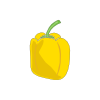
Green bell peppers are crisp, mild-flavored vegetables known for their glossy skin and blocky, hollow shape. They are actually immature bell peppers, harvested before turning red, yellow, or orange, which gives them a slightly more bitter, fresh taste. The plants produce sturdy green stems, broad leaves, and small white flowers that develop into the familiar thick-walled fruits.
Thriving in warm, sunny conditions, green bell peppers are widely grown in gardens and farms around the world. They are rich in vitamins—especially vitamin C—and add crunch and subtle flavour to salads, stir-fries, sauces, and stuffed dishes. Valued for their versatility, texture, and nutritional benefits, green bell peppers are a staple in both home cooking and commercial agriculture.
How To Grow
-
Choose the Right Conditions Bell peppers need warm temperatures and full sun. Ideal temperatures are 20–30°C (68–86°F). Protect plants from cold winds and frost.
-
Start Seeds Sow seeds indoors 8–10 weeks before the last frost. Plant seeds about 0.5 cm (¼ inch) deep. Keep soil warm and moist; germination takes 7–14 days.
-
Transplanting Transplant seedlings outdoors once night time temperatures stay above 13°C (55°F). Harden off plants gradually. Space plants 45–60 cm (18–24 inches) apart.
-
Soil Use fertile, well-drained soil rich in compost. Soil pH should be slightly acidic to neutral (6.0–7.0).
-
Watering Water regularly to keep soil evenly moist. Avoid waterlogging or letting soil dry out completely. Mulch to retain moisture and warmth.
-
Feeding Feed every 2–3 weeks with a balanced or high-potassium fertilizer once flowering begins. Avoid too much nitrogen, which causes leafy growth instead of fruit.
-
Support and Care Stake plants if fruits become heavy. Remove the first flowers if plants are small to encourage stronger growth. Keep weeds under control.
-
Pest and Disease Care Watch for aphids, spider mites, and caterpillars. Ensure good air circulation to prevent disease.
With proper warmth, sunlight, and care, green bell peppers will produce plentiful fruit throughout summer and early autumn.
Harvesting
-
When to Harvest Green bell peppers are ready 60–80 days after transplanting. Harvest when fruits are firm, glossy, and full-sized. Peppers can be picked green or left longer to change colour, but green peppers have a crisper, slightly bitter taste.
-
How to Harvest Use sharp scissors or pruning shears. Cut the stem just above the fruit, leaving a short piece attached. Do not pull peppers off by hand, as this can damage the plant.
-
Harvest Regularly Pick peppers frequently to encourage more flowers and fruit. Removing mature fruits helps the plant direct energy into new growth.
-
Handle with Care Peppers bruise easily, so handle gently. Avoid stacking heavy fruits on top of each other.
-
After Harvest Care Store peppers in the refrigerator for up to 1–2 weeks. Do not wash until ready to use to prevent moisture-related spoilage.
Harvesting at the right time ensures crisp texture, good flavour, and continued production throughout the season.
Common Problems
Common Problems with Green Bell Peppers
Pests
- Aphids – Cluster under leaves and on new growth, causing curling and stunted shoots. Blast off with water or use insecticidal soap.
- Spider Mites – Tiny mites that cause stippled, yellowing leaves in hot, dry conditions. Increase humidity and use appropriate miticides.
- Thrips – Cause silvery streaking on leaves and distorted fruit. Use sticky traps and insecticidal soap.
- Caterpillars/Hornworms – Chew large holes in leaves and fruit. Hand-pick or use biological controls such as Bacillus thuringiensis (Bt).
- Whitefly – Sap-sucking insects found on leaf undersides. Use yellow sticky traps and neem oil sprays.
Diseases
- Blossom End Rot – Dark, sunken patch at the base of fruit caused by calcium deficiency linked to irregular watering. Maintain consistent soil moisture and avoid over-feeding with nitrogen.
- Phytophthora Root Rot – Caused by waterlogged soil. Ensure excellent drainage and avoid overwatering.
- Botrytis (Grey Mould) – Fuzzy grey mould on stems and fruit in humid conditions. Improve air circulation and remove affected material promptly.
- Bacterial Spot – Water-soaked spots on leaves and fruit. Avoid overhead watering and rotate crops annually.
- Mosaic Virus – Spread by aphids; causes mottled, distorted foliage. Remove infected plants and control aphid populations.
Physiological Issues
- Blossom Drop – Flowers falling before setting fruit, often caused by temperature extremes (too cold below 15°C or too hot above 35°C), drought stress, or excess nitrogen.
- Sunscald – Pale, papery patches on fruit exposed to intense direct sun. Maintain healthy leaf canopy.
- Poor Fruit Set – Often due to lack of pollinating insects, very high or low temperatures, or nutrient imbalance.