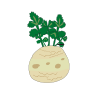
Celeriac, also known as celery root, is a cool-season vegetable grown for its large, knobbly root rather than its stems. The plant forms a swollen, round base with rough, tan-coloured skin and fine root hairs, topped by a crown of dark green, celery-like leaves. Beneath its rugged exterior, celeriac has firm, creamy-white flesh with a mild, earthy flavour that combines notes of celery and parsley.
Thriving in cool, moist conditions, celeriac has a long growing season and is typically harvested in autumn and winter. It is valued for its versatility in the kitchen and can be eaten raw in salads, mashed, roasted, or added to soups and stews. Rich in fibre, vitamins, and minerals, celeriac is a nutritious and reliable crop for colder months.
How To Grow
-
Choose the Right Time Celeriac has a long growing season. Sow seeds indoors in late winter to early spring. It needs cool conditions to grow well.
-
Choose the Right Location Plant in full sun to partial shade. Use fertile, moisture-retentive soil. Consistent moisture is essential.
-
Sowing Seeds Sow seeds on the surface of moist compost and do not cover, as they need light to germinate. Keep soil warm and moist. Germination can take 2–3 weeks.
-
Transplanting Transplant seedlings once they have a few true leaves. Space plants 30–40 cm (12–16 inches) apart. Plant at the same depth—do not bury the crown.
-
Watering Water regularly to keep soil evenly moist. Dry conditions can cause small or woody roots.
-
Feeding Feed every 2–3 weeks with a balanced liquid fertilizer. Compost or well-rotted manure improves soil fertility.
-
Care and Maintenance Remove side shoots and excess leaves to focus energy on root growth. Keep beds weed-free. Mulch to retain moisture.
-
Growing Period Celeriac takes 6–7 months to mature. Growth improves as temperatures cool in late summer and autumn.
With patience and steady care, celeriac produces flavourful roots ideal for autumn and winter harvests.
Harvesting
-
When to Harvest Celeriac is usually ready 6–7 months after sowing. Roots can be harvested from early autumn through winter. Harvest when roots are 10–15 cm (4–6 inches) wide or larger. Flavour improves after light frosts.
-
How to Harvest Loosen the soil around the plant with a fork. Lift the root carefully from the ground. Avoid damaging the root, as this reduces storage quality.
-
Trimming Cut off the leaves close to the root. Trim away fine root hairs. Do not wash if storing.
-
Harvesting as Needed Celeriac can be left in the ground and harvested as required in mild climates. Protect plants with mulch in cold weather.
-
After Harvest Care Store roots in a cool, dark, frost-free place. Celeriac stores well for several months.
Harvesting at the right time ensures firm texture, good flavour, and excellent storage life.
Common Problems
Common Problems with Celeriac
Slugs and Snails
Young seedlings and developing roots are vulnerable to slug and snail damage. Use physical barriers, traps, or organic deterrents to protect plants, especially after transplanting.
Celery Leaf Miner
The larvae of the celery leaf miner tunnel through leaves, causing pale, blotchy patches. Remove affected leaves promptly and destroy them. Covering plants with fine mesh can help prevent adult flies from laying eggs.
Celery Fly
Similar to leaf miner, the celery fly can cause blistering and distortion of foliage. Inspect plants regularly and remove infested leaves.
Crown Rot
Excessive moisture around the crown or poorly drained soil can lead to rotting at the base. Ensure plants are not buried too deeply and that soil drains adequately.
Bolting
Exposure to prolonged cold periods (below 10°C) shortly after transplanting can trigger bolting — the plant runs to seed rather than developing a swollen root. Harden off transplants carefully and avoid planting out too early.
Split Roots
Irregular watering — alternating dry and wet periods — can cause roots to crack or split. Consistent moisture and mulching help prevent this.
Calcium Deficiency / Tip Burn
In hot, dry conditions, poor calcium uptake can cause leaf tip browning. Maintain steady watering and ensure soil pH is in the slightly acid to neutral range (6.0–7.0).