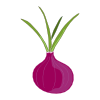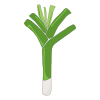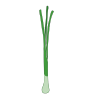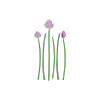
Chives (Allium schoenoprasum) are a hardy perennial herb belonging to the onion family. Their slender, hollow, grass-like leaves carry a mild onion flavour that enhances salads, soups, egg dishes, potatoes, and many other recipes. The attractive purple-pink globe flowers that appear in late spring and early summer are also edible and make a beautiful garnish.
Chives form neat clumps that slowly spread over time, making them as ornamental as they are productive. Once established they require very little attention, dying back to ground level each winter and returning reliably in spring. They are an excellent choice for herb gardens, raised beds, borders, and even containers.
How To Grow
Sowing from seed: Sow seeds thinly about 1 cm deep in trays or small pots. Keep the compost moist and place in a warm spot; germination typically takes 2–3 weeks. Once seedlings are large enough to handle, thin or prick out into small clumps of 4–6 seedlings and grow on before planting out.
Planting out: Space clumps approximately 20–25 cm apart in well-drained, fertile soil. Chives prefer a sunny position but will tolerate partial shade.
Division: Every 3–4 years, lift and divide established clumps in spring or autumn to reinvigorate growth. Simply split the clump into smaller sections and replant.
Ongoing care: Water regularly during dry spells and remove flower heads promptly if you want to encourage continued leaf production. Feed with a balanced liquid fertiliser occasionally through the growing season to boost leaf growth.
Containers: Chives grow very well in pots — use a good quality, well-drained compost and ensure the container does not become waterlogged.
Harvesting
Begin harvesting once the clumps are well established and the leaves are at least 10–15 cm tall. Use scissors or a sharp knife to cut the leaves down to about 2–3 cm above soil level — cutting the whole clump rather than snipping individual tips encourages fresh, tender regrowth.
The plant will regrow quickly and can typically be cut 3–5 times during the growing season. Do not remove just the tips, as this results in hollow, toughened stems with poor flavour.
The purple globe flowers are also edible — use them whole to garnish salads or pull the individual florets apart to scatter over dishes. However, if left to set seed, plants may self-sow prolifically, so deadhead promptly unless you want natural propagation.
In mild climates, light harvesting may be possible almost year-round; in colder areas, the plant dies back in winter and regrows reliably each spring.
Common Problems
Chives are generally trouble-free and among the most resilient herbs you can grow. However, a few issues can occasionally arise:
Onion thrips: Tiny insects that cause silvery streaking on leaves. Remove affected foliage and avoid over-fertilising with nitrogen, which encourages soft growth that attracts them.
Downy mildew: A fungal problem favoured by wet, humid conditions. Improve air circulation around clumps and avoid wetting foliage when watering.
Root rot: Caused by waterlogged soil. Ensure planting sites or containers have good drainage.
Leek rust: Occasionally affects chives, appearing as orange pustules on leaves. Remove infected material promptly and avoid overhead watering.
Slugs and snails: Young shoots in spring may be attacked. Use physical barriers, traps, or biological controls as appropriate.
Overall, chives are rarely seriously troubled by pests or disease, and their strong scent is thought to deter many common garden pests.