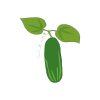
Cucumbers are refreshing, fast-growing vegetables known for their crisp texture and mild, clean flavor. They produce long or short cylindrical fruits with smooth or slightly bumpy green skins and pale, juicy flesh. Grown on trailing or climbing vines with broad green leaves and yellow flowers, cucumber plants are a productive and attractive addition to vegetable gardens.
Highly valued for their high water content, cucumbers are especially popular in salads, drinks, and fresh dishes, helping to keep meals light and cooling. They can be eaten raw, pickled, or cooked, depending on the variety. Easy to grow in warm conditions and capable of producing abundant harvests throughout summer, cucumbers are a favourite crop for both beginner and experienced gardeners.
How To Grow
-
Choose the Right Time Cucumbers need warm weather. Sow seeds after the last frost or start indoors 2–3 weeks early. Ideal temperature: 20–30°C (68–86°F).
-
Pick a Sunny Location Choose a spot with full sun (6–8 hours daily). Provide space for vines or install a trellis for climbing varieties.
-
Prepare the Soil Use rich, well-draining soil. Mix in plenty of compost or well-rotted manure. Soil pH: 6.0–7.0.
-
Plant the Seeds Sow seeds 2–3 cm deep. Plant 2–3 seeds per spot, then thin to the strongest plant. Space plants 45–60 cm apart (rows 90–120 cm apart). Water well after planting.
-
Water Consistently Water deeply 2–3 times per week. Keep soil evenly moist—uneven watering causes bitter fruit. Water at the base, not on leaves.
-
Feed the Plants Feed every 2 weeks with a balanced or potassium-rich fertilizer. Avoid excess nitrogen, which causes leafy growth with fewer fruits.
-
Support & Care Train vines onto a trellis or support. Mulch to retain moisture and suppress weeds. Hand-pollinate flowers if fruits fail to form.
-
Pest & Disease Control Watch for aphids, cucumber beetles, and powdery mildew. Improve airflow and remove affected leaves promptly.
Harvesting
When to Harvest Harvest when cucumbers are young and firm. Most slicing cucumbers are ready at 15–20 cm long. Pickling cucumbers are best at 5–10 cm long. Overripe cucumbers become bitter and seedy.
How to Harvest Use sharp scissors or a knife. Cut the cucumber from the vine, leaving a short piece of stem attached. Do not pull or twist, as this can damage the vine.
Harvesting Tips Check plants daily during peak production. Harvest in the morning when fruits are crisp. Regular picking encourages the plant to produce more cucumbers.
After Harvest Care Store cucumbers in the refrigerator. Best used within 5–7 days for freshness. Do not wash until ready to use.
End-of-Season Tip Remove any overgrown or damaged fruits to keep vines productive. Harvest all remaining cucumbers before the first frost.
Common Problems
Common Cucumber Problems
Pests
Aphids are small, soft-bodied insects that cluster on the undersides of leaves and new growth, sucking sap and causing yellowing and distorted foliage. Encourage natural predators such as ladybirds, or use a strong jet of water or insecticidal soap to control infestations.
Cucumber Beetles feed on leaves, flowers, and fruit, and can transmit bacterial wilt. Remove adults by hand and use row covers early in the season to protect young plants.
Spider Mites thrive in hot, dry conditions and cause fine speckling on leaves. Increase humidity and spray affected plants with water or neem oil.
Whitefly can build up quickly in warm conditions, weakening plants. Use yellow sticky traps and insecticidal soap sprays.
Diseases
Powdery Mildew appears as a white powdery coating on leaves, typically in warm, humid or dry conditions with poor airflow. Remove affected leaves, improve ventilation, and consider resistant varieties.
Downy Mildew causes yellow patches on upper leaf surfaces with grey-purple fuzz beneath. Improve drainage and air circulation, avoid overhead watering, and use fungicide if necessary.
Bacterial Wilt causes rapid wilting and plant death, spread by cucumber beetles. Remove and destroy affected plants promptly; there is no cure.
Root Rot results from waterlogged soil. Always plant in well-drained soil and avoid overwatering.
Physiological Problems
Bitter Fruit is typically caused by heat stress, irregular watering, or leaving fruits on the vine too long. Harvest regularly and water consistently.
Misshapen or Hollow Fruits can result from poor pollination or uneven watering. Hand-pollinate flowers in enclosed spaces and maintain even moisture levels.