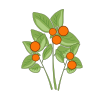
This is a generic perennial flower placeholder for use in garden planning when the specific flowering plant you wish to grow is not available in the plant list. Use it to mark beds or areas where orange-flowered perennials — such as crocosmia, helenium, geum, or hemerocallis (daylily) — are planned.
Perennial flowers return year after year from their root systems, providing reliable colour and structure to garden borders. Many attract beneficial insects such as bees, hoverflies, and butterflies, making them valuable companions in a productive vegetable garden. Use this placeholder to reserve space in your plan and to visualise colour and layout, then replace it with a specific plant entry if one becomes available.
How To Grow
Growing Perennial Flowers
Perennial flowers establish themselves in the first year and return reliably each subsequent season. Most prefer a well-prepared bed with good drainage and a moderate level of organic matter worked into the soil before planting.
- Planting time: Most perennial flowers are best planted in spring or early autumn when temperatures are mild, allowing roots to establish before extremes of heat or cold.
- Spacing: Allow adequate space between plants — typically 20–45 cm depending on the species — to encourage good air circulation and prevent disease.
- Feeding: Apply a balanced general fertiliser in spring as new growth emerges. Avoid excessive nitrogen, which promotes leafy growth at the expense of flowers.
- Mulching: A layer of organic mulch around the base helps retain moisture, suppress weeds, and protect roots during cold periods.
- Division: Most perennial flowers benefit from being lifted and divided every 3–5 years to maintain vigour and flowering performance.
As this is a generic placeholder, refer to specific care guides for the exact perennial flower you are growing.
Harvesting
Harvesting Perennial Flowers
Most perennial flowers are grown primarily for ornamental purposes, but many can be cut for floral arrangements or used to attract beneficial insects to the garden.
- Cut flowers: Harvest stems in the early morning when temperatures are cool and flowers are at or just before full bloom for the longest vase life. Cut at a 45° angle and place immediately in water.
- Deadheading: Removing spent blooms regularly encourages the plant to produce more flowers and extends the flowering season. Use clean, sharp scissors or secateurs.
- Seed collection: If you wish to collect seeds for propagation, allow a proportion of flowers to set seed fully before removing the seed heads. Store seeds in a cool, dry place.
- Foliage: The foliage of some perennial flowers can also be harvested and used as greenery in arrangements.
Refer to guidance specific to the perennial flower variety you are growing for more detailed harvesting advice.
Common Problems
Common Problems with Perennial Flowers
Perennial flowers are generally resilient but can be affected by a range of pests and diseases:
- Aphids: Small sap-sucking insects that cluster on new growth and buds. Encourage natural predators such as ladybirds and lacewings, or remove by hand. A blast of water from a hose can dislodge colonies.
- Slugs and snails: These can cause significant damage to new shoots, especially in spring. Use physical barriers, traps, or biological controls.
- Powdery mildew: A white fungal coating on leaves, often caused by dry soil combined with humid air. Improve airflow between plants and water at the base rather than overhead.
- Root rot: Caused by waterlogged soil. Ensure good drainage and avoid overwatering.
- Vine weevil: The grub stage feeds on roots and can cause plants to collapse. Look for the characteristic notched leaf margins caused by adults feeding at night.
- Leaf spot: Various fungal leaf spots can occur in wet seasons. Remove affected leaves promptly and avoid wetting foliage when watering.
Good cultural practices — correct spacing, adequate drainage, and regular inspection — will prevent most problems.