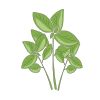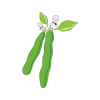
The Green or French Bean (Phaseolus vulgaris) is a half-hardy annual originally native to South America, now one of the most widely grown vegetables in home gardens worldwide. It produces tender, crisp pods in a range of colours — green, yellow (wax beans), and purple — making it both productive and ornamental.
French beans come in two main forms: dwarf (bush) varieties that need no support and are ideal for containers and small spaces, and climbing varieties that can reach 1.5–2 m and require a trellis or canes. They are a warm-season crop that absolutely cannot tolerate frost, but they are fast-maturing and very rewarding for gardeners.
As legumes, French beans fix atmospheric nitrogen through root nodules, helping to improve soil fertility for subsequent crops. They are excellent for crop rotation and companion planting schemes.
How To Grow
Sowing: Sow seeds directly outdoors only after the last frost date, when soil temperature has reached at least 10°C. Sow seeds 4–5 cm deep, spacing seeds approximately 10 cm apart within the row, with rows 45 cm apart. For an earlier start, sow indoors 3–4 weeks before the last expected frost in individual pots or modules, as French beans dislike root disturbance during transplanting.
Soil preparation: Choose a sunny, sheltered spot with well-drained, moderately fertile soil. Avoid over-rich soil — excess nitrogen encourages leafy growth at the expense of pods. Work in compost before sowing if the soil is poor.
Watering: Water regularly, especially during flowering and pod development. Inconsistent watering causes flowers to drop and pods to be tough or stringy.
Support: Dwarf/bush varieties need little or no support. Climbing varieties require canes, a trellis, or netting at least 1.5 m tall.
Succession sowing: Sow every 2–3 weeks from late spring through midsummer for a continuous harvest throughout the season.
Mulching: Apply a mulch around the base of plants to retain moisture and suppress weeds.
Harvesting
When to harvest: Begin picking pods when they are approximately 10–12 cm long and still slim. The pods should snap cleanly when bent — if they bend rather than snap, they have become too mature and fibrous. Check plants every 1–2 days once pods start forming, as they develop quickly in warm weather.
How to harvest: Pick pods carefully by holding the stem with one hand and snapping the pod off with the other to avoid pulling or damaging the plant. Regular picking is essential — leaving mature pods on the plant signals it to stop producing new flowers and pods.
Yield: A single plant can produce pods over several weeks if harvested regularly. For a continuous supply, combine regular picking with succession sowing every few weeks throughout the growing season.
Storage: Use pods fresh for the best flavour and texture. They can be stored in the refrigerator for up to a week, blanched and frozen, or dried for use as haricot or dried beans.
Common Problems
Slugs and snails: Young seedlings are very vulnerable to slug and snail damage. Use physical barriers, organic pellets, or encourage natural predators. Check plants at night when slugs are most active.
Black bean aphid (Aphis fabae): Colonies of black aphids can colonise stems and undersides of leaves, weakening plants. Remove by hand, spray with a strong jet of water, or use an appropriate insecticidal soap.
Bean seed fly (Delia platura): Larvae tunnel into germinating seeds and young roots, causing poor or failed germination. Sow when soil is warm to encourage rapid germination, or start seeds indoors.
Halo blight and anthracnose: Bacterial and fungal diseases can cause dark spots and water-soaked lesions on pods and leaves. Always use certified disease-free seed, avoid overhead watering, and do not handle plants when wet.
Root rot: Caused by waterlogged or cold soil. Ensure good drainage and do not sow into cold, wet soil.
Mosaic virus: Causes mottled, distorted leaves. Spread by aphids — control aphid populations to reduce risk. Remove and destroy affected plants.