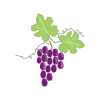
Red Grape Vine (Vitis vinifera)
Whether sprawling across a rustic wooden trellis or lined up in precise rows in a world-class vineyard, red grape vines are as much a visual delight as they are a botanical wonder. As a woody, deciduous perennial climber, a well-tended vine can remain productive for 50 to 100 years or more — a living legacy in any garden.
The Vine Itself
Red grape vines are vigorous climbers that use thin, wiry tendrils to attach themselves to supports, fences, pergolas, and trellises. The bark of older vines becomes shredded and textured, giving the plant a characterful, ancient appearance that adds structure and beauty to any garden space.
The foliage is equally striking — large, deeply lobed, heart-shaped leaves that emerge bright green in spring and mature to a lush canopy through summer. In autumn, many red-fruited varieties put on a spectacular display of crimson, gold, and burnt orange before the vine drops its leaves and enters dormancy.
The Fruit
The most captivating moment in the vine's annual cycle is véraison — the point in summer when hard, green berries begin to soften and transition through shades of pink and violet into their final deep purple, ruby, or midnight-blue colour. The skin of red grapes is rich in anthocyanins (natural pigments) and tannins, which give red wine its colour and structure. Interestingly, the juice of most red grape varieties is actually clear.
A natural waxy or dusty silver coating called bloom often covers ripe grapes — this is a protective layer of wild yeast and waxes that guards against moisture loss and microbial attack.
Growing Requirements
Red grape vines are sun-seekers and thrive in full sun with well-drained, even rocky or sandy soil. They tend to produce their best fruit when they have to work slightly harder — vines grown in overly fertile, moist conditions often put energy into excessive leafy growth at the expense of fruit quality. A soil pH of around 6.0–7.0 is ideal.
How To Grow
How to Grow Red Grape Vines
Growing red grape vines is a rewarding long-term investment. While they require patience — typically taking two to three years to produce a meaningful harvest — the process is straightforward if you establish the right foundation from the start.
Planting Time and Location
- When to plant: Plant bare-root vines in late winter or early spring while they are still dormant, before bud break.
- Sunlight: Choose a site that receives full sun for at least 7–8 hours per day. Insufficient sunlight reduces sugar development and increases the risk of fungal disease.
- Soil: Grapes tolerate low-fertility soils well but demand excellent drainage. Avoid waterlogged areas. A slightly acidic to neutral pH (6.0–7.0) is ideal.
Support Structures
Grapes cannot be grown successfully without a planned support system in place before planting.
- Install a sturdy trellis, fence, wire system, or pergola prior to planting.
- If growing multiple vines, space them 150–200 cm apart to allow for airflow and vigorous spread.
Planting Method
- Soak bare roots in water for 2–3 hours before planting.
- Dig a hole approximately 30 cm deep and 30 cm wide.
- Trim any damaged or broken roots before placing the vine.
- Set the vine slightly deeper than its nursery depth.
- Backfill with soil, firming gently to eliminate air pockets. Do not incorporate high-nitrogen fertiliser at planting — it can scorch young roots.
The Critical First Year
Prune the newly planted vine back to just 2–3 strong buds immediately after planting. This feels drastic, but it directs all the plant's energy into developing a deep, vigorous root system rather than supporting excess top growth.
Water consistently throughout the first growing season, keeping the soil moist but never waterlogged.
Training and Annual Pruning
Grapes fruit on one-year-old canes (wood grown the previous summer), which makes annual winter pruning essential.
- In the first year, select the strongest shoot to become the main trunk and tie it to your support.
- Each winter while the vine is fully dormant, remove 70–90% of the previous season's growth.
- Neglecting winter pruning results in a tangled, overcrowded canopy with poor air circulation and very little fruit.
Feeding
Apply a balanced general-purpose fertiliser in early spring as growth begins. Supplement with a high-potassium feed (such as tomato fertiliser) during the fruiting season to support berry development. Avoid excess nitrogen, which encourages leafy growth at the expense of fruit.
Harvesting
Harvesting Red Grapes
Harvesting red grapes is the pivotal moment of the growing season. Unlike many other fruits, grapes do not continue to ripen or sweeten after picking — what is on the vine is what goes into the basket. Timing the harvest correctly is therefore critical.
Knowing When to Harvest
Colour change alone is not sufficient — grapes can turn fully purple weeks before they are truly ripe. Use the following checks together:
- Taste test (most reliable): Pick a grape from the bottom of a cluster, as these ripen last. It should be sweet, well-flavoured, and have little to no sharpness or mouth-puckering tartness.
- Seed colour: Bite into a grape — the seeds should be dark brown and crunchy. Green, soft seeds indicate the fruit is not yet ready.
- Texture: Ripe grapes feel plump and yield slightly under gentle pressure rather than being firm or rock-hard.
- Stem colour: The stems of ripe clusters often transition from green to a woodier, brownish colour as the fruit matures.
Tools and Equipment
- Use a sharp, clean pair of bypass pruning shears or dedicated grape scissors — do not pull or tug clusters, as this risks damaging the fruiting wood needed for next year's crop.
- Use shallow crates or containers to avoid crushing the lower clusters under the weight of those placed on top.
Harvesting Process
- Harvest in the cool of the morning. Grapes picked during the heat of the day have elevated respiration rates and will deteriorate or ferment more quickly.
- Support the cluster with one hand and cut the stem (peduncle) cleanly where it meets the vine.
- Immediately sort and remove any shrivelled, dried, or mouldy berries from the cluster to prevent spoilage spreading to healthy fruit.
Storage
Fresh grapes are best consumed within a few days of harvest. Store unwashed clusters in the refrigerator to extend shelf life. For longer preservation, grapes can be dried into raisins, made into juice, jams, or processed into wine or vinegar.
Protecting the Crop
As grapes reach peak sugar levels, birds and wasps become increasingly attracted to the clusters. If harvesting cannot happen immediately, cover the ripening fruit with fine-mesh netting to protect the crop in the final weeks of ripening.
Common Problems
Common Problems with Red Grape Vines
Powdery Mildew
One of the most prevalent fungal diseases affecting grape vines. It appears as a white, powdery coating on leaves, shoots, and developing fruit. It thrives in warm, dry conditions with poor air circulation. Prevention: ensure adequate plant spacing, prune regularly to open up the canopy, and avoid overhead watering. Treatment: apply sulphur-based fungicides or potassium bicarbonate sprays at the first sign of infection.
Downy Mildew
A distinct fungal disease that produces yellow patches on the upper leaf surface and a greyish-white fuzz on the underside. It spreads rapidly in cool, wet conditions. Prevention: improve drainage, increase airflow through pruning, and apply copper-based fungicides preventatively during wet seasons.
Botrytis (Grey Mould)
Botrytis cinerea causes grey, fluffy mould on ripe or damaged fruit clusters, particularly in cool, humid weather near harvest time. Remove infected bunches promptly to prevent spread. Thin clusters earlier in the season to allow better air movement around developing fruit.
Phylloxera
A microscopic insect that attacks vine roots, causing eventual decline and death. Most modern vines are grafted onto resistant rootstocks as a preventative measure. If purchasing new vines, always source from reputable nurseries that use certified resistant rootstocks.
Vine Weevil
Adult weevils notch leaf edges while larvae feed on roots, causing wilting and dieback. Check the soil around established vines and treat with biological controls (nematodes) or appropriate soil drenches if larvae are found.
Birds and Wasps
As grapes ripen and sugar levels rise, birds and wasps become a serious pest. Cover ripening clusters with fine-mesh netting or perforated bags to protect fruit in the final weeks before harvest.
Nutrient Deficiencies
- Magnesium deficiency: yellowing between leaf veins (interveinal chlorosis), common in sandy soils. Apply foliar Epsom salt (magnesium sulphate) spray.
- Iron deficiency: pale yellow new leaves. Improve soil pH or apply chelated iron.
- Potassium deficiency: leaf margin scorch, reduced fruit quality. Apply a balanced potassium feed during the growing season.
Poor Fruit Set
Caused by cold or wet weather during flowering, which disrupts pollination. Little can be done about weather, but ensuring vines are growing vigorously and not over-fed with nitrogen (which promotes leafy growth at the expense of flowers) will help maximise fruit set.