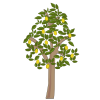
The lemon tree (Citrus limon) is a small, evergreen masterpiece of the botanical world. It’s a tree that manages to be both hard-working and incredibly stylish, offering year-round glossy foliage and fruit that is a literal staple of global cuisine.
The Visual Profile A healthy lemon tree typically stands between 3 to 6 meters tall, though many home gardeners prefer dwarf varieties that stay much smaller.
Foliage: The leaves are a deep, waxy green with an elliptical shape. When crushed, they release a faint, citrusy scent that hints at the fruit to come.
Flowers: Before the fruit appears, the tree produces small, star-shaped white blossoms. They often have a subtle purple tint on the underside of the petals and carry a fragrance so sweet it can perfume an entire garden.
The Fruit: The iconic oval fruit starts as a tiny green nub and matures into a vibrant, sunshine-yellow citrus. The rind is thick and dotted with oil glands, while the pale yellow pulp inside is divided into segments full of acidic, refreshing juice.
Growing Habits & Personality Lemon trees are famously "everbearing," meaning in the right climate, they can produce flowers and fruit at the same time. This results in a beautiful, multi-coloured display of white buds, green unripened fruit, and bright yellow mature lemons all on one branch.
Why They Are Beloved Beyond their beauty, lemon trees are a symbol of freshness and hospitality. From the zest used in baking to the juice that brightens a savoury dish—or the classic glass of lemonade—every part of the fruit is useful. They are also incredibly resilient; with a bit of pruning and the right fertilizer, a single tree can provide a lifetime of harvests.
Fun Fact: Because they are self-pollinating, you generally only need one tree to get a full crop of fruit, making them the perfect "solitary" addition to a backyard or balcony.
How To Grow
Growing a lemon tree is a rewarding "long game." Whether you’re starting from a seed for the fun of the experiment or buying a sapling for a faster harvest, here is the roadmap to citrus success.
-
Choose Your Path From Seed: It’s cheap and fascinating, but be warned: it can take 5 to 10 years to see fruit, and the lemons may not be identical to the parent. From Sapling: Most gardeners buy a 2- or 3-year-old grafted tree (like a 'Meyer' or 'Eureka'). These are hardier and usually produce fruit within a year or two.
-
The Planting Process If Growing from Seed: Extract & Clean: Take seeds from a fresh lemon. Rinse them to remove the sugary coating (which prevents mould). Do not let them dry out; plant them while still damp. Sow: Use a small pot with citrus-specific potting mix. Plant the seed about 1 cm deep. The "Mini-Greenhouse": Cover the pot with plastic wrap and place it in a warm, bright spot (about 21°C). Once you see a sprout (1–3 weeks), remove the plastic. If Planting a Sapling (Indoor/Outdoor Pots): The Pot: Choose a container with excellent drainage (terracotta is great as it "breathes"). Ensure it's roughly 25% larger than the current root ball. The Soil: Use a well-draining, slightly acidic mix (pH 5.5 to 6.5).Positioning: Place the tree so the top of the root ball is level with the soil surface. Don't bury the trunk!
-
Ongoing Care Lemon trees are "hungry" and "thirsty," but they hate being soggy. Sunlight: They need 6 to 8 hours of direct sun. If growing indoors, a south-facing window is a must. Watering: Use the "knuckle test." Stick your finger 2 inches into the soil; if it's dry, water it thoroughly until it runs out the bottom. In winter, reduce watering significantly. Feeding: Use a high-nitrogen citrus fertilizer every 4–6 weeks during the growing season (Spring through Summer).Humidity: If indoors, lemon trees love a misting or a pebble tray with water, especially when the heater is on.
Harvesting
Harvesting lemons is incredibly satisfying, but it’s more of an art than a science. Unlike some fruits that ripen on a windowsill (like bananas or tomatoes), lemons stop ripening the moment they are picked. If you pluck a green, sour lemon, it stays a green, sour lemon.
Here is how to ensure you’re picking at the peak of perfection.
- Timing: The "Checklist" for Ripeness Don't just go by the calendar; go by the look and feel of the fruit.
Colour: The most obvious sign. Wait for the fruit to turn a solid, vibrant yellow. If there is still a hint of green near the stem, it’s likely not fully sweet (or as "sweet" as a lemon gets) yet.
Size: Most standard lemons are harvest-ready when they are 5 to 8 cm (2 to 3 inches) long.
The "Squeeze Test": Gently give the lemon a squeeze. A rock-hard lemon is underripe. You’re looking for a slight "give" or springiness, which indicates the juice vesicles inside are full and ready to burst.
Skin Texture: Ripe lemons often develop a glossy, waxy sheen. If the skin is still dull or very pebbly/rough, it might need more time.
- The Technique: "Snap or Snip" Lemons have sturdy stems, and tugging on them can damage the delicate fruiting wood of the tree, potentially hurting next year’s crop.
The Snip (Best Method): Use a clean pair of hand pruners or sharp scissors. Cut the stem as close to the fruit as possible.
The Snap: If you don't have tools, grasp the fruit and tilt it upward toward the branch while giving it a gentle twist. If it doesn't come away easily, it's not ready.
- Maximizing Your Harvest If you have a "bumper crop" (too many lemons to use at once), don't let them go to waste:
Zest First: Zest the lemons and freeze the zest in small portions for baking.
Freeze the Juice: Squeeze the lemons and freeze the juice in ice cube trays. One cube usually equals about 1–2 tablespoons of juice—perfect for recipes!
Leave them on the tree: In many climates, lemons can actually stay on the tree for several weeks after they turn yellow without losing quality. They are their own best storage units.
Common Problems
Lemon trees are generally robust but can be affected by a range of pests and diseases. Staying vigilant and acting early is the best approach.
Common Pests
Scale Insects — These small, waxy, immobile insects attach to stems and leaves, sucking sap and excreting sticky honeydew. Look for brown or white bumps on branches. Treat with horticultural oil or a soft brush dipped in rubbing alcohol.
Citrus Leaf Miner — The larvae of a tiny moth tunnel through young leaves, leaving silvery trails and causing leaves to curl. Remove and destroy affected foliage, and use sticky yellow traps to monitor adult moths.
Aphids — Clusters of small soft-bodied insects on new growth cause distorted, curling leaves. Blast off with water or apply insecticidal soap spray.
Spider Mites — In hot, dry conditions, fine webbing and stippled, pale leaves indicate mite activity. Increase humidity and apply miticide or neem oil.
Common Diseases
Root Rot (Phytophthora) — Caused by overwatering or poor drainage, this fungal disease causes yellowing leaves, wilting, and eventual tree death. Prevention through well-drained soil and careful watering is essential. Improve drainage and reduce watering frequency if suspected.
Citrus Canker — Bacterial infection causing raised, corky lesions on leaves, fruit, and stems surrounded by yellow halos. Remove and destroy infected material; avoid overhead watering.
Sooty Mould — A black, dusty fungal coating that grows on honeydew secreted by sap-sucking pests. Control the pest causing the honeydew and wipe leaves with a damp cloth.
Nutritional Issues
Lemon trees are heavy feeders and frequently show nutrient deficiencies.
- Yellowing leaves with green veins (Chlorosis) — Often indicates iron or manganese deficiency, typically triggered by high soil pH. Acidify the soil or apply a chelated micronutrient feed.
- Pale, overall yellow leaves — May signal nitrogen deficiency. Apply a high-nitrogen citrus fertiliser.
- Leaf drop — Can be caused by sudden temperature changes, overwatering, underwatering, or cold draughts when grown indoors.