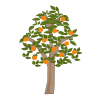
The citrus lime tree (Citrus aurantiifolia and related species) is a small, evergreen fruit tree prized for its aromatic, acidic green fruits. It thrives in warm, frost-free conditions and is a staple of tropical and subtropical horticulture worldwide.
Key Varieties
- Tahiti (Persian) Lime — The most widely grown commercial variety. Larger, seedless, and more cold-tolerant than Key lime. The fruit most commonly found in markets.
- Key Lime (C. aurantiifolia) — Smaller, more intensely flavoured, and highly aromatic. Prized for culinary use, particularly in desserts.
- Kaffir Lime (C. hystrix) — Grown primarily for its fragrant leaves and zest rather than its juice, which is a cornerstone of South-East Asian cuisines.
Plant Characteristics
Lime trees are compact, bushy, evergreen trees typically reaching 3–5 metres in height. They have glossy, dark green oval leaves, small white fragrant flowers, and produce green fruits that ripen to a light yellow-green. In cooler climates, they are widely and successfully grown as container plants that can be moved under cover during colder months.
How To Grow
Soil & Pot Preparation
Lime trees thrive in a well-draining, slightly acidic growing medium (pH 6.0–7.0). Use a specialist citrus compost or blend multipurpose compost with approximately 20% horticultural grit. When growing in containers, choose a pot with generous drainage holes — terracotta pots are ideal as they allow the roots to breathe.
Position
Choose the sunniest, most sheltered spot available. Lime trees need a minimum of 6–8 hours of direct sunlight daily. When temperatures drop, move container-grown trees to a bright indoor location such as a conservatory, heated greenhouse, or a sunny windowsill. Avoid placing them near direct heat sources, which cause the humidity levels they need to drop sharply.
Watering
Water thoroughly until it drains freely from the bottom of the pot, then allow the top 2–3 cm of compost to dry out before watering again. Avoid waterlogging, which leads rapidly to root rot. Soft or rainwater is preferable to hard tap water, which can raise the soil pH over time.
Feeding
Lime trees are hungry feeders. Apply a high-nitrogen citrus fertiliser during the active growing season and switch to a balanced, lower-nitrogen formula during the cooler months. Feed regularly according to the product instructions — nutrient deficiency is one of the most common causes of yellowing leaves.
Pollination
When growing indoors, flowers may need hand pollination. Use a small, dry paintbrush to transfer pollen gently from flower to flower, mimicking the work of insects.
Pruning
Prune lightly after fruiting to maintain shape and encourage airflow through the canopy. Remove any dead, crossing, or inward-growing branches. Avoid heavy pruning, which can stress the tree and reduce the following season's crop.
Harvesting
When to Harvest
Lime fruits do not continue to ripen significantly once removed from the tree, so timing is important. Harvest when the fruit is fully sized and the skin is smooth and deep green. As limes mature further on the tree, they transition to a pale yellow-green and become sweeter and juicier, though less sharp in flavour.
Indicators of Readiness
- The squeeze test: The fruit should yield slightly to gentle pressure. Rock-hard fruit is not yet ready.
- Skin texture: Look for a smooth, slightly glossy surface. Very rough or dull skin indicates the fruit is still developing.
- Colour: Harvest at deep green for maximum acidity, or allow to yellow slightly for a sweeter, milder flavour.
How to Pick
- Do not pull or twist the fruit directly from the branch — citrus wood is brittle and fruiting spurs can be damaged easily.
- Use sharp, clean secateurs or scissors to snip the stem cleanly just above the fruit.
Storage
- At room temperature: Freshly harvested limes keep well for approximately one week.
- Refrigerated: Store in a sealed bag or airtight container in the refrigerator for up to four weeks.
- Freezing: Juice and zest can be frozen for longer-term storage.
Maximising Yield
Ensure consistent watering and feeding during fruit development. Irregular watering can cause fruit to split or drop prematurely. A mature, well-maintained tree in a suitable climate can produce fruit over an extended season.
Common Problems
Common Pests
Scale Insects
Small, waxy, brown or white bumps on stems and the undersides of leaves. They feed on sap and excrete sticky honeydew, which encourages sooty mould. Treat with horticultural oil or an appropriate insecticidal soap spray, ensuring good coverage on all leaf surfaces.
Spider Mites
Tiny mites that thrive in hot, dry conditions — particularly common on indoor container plants. Signs include fine webbing and stippled, yellowing leaves. Improve humidity around the plant and treat with a suitable miticide or horticultural soap.
Mealybugs
White, fluffy-looking insects clustering in leaf joints and on stems. They weaken the plant and produce honeydew. Remove by hand where practical, and treat with insecticidal soap or neem oil.
Citrus Leafminer
The larvae of a small moth tunnel through new leaf growth, leaving characteristic silvery trails. Remove and destroy affected leaves and, if necessary, apply an appropriate organic or chemical control.
Common Diseases
Root Rot (Phytophthora spp.)
Caused by overwatering or poorly drained compost. Symptoms include yellowing leaves, wilting, and a general decline. Ensure the growing medium drains freely and allow the compost to partially dry between waterings.
Sooty Mould
A black, powdery fungal growth on leaves, usually secondary to honeydew produced by sap-sucking insects. Control the underlying pest infestation and wipe affected leaves with a damp cloth.
Nutritional Deficiencies
Yellowing Leaves (Chlorosis)
Often caused by iron or magnesium deficiency, particularly in alkaline or waterlogged soils. Apply a chelated iron or magnesium supplement and check the soil pH. Avoid using hard tap water if possible.
Leaf Drop
Commonly triggered by sudden temperature changes, cold draughts, overwatering, or moving the plant to a lower-light environment. Maintain stable conditions and water consistently to reduce stress.