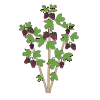
Summer-fruiting raspberries (also known as floricane-bearing) are the classic stars of the midsummer garden. Unlike their autumn cousins, these varieties focus all their energy into one massive, sweet explosion of fruit during the warmest months of the year.
Growth Habit & Harvest The defining characteristic of summer raspberries is their two-year life cycle. They produce fruit on the canes that grew during the previous growing season.
The Timeline: Typically, you’ll see a heavy harvest starting in late June and lasting through July.
The Reward: While the harvest window is shorter than autumn varieties, the yield is often more concentrated and the berries are frequently cited as being larger and more flavourful.
Structure: They usually require a sturdy support system (wires or a trellis) because the canes can reach heights of 5 to 8 feet and get quite heavy when laden with fruit.
Pruning Essentials Because they fruit on "old wood," pruning is straightforward but specific. Once a cane has finished fruiting for the summer, it turns brown and woody. You simply cut those spent canes down to ground level in late summer or autumn, leaving the fresh, green "primocanes" to grow and provide next year's crop
How To Grow
Growing summer-fruiting raspberries is remarkably rewarding, provided you get the foundations right. Because these plants stay in the ground for a decade or more, a little "homework" before planting goes a long way.
- The Perfect Location Raspberries are hardy, but they have a few "non-negotiables":
Sun: Full sun is best for the sweetest fruit. They can handle partial shade, but your harvest will be smaller.
Soil: They crave rich, well-draining soil. They hate "wet feet"—if your soil is heavy clay, plant them in raised beds to prevent root rot.
Shelter: Strong winds can whip the tall canes around, damaging the fruit and breaking the stems, so choose a sheltered spot.
- Planting Step-by-Step The best time to plant is during the dormant season (late autumn to early spring).
Prepare the Ground: Dig in plenty of well-rotted manure or compost.
Spacing: Space plants about 45–60cm (18–24 inches) apart. If planting multiple rows, keep the rows 1.8m (6 feet) apart to allow for picking access.
Depth: Plant them shallowly. Look for the "soil mark" on the stem; the roots should be just below the surface (about 5-8cm deep).
The First Cut: After planting, cut the canes down to about 25cm (10 inches) above the ground to encourage vigorous new growth.
- Support Systems Since summer raspberries can grow over 2 meters tall, they need a "post and wire" system:
Drive two heavy posts into the ground at either end of your row.
Stretch 2 or 3 parallel wires between them at heights of roughly 0.6m, 1.1m, and 1.6m.
As the canes grow, tie them loosely to these wires using garden twine.
- Ongoing Care Watering: Critical during flowering and fruiting. Soak the base of the plants, not the leaves, to avoid fungal issues.
Mulching: Apply a thick layer of bark chip or compost in spring to keep moisture in and weeds out.
Feeding: Use a high-potash fertilizer (like tomato feed) in early spring to boost berry production.
The "Summer-Fruiting" Golden Rule Remember: Don't prune the green canes in their first year. If you cut everything to the ground every winter, you will never get fruit! You only remove the canes that have already turned brown and finished fruiting
Harvesting
Harvesting is the best part, but there’s a bit of an art to it if you want to avoid ending up with a handful of mush. Summer raspberries are delicate, so a "gentle touch" is the rule of thumb.
Timing is Everything Check Daily: Once they start ripening in June or July, raspberries move fast. Check your canes every day (or every other day) to catch them at their peak.
The Colour Test: Look for a deep, uniform red (or yellow/purple depending on your variety) all the way to the top. If there is any green or white at the base of the berry, leave it for another day.
The "Tug" Test: This is the ultimate giveaway. A ripe raspberry will slide easily off the central white core (the receptacle) with the slightest pull. If you have to yank it, it’s not ready.
The Picking Technique Be Gentle: Use your thumb and first two fingers to "roll" the berry off the core. Don't squeeze, or you'll bruise the fruit.
Dry is Best: Try to harvest on a dry morning after the dew has evaporated. Wet berries mould almost instantly.
Shallow Containers: Use shallow baskets or bowls. If you pile raspberries too deep, the weight of the top layer will crush the ones at the bottom.
Look Underneath: Many of the best berries hide under the broad leaves. Lift the canes slightly to find the "hidden gems."
❄️ After-Harvest Care Don't Wash (Yet): Only wash your raspberries right before you eat them. Moisture is the enemy of shelf life.
Cool Down: Get them into the fridge as soon as possible. Even a couple of hours in the sun can make them go soft.
Longevity: Fresh raspberries usually only last 2–3 days in the fridge. If you have a bumper crop, freeze them in a single layer on a baking tray before bagging them up.
Keep an Eye Out... While you're harvesting, keep a lookout for "Raspberry Beetle" larvae (tiny white grubs inside the fruit). If you see a berry that looks shrivelled or brown at the top, pull it off and discard it to keep the rest of your crop clean
Common Problems
Common Problems with Summer-Fruiting Raspberries
Pests
Raspberry Beetle (Byturus tomentosus) is the most significant pest. The adult beetles lay eggs on flowers in early summer, and the larvae burrow into ripening fruit, leaving small white grubs inside. To manage, apply an appropriate insecticide at dusk when flowers are open, or encourage natural predators. Picking and destroying affected berries also helps limit the population.
Aphids cluster on shoot tips and the undersides of leaves, weakening new growth and potentially spreading viruses. Blast them off with water or use an insecticidal soap spray. Encouraging ladybirds and lacewings provides natural control.
Raspberry Moth larvae overwinter in soil and attack young shoots in spring. Remove and destroy affected shoots promptly.
Spider Mites can be a problem in hot, dry conditions, causing a fine mottling of leaves. Keep plants well-watered and improve airflow.
Diseases
Cane Blight causes canes to die suddenly, often after wilting at the tips. Dark, cracked lesions appear at the base of affected canes. Remove and destroy infected canes immediately; avoid wounding canes during tying.
Spur Blight creates purple or brown blotches around the buds on canes, which may then fail to produce laterals. Improve airflow by thinning canes and avoid overhead watering.
Botrytis (Grey Mould) thrives in wet, humid conditions, causing fruit and canes to develop a grey fuzzy mould. Remove affected material promptly and ensure good spacing for airflow.
Raspberry Mosaic Virus is spread by aphids and causes mottled, distorted leaves and poor yields. There is no cure — remove and destroy affected plants entirely and do not replant raspberries in the same spot for several years. Always buy certified virus-free stock.
Phytophthora Root Rot occurs in waterlogged soils, causing canes to collapse and roots to turn reddish-brown. Improve drainage before planting and consider raised beds in heavy soils.
Nutritional Issues
Iron or Manganese Deficiency (interveinal chlorosis) can develop in alkaline soils. Test soil pH and aim for 6.0–6.5; apply sulphur to lower pH if necessary, or use chelated iron/manganese feeds.
Potassium Deficiency causes leaf scorch around the edges and reduced fruit quality. Apply a high-potash fertiliser in early spring.
Environmental Problems
Suckers spread aggressively beyond the intended row. Hoe or pull suckers that appear between rows to keep plants manageable.
Windrock can loosen roots and damage canes; ensure a good support system is in place and consider a sheltered planting position.