Redcurrant (Ribes rubrum)
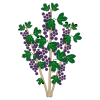
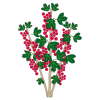
The redcurrant is one of the most striking and versatile of all the soft fruits. Growing in elegant, dangling clusters known as strigs, its small, translucent berries resemble polished rubies or glass beads, making it as ornamental as it is productive.
Flavour & Texture
Redcurrants are boldly tart and refreshing, with a satisfying burst when bitten. The primary flavour note is sharp acidity, underpinned by a faint earthy sweetness and a hint of floral tannin. This intensity makes them far more versatile than sweeter berries — they balance rich savoury dishes such as roasted meats just as effectively as they lift sugary desserts.
Culinary Uses
Because of their naturally high pectin content, redcurrants are the gold standard for homemade jellies and preserves. A spoonful of redcurrant jelly alongside roasted meat is a classic pairing that showcases their natural acidity.
- Jelly and jam: The high pectin content means redcurrants set easily without additional gelling agents.
- Baking and desserts: They provide a tart backbone to summer puddings, tarts, cheesecakes, and fruit compotes.
- Garnishing: A strig of redcurrants lightly dusted in fine sugar becomes an elegant, professional-looking cake decoration.
- Sauces: Blended or strained, redcurrants form the base of vibrant, jewel-coloured coulis and sauces.
In the Garden
Redcurrant bushes are long-lived, productive, and surprisingly adaptable. They tolerate partial shade better than almost any other fruiting plant, making them ideal for less-than-perfect spots in the garden. A well-maintained bush can remain productive for 20 years or more, rewarding minimal effort with generous annual harvests.
Nutritional note: Redcurrants are rich in vitamin C, vitamin K, and antioxidants, adding further value beyond their culinary appeal.
How To Grow
How to Grow Redcurrants
Redcurrants are among the most rewarding of all fruit bushes — hardy, long-lived, and productive even in less-than-ideal conditions. They fruit on two- and three-year-old wood, so a little patience and regular pruning are the keys to a consistent harvest.
Planting
When to plant: Bare-root plants are best planted during dormancy in late autumn or late winter. Container-grown plants can be planted at almost any time, provided the ground is not frozen or waterlogged.
Soil: Redcurrants prefer well-drained, fertile soil with a pH of 6.0–7.0. They dislike waterlogged conditions. Incorporate well-rotted compost or manure into the planting hole to improve structure and fertility.
Position: Full sun produces the sweetest, most abundant crop, but redcurrants are notably tolerant of partial shade — a real advantage in gardens with limited sunny space.
Spacing: Allow approximately 1.5m (5ft) between bushes to ensure good airflow and easy access for harvesting and pruning.
Planting depth: Set the plant slightly deeper than it sat in its nursery container to encourage a strong, upright stem (called a 'leg') to develop.
Watering & Feeding
- Water consistently throughout the growing season, particularly during fruit swelling in early summer. Dry spells at this stage can cause small, flavourless fruit or premature drop.
- Apply a thick mulch of compost around the base of the plant each spring to retain moisture and suppress weeds. Keep mulch away from the main stem.
- Feed with a high-potash fertiliser in early spring to support flowering and fruiting. A general balanced feed applied in late winter also helps overall vigour.
Pruning
Pruning is the single most important maintenance task for redcurrants, as it directly determines your harvest.
- Aim: Create and maintain an open, goblet-shaped bush that allows light into the centre and promotes good airflow.
- Winter pruning (when dormant): Remove dead, damaged, or crossing branches. Cut back side-shoots (laterals) to two or three buds from the main framework. Shorten leading branches by about a third.
- Summer pruning (midsummer): Pinch or cut back new side-shoot growth to five leaves. This directs energy into the developing fruit and helps control size.
- As bushes age, remove one or two of the oldest, thickest stems each year to encourage productive new growth.
Training Options
Redcurrants are highly adaptable and can be trained into several forms:
- Open bush — the most common method
- Standard — trained on a single tall stem, ideal for underplanting
- Cordon — single or double vertical stems trained against a wall or fence, ideal for small gardens
Protecting from Birds
Birds are strongly attracted to the bright, ripe berries and can strip a bush very quickly. Protect with fine-mesh netting or grow within a dedicated fruit cage for reliable harvests each year.
Harvesting
Harvesting Redcurrants
Redcurrants have a relatively short but rewarding harvest window. Because the berries are fragile, with thin skins that bruise easily, the right technique makes a significant difference to the quality of your picked fruit.
When to Harvest
Berries are ready to pick when they are uniformly deep, glossy red and feel slightly soft when gently pressed. Pale or greenish berries need more time; very dull-looking berries may be overripe.
Unlike many soft fruits, redcurrants can hang on the bush for one to two weeks after reaching full colour without spoiling — and this extra time often deepens their flavour. If unsure, taste a berry from each strig before harvesting the whole cluster.
How to Harvest
Always harvest by the strig (the whole cluster), never by individual berries. Picking berries one at a time crushes the thin skins and causes unnecessary 'bleeding' and mess.
- By hand: Pinch the top of the strig firmly where it joins the main branch and snap or pull cleanly away.
- With scissors: A pair of clean scissors or snips is ideal for tough or awkward stems, and reduces the risk of shaking adjacent ripe clusters to the ground.
Work through the bush systematically, harvesting all fully ripe strigs in a single pass. Any remaining green or pink clusters can be left to ripen and harvested a week or so later.
Post-Harvest Handling
- Do not wash the berries until you are ready to use them — moisture accelerates deterioration.
- Store the berries on their stalks in a single shallow layer in the refrigerator. They will keep for 3–5 days in good condition.
- For longer storage, redcurrants freeze very well. Spread them on a tray to freeze individually (open-freeze) before transferring to airtight bags. Frozen redcurrants retain their flavour and pectin properties well for up to 12 months.
Stripping the Berries
When ready to use, hold the top of the strig over a bowl and run the tines of a fork firmly down the length of the cluster. The berries will pop off cleanly into the bowl, leaving the bare stalks in your hand.
Common Problems
Common Problems with Redcurrants
Pests
Birds are the number one threat once berries begin to colour. Draping fine netting over bushes or growing inside a fruit cage is the most reliable protection.
Redcurrant Blister Aphid (Cryptomyzus ribis) causes distinctive red or yellow blistering on the upper surface of leaves in spring and early summer. The aphids live on the undersides of leaves. Although alarming-looking, the damage is rarely fatal. Remove affected leaves promptly and encourage natural predators such as ladybirds and lacewings.
Vine Weevil larvae feed on roots and can weaken or kill young plants. Look for notched leaf edges (adult weevils) and check the root zone if plants show unexplained wilting. Biological controls (nematodes) are effective in warmer soil conditions.
Sawfly Caterpillars (Nematus ribesii) can strip a bush of its foliage remarkably quickly in late spring and early summer. Check the inner parts of the bush regularly and remove caterpillars by hand, or apply an appropriate insecticide if infestations are severe.
Diseases
Powdery Mildew can appear on young shoots and leaves during warm, dry periods, especially if airflow through the bush is restricted. Prune regularly to maintain an open goblet shape and avoid overhead watering.
Botrytis (Grey Mould) thrives in damp, cool conditions, attacking ripening fruit and dead wood. Remove any mouldy berries and dead wood promptly, and ensure good airflow.
Coral Spot (Nectria cinnabarina) is a fungal disease that enters through wounds or dead wood, producing small, bright orange-pink pustules on branches. Cut back infected wood to healthy tissue and disinfect pruning tools between cuts.
Reversion Virus — spread by the currant gall mite — causes distorted, abnormally small leaves and a dramatic reduction in fruit yield. There is no cure; affected plants should be dug up and destroyed. Always source certified virus-free stock.
Nutritional Deficiencies
Redcurrants growing on alkaline soils can show iron or magnesium deficiency (yellowing between leaf veins). Correct soil pH to 6.0–7.0 and apply a balanced feed in spring. A high-potash fertiliser encourages flowering and fruiting.