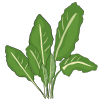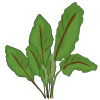
Red Veined Sorrel (Rumex sanguineus) is sometimes called the "supermodel" of the herb garden. While most leafy greens are content simply being green, this striking perennial herb brings dramatic visual contrast with its bright lime-green leaves threaded through with deep burgundy or crimson veins.
Appearance and Growth Red veined sorrel is grown for both its ornamental appeal and its edibility. The lance-shaped leaves are marked with a vivid network of dark red or purple veins, making it as attractive in a border as it is in a kitchen garden. It grows in a neat, low rosette — compact enough for container gardening or as an ornamental edging plant.
In midsummer, tall reddish-brown flower stalks appear. Most gardeners remove these promptly to keep the plant's energy directed toward producing fresh foliage.
Flavour Profile Sorrel's flavour is distinctive — sharp, citrusy, and tangy, quite unlike the bitterness of kale or the heat of rocket. This characteristic zing comes from oxalic acid, which gives it a bright, lemony quality. Young leaves are tender and succulent; older leaves become tougher with a more intense, acidic flavour.
Because of its oxalic acid content, sorrel is best enjoyed in moderation, particularly by those who are prone to kidney stones — similar to spinach or rhubarb in this regard.
Red veined sorrel is a truly versatile plant: beautiful enough for the flower border, hardy enough to survive cold winters, and flavourful enough to earn a permanent place in the kitchen.
How To Grow
Growing red veined sorrel is straightforward — it is a hardy perennial that is often more resilient than the lettuce or spinach growing nearby. Once established, it reliably returns each year with minimal effort, making it ideal for both raised beds and containers.
Getting Started: Seed or Division?
- From Seed: Sow seeds directly into the garden a few weeks before the last expected frost date, or start indoors 4–6 weeks earlier. Seeds germinate readily, usually within 7–14 days under warm conditions.
- From Division: Established clumps can be divided in spring or autumn. Carefully lift a section of the root mass and replant immediately. Division also reinvigorates older plants that may have become less productive.
Ideal Growing Conditions
- Sunlight: Prefers full sun but tolerates partial shade, which can help keep leaves more tender during warmer spells.
- Soil: Adaptable to most soils but performs best in well-drained, moderately fertile ground with a slightly acidic to neutral pH. Avoid waterlogged conditions.
- Watering: Keep the soil consistently moist. Dry conditions trigger bolting, which sharply reduces leaf quality.
Planting and Spacing
- Sow seeds at approximately 1 cm depth.
- Space plants 20–30 cm apart to allow each rosette adequate room to develop.
- For containers, choose a pot at least 20 cm deep with good drainage.
Maintenance
- Mulching: A layer of organic mulch helps retain soil moisture and suppress weeds.
- Deadheading: Remove flower stalks as soon as they appear. Allowing the plant to flower redirects energy away from leaf production and reduces flavour quality.
- Division: Every 2–3 years, divide congested clumps to maintain vigour.
- Pests: Slugs and snails are the most common nuisance. Use physical barriers or organic slug controls, especially on young plants.
Perennial Advantage Once established, red veined sorrel is often one of the first edible plants to produce in late winter or early spring, and one of the last to die back in autumn. In mild conditions it may remain semi-evergreen throughout the year.
Harvesting
Harvesting red veined sorrel correctly ensures a continuous supply of tender, flavourful leaves throughout the growing season. Because the plant is valued for both its striking appearance and its sharp, lemony taste, the approach to harvesting depends on how you intend to use it.
When to Harvest
- Micro-greens (2–4 weeks from germination): Harvest when the first true leaves appear. These are exceptionally tender with vivid red veining.
- Baby leaves (4–6 weeks): At roughly 5–8 cm in length, these are ideal for salads — crisp, tart, and not yet fibrous.
- Mature leaves: Larger leaves become tougher and more intensely acidic. These are better suited to cooking — soups, sauces, or omelettes — where they will be blended or wilted down.
Technique: Cut-and-Come-Again Red veined sorrel grows as a rosette, and the best approach is to harvest progressively:
- Harvest outer leaves first: This allows the younger central leaves to continue developing.
- Use clean scissors or snips: Cutting cleanly at the base of the stem reduces the risk of rot or pest damage compared to tearing.
- Cut at the crown: Snip stems as close to the base as possible to avoid leaving stubs that may decay.
The One-Third Rule Never remove more than one-third of the plant at a single harvest. The remaining leaves are essential for the plant to photosynthesise and recover quickly for the next flush of growth. Frequent, moderate harvesting encourages denser, more productive regrowth.
Controlling Bolting Monitor the plant closely during warm periods. As soon as a thick central flower stalk begins to emerge, cut it off at the base. Once sorrel bolts, leaf texture deteriorates and flavour becomes harsh.
Post-Harvest Handling Sorrel wilts rapidly after cutting:
- Plunge freshly cut leaves into cold water immediately to firm them up.
- Dry thoroughly before storage.
- Store in a sealed container in the refrigerator — leaves will keep for 3–5 days.
- Avoid cutting with carbon steel or aluminium blades, as the oxalic acid in sorrel can react with these metals and cause discolouration.
Common Problems
Red veined sorrel is generally a trouble-free plant, but a few common issues are worth being aware of.
Bolting The most frequent problem with sorrel is bolting — sending up a tall flower spike, typically triggered by heat, drought, or long days. Once the plant bolts, leaf production slows dramatically and the remaining leaves become tough and overly acidic. Remove flower stalks as soon as they appear, and ensure the plant receives consistent moisture during warm periods.
Slugs and Snails Young sorrel plants are particularly vulnerable to slug and snail damage, especially in cool, damp conditions. Leaves may appear with irregular holes or ragged edges. Use physical barriers such as copper tape around containers, lay organic slug pellets, or encourage natural predators such as hedgehogs and ground beetles. Removing debris and mulch close to the plant crown can reduce hiding places.
Aphids Aphid colonies occasionally establish on the undersides of leaves or along stems, particularly during dry spells. A strong jet of water will dislodge most colonies. Encouraging beneficial insects such as ladybirds (ladybugs) and lacewings helps keep populations in check.
Leaf Miners Leaf miner larvae tunnel through the leaf tissue, leaving pale, winding trails. Remove and destroy affected leaves promptly to limit the spread. Covering plants with fine insect mesh can prevent adult flies from laying eggs.
Root Rot Waterlogged or compacted soil can cause root rot, leading to wilting and yellowing even when soil appears moist. Ensure good drainage and avoid overwatering. Raised beds or containers with drainage holes help prevent this issue.
Oxalic Acid Content While not a disease, it is worth noting that sorrel contains oxalic acid. Eaten in small amounts as part of a balanced diet it is perfectly safe for most people, but those prone to kidney stones or with related health conditions should consume it in moderation — as they would spinach or rhubarb.