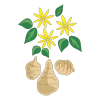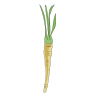
Salsify is one of those classic heirloom root vegetables that has quietly endured for centuries, treasured by gardeners and chefs alike for its remarkable flavour and elegant simplicity. Often called the "Oyster Plant", it produces long, tapered roots beneath a tuft of slender, grass-like foliage, and rewards patience with a taste quite unlike any other garden vegetable.
Two Main Types
- White Salsify (Tragopogon porrifolius): Also known as "Goat's Beard," this variety has a tan or off-white skin and resembles a slim, hairy parsnip. It has a mild, delicate flavour.
- Black Salsify (Scorzonera hispanica): Often grouped with salsify, it has a dark, cork-like skin with a creamy white interior. It is generally considered the more richly flavoured of the two.
Flavour Profile
When cooked, salsify develops a subtle, sweet, oceanic quality that many describe as reminiscent of oysters or artichoke hearts. After exposure to frost, the roots convert their starches to sugars, making the flavour even more complex and pleasant. The cooked texture is wonderfully creamy — somewhere between a well-prepared potato and a Jerusalem artichoke.
In the Kitchen
Salsify oxidises quickly once peeled, so it should be placed immediately into water with a squeeze of lemon juice or a splash of vinegar. It can be boiled, steamed, roasted, sautéed, or puréed. The young spring shoots that emerge from overwintered roots are also edible and make a tender, sweet addition to salads or light dishes.
How To Grow
Growing salsify is straightforward once you understand its key requirements. It is a cool-season biennial typically grown as an annual for its long, tapered taproot, and rewards good soil preparation with an excellent harvest.
Soil Preparation
This is the single most important step. Salsify needs deep, stone-free, loose soil to at least 30 cm depth. If the root encounters a stone or compacted layer, it will fork, producing multiple small, difficult-to-peel roots. Dig or fork the bed thoroughly before sowing and work in well-rotted compost — avoid fresh manure, which encourages forking.
Sowing
- Direct sow only: Salsify does not transplant well due to its long taproot.
- Timing: Sow in early to mid spring, once the soil has warmed enough to work. It needs a long growing season of roughly 120–150 days.
- Depth: Sow seeds approximately 1–1.5 cm deep.
- Spacing: Sow thinly in rows about 30 cm apart, then thin seedlings to 10–15 cm apart once established.
- Germination: Salsify can be slow to germinate — allow up to 21 days and do not assume failure too quickly. Use fresh seed each year, as viability drops significantly with age.
Ongoing Care
- Watering: Keep soil evenly moist throughout the growing season. Irregular watering leads to woody or split roots.
- Weeding: Because salsify grows slowly initially, it is easily overwhelmed by weeds. Hand-weed carefully around the crowns to avoid disturbing the roots.
- Feeding: If the soil was well prepared before sowing, little or no additional feeding is needed.
Tips for Success
- Always use fresh seed — salsify seed viability declines rapidly after one year.
- A long, cool growing season produces the best roots. Warm summers are less problematic if sowing is timed correctly.
- Roots left in the ground over winter will send up tender new shoots in spring — these "chards" are a bonus harvest.
Harvesting
Harvesting salsify requires patience and care. The roots are long — often 20–30 cm — and surprisingly brittle, so rough handling will snap them, wasting much of the crop.
When to Harvest
- Timing: Roots are typically ready 120–150 days after sowing, usually in late autumn through winter.
- After frost: Flavour improves markedly after the first hard frosts, which convert the root's starches to sugars. If possible, delay harvesting until after several good frosts.
- Leave in ground: Salsify is extremely frost hardy and can be left in the soil throughout winter, harvested as needed. This keeps roots in perfect condition without the need for storage.
Harvesting Technique
- Do not pull by the leaves — the tops will snap, leaving the root buried.
- Trim foliage back to about 5 cm above the crown so you can clearly see the root's position.
- Insert a long-tined garden fork 15 cm away from the plant and push it deep into the soil.
- Rock the fork back and forth gently to break the soil's grip on all sides of the root.
- Reach down and grasp the root as low as possible, lifting steadily while continuing to lever with the fork.
Post-Harvest Care
- Milky sap: Snapped or cut roots exude a milky latex — this is normal and harmless. It will seal over quickly.
- Do not wash until use: Store unwashed roots to prevent rot during storage.
- Short-term: Store in the refrigerator in a perforated bag for 2–3 weeks.
- Long-term: Pack in boxes of barely damp sand in a cool, dark place. This mimics in-ground conditions and can keep roots firm for several months.
Bonus Harvest — Spring Shoots
Any roots left in the ground will produce tender young shoots in spring. These "chards" are mild, sweet, and delicious eaten raw in salads or lightly steamed.
Common Problems
Salsify is one of the least troublesome root vegetables to grow, with relatively few serious pest or disease problems. However, there are a few issues to be aware of.
Common Problems
Forked or Misshapen Roots
- Cause: Stony, compacted, or freshly manured soil forces the root to split around obstacles.
- Solution: Prepare a deep, stone-free bed with well-rotted (not fresh) compost before sowing. This is the single most important step for good roots.
Poor Germination
- Cause: Old seed is the most common reason. Salsify seed loses viability quickly — often within a year.
- Solution: Always use fresh seed purchased for the current season. Sow a little extra to allow for lower germination rates.
Bolting (Premature Flowering)
- Cause: Drought, irregular watering, or stress during the growing season can trigger the plant to flower in its first year.
- Solution: Maintain consistent soil moisture. If plants bolt, the roots become woody and less palatable, though the flowers are edible and attractive to pollinators.
Aphids
- Cause: Aphid colonies can establish on the foliage, particularly during warm, dry spells.
- Solution: Inspect regularly and knock aphids off with a strong jet of water. Encourage natural predators such as ladybirds and lacewings. Avoid excessive nitrogen feeding, which promotes soft, aphid-attractive growth.
White Blister (Fungal)
- Cause: Wet conditions can occasionally encourage fungal issues on the foliage.
- Solution: Ensure good airflow by maintaining proper plant spacing. Avoid overhead watering where possible.
General Prevention
- Practise crop rotation, avoiding growing salsify or other members of the daisy family in the same bed in consecutive years.
- Remove and dispose of any diseased plant material promptly — do not compost it.