Often referred to as the "utility player" of the vegetable garden, the spring onion (Allium fistulosum and related species) is a versatile allium that bridges the gap between the bite of a mature bulb onion and the mildness of a chive.
What Is a Spring Onion?
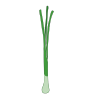
Spring onions are onions harvested at a young, immature stage before a large bulb has fully developed. They are typically identified by their small, white to pale-green spherical bulb at the base and long, hollow, bright-green stalks. They are often confused with scallions, but spring onions have a more pronounced, rounded bulb at their base.
Flavour Profile
The spring onion offers a two-for-one deal on flavour:
- The Bulb: Crisp in texture with a sweet, mildly pungent flavour that mellows considerably when cooked.
- The Greens: Fresh, grassy, and lightly sharp — perfect for garnishing soups, salads, stir-fries, and dips.
Culinary Uses
Spring onions are used raw and cooked across a huge range of cuisines. They can be sliced into salads, used as a pizza topping, folded into omelettes, grilled whole, or pickled. Both the white base and the green tops are fully edible, making them a virtually zero-waste ingredient in the kitchen.
How To Grow
Growing spring onions is widely considered one of the easiest wins in home gardening. They are fast-maturing, take up very little space, and can be grown in a variety of ways.
Sowing from Seed (Recommended)
Growing from seed is the most economical method and provides access to a wide range of varieties.
- Sow depth: Approximately 1 cm deep into prepared soil or a container of multi-purpose compost.
- Spacing: Sow thinly in rows about 15 cm apart. You can thin seedlings once established if they are overcrowded, aiming for roughly 5 cm between plants.
- Succession sowing: For a continuous harvest throughout the growing season, sow a fresh short row every 3 weeks. This prevents gluts and gaps.
- Containers: Spring onions thrive in pots. Use a container at least 15 cm deep with good drainage holes.
Using Sets
Small onion sets (immature bulbs) can be pushed into the soil with just the tip showing, spaced about 5 cm apart. This method is slightly faster than seed and can be more resistant to early pest damage.
Regrowing from Scraps
When using shop-bought spring onions, save the white root end (about 2–3 cm) and replant it in moist compost or stand it in a glass of water. New green shoots will emerge within a few days, though successive regrowths are progressively weaker.
Key Care Tips
- Sunlight: Prefers a sunny position but tolerates partial shade.
- Watering: Keep soil consistently moist; shallow roots dry out quickly in warm weather.
- Weeding: Spring onions are poor competitors. Keep the surrounding area weed-free.
- Bolting: If plants send up a thick flowering stem, harvest immediately — the bulb remains edible but will toughen if left.
- Overwintering: Hardy varieties can be sown in autumn for an early spring harvest in cooler climates.
Harvesting
Harvesting spring onions is a pick-as-you-go process rather than a single harvest event. Unlike storage onions, they are best eaten fresh.
When to Harvest
- The pencil rule: Harvest when the white base is roughly the thickness of a pencil or finger.
- Height: The green tops are typically 15–25 cm tall at the ideal harvest point.
- Time from sowing: Usually 8–12 weeks from seed sowing, depending on variety and growing conditions.
- Taste test: You can harvest at any size — smaller plants are milder, larger ones more pungent.
How to Harvest
Because the stems are relatively delicate, avoid grabbing the greens and pulling hard, as you risk snapping the stem from the bulb.
- Loosen the soil around the plant with a hand fork or trowel.
- Grip low — hold the plant as close to the white bulb as possible.
- Pull vertically and steadily. If the soil is dry, water the patch 20–30 minutes before harvesting.
Thinning as Harvesting
If you sowed seeds thickly, harvest alternate plants to give the remaining ones room to develop larger bulbs.
Greens-Only Harvest
If you only need the green tops, snip the upper half of the leaves with scissors and leave the bulb in the ground. It will continue to regenerate new growth for several weeks.
Post-Harvest Storage
- Remove loose soil and trim the root "beard" and any yellowed outer leaves.
- Do not wash until ready to use — trapped moisture causes rapid deterioration in the refrigerator.
- Store loosely wrapped in the refrigerator for up to one week.
Flavour Note
The longer spring onions remain in the ground, the more pronounced their onion flavour becomes. Harvest early for a sweeter, milder taste.
Common Problems
Spring onions are relatively trouble-free, but a few pests and diseases can affect them. Early identification and good growing practices prevent most issues.
Pests
Onion Fly (Delia antiqua)
The larvae of the onion fly burrow into bulbs and roots, causing plants to yellow, wilt, and collapse. Protect young plants with fine insect-proof mesh laid directly over the crop. Avoid growing spring onions in the same spot year after year.
Thrips
Tiny, slender insects that rasp leaf surfaces, leaving silvery streaks and distorted growth. They are most active in warm, dry conditions. Encourage natural predators and maintain adequate watering. In severe cases, remove heavily infested leaves.
Onion Eelworm (Stem and Bulb Nematode)
Microscopic nematodes cause swollen, distorted, and softened stems. There is no chemical cure; affected plants should be removed and destroyed immediately. Do not plant alliums in the same soil for at least three years.
Diseases
White Rot (Sclerotium cepivorum)
A serious fungal disease that causes fluffy white mould to develop on the roots and bulb base, leading to plant collapse. Spores persist in soil for many years. Practise strict crop rotation and avoid introducing contaminated soil or equipment.
Downy Mildew (Peronospora destructor)
Causes pale patches and a grey-purple fuzzy coating on leaves, especially in cool, damp weather. Improve air circulation by thinning plants and avoid overhead watering. Remove and dispose of affected foliage promptly.
Neck Rot (Botrytis allii)
A grey mould that typically affects plants in wet or humid conditions. Ensure good drainage, avoid overcrowding, and do not over-apply nitrogen fertiliser.
General Prevention
- Practise crop rotation — avoid planting alliums in the same bed more than once every three to four years.
- Maintain good soil drainage to prevent fungal root diseases.
- Remove and destroy any plant debris at the end of the season to reduce overwintering pest and disease populations.