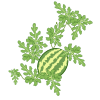
Watermelon (Citrullus lanatus) is an iconic summer fruit and one of the most refreshing crops a gardener can grow. Technically a type of berry known as a pepo, it belongs to the same family as cucumbers, pumpkins, and squash.
Appearance & Texture
The thick, hard rind — typically striped or solid green — protects the vibrant, juicy flesh inside. Most commonly, the flesh is a deep ruby red, though heirloom varieties can produce stunning shades of sunset yellow or bright orange. The first bite delivers a unique granular snap followed by a flood of sweet, lightly floral juice.
Varieties
Watermelons range from large, seeded heirlooms to compact 'icebox' or 'bush' types ideal for smaller gardens. Seedless varieties are popular for ease of eating. Choosing the right variety for your growing season length is key — short-season gardeners should select varieties that mature in 70–80 days.
Nutritional Value
Comprised of roughly 92% water, watermelons are an outstanding source of hydration. They also contain lycopene, vitamin C, and vitamin A, making them as nutritious as they are delicious. The rind and seeds are also edible and nutrient-rich.
How To Grow
Sowing
Watermelons need a long, warm growing season of at least 80–100 frost-free days. Sow seeds indoors in small pots or peat pots 3–4 weeks before the last expected frost, at a depth of around 2.5 cm. Maintain a soil temperature of at least 22°C for reliable germination. Seeds can also be sown directly outdoors once the soil has warmed to at least 18–21°C and all frost risk has passed.
Soil & Planting
Watermelons thrive in sandy, well-drained loam enriched with plenty of well-rotted compost or manure. Aim for a slightly acidic pH of 6.0–6.8. Planting in raised mounds or hills improves drainage and helps warm the soil. Space plants generously — at least 100 cm between plants and up to 200 cm between rows — as the vines spread extensively. Compact 'bush' or 'icebox' varieties are better suited to small spaces.
Sunlight
Provide a minimum of 8–10 hours of direct sunlight per day. The more sun watermelons receive, the sweeter the fruit.
Watering
- Early growth: Keep soil consistently moist but never waterlogged. Drip irrigation or soaker hoses are ideal to avoid wetting foliage and reducing the risk of fungal disease.
- Fruit development: Maintain approximately 25–50 mm of water per week.
- Pre-harvest: Reduce watering significantly about 1–2 weeks before harvest to concentrate sugars in the fruit and improve flavour.
Feeding
Apply a balanced fertiliser at planting. Once flowering begins, switch to a lower-nitrogen, higher-potassium feed to encourage fruit development rather than excessive leafy growth.
Pollination
Watermelons produce separate male and female flowers on the same plant. Bees and other pollinators are essential. If pollinator activity is low, hand-pollinate by transferring pollen from a male flower to a female flower (identified by the small embryonic fruit at its base) using a soft brush.
Harvesting
When to Harvest
Watermelons do not continue to ripen after cutting, so timing is critical. Look for the following signs of ripeness before harvesting:
Visual Cues
- Field spot: The patch of skin where the fruit rests on the ground should turn from white or pale green to a creamy yellow or buttery gold colour.
- Tendril: The small curly tendril closest to the fruit's attachment point should be completely brown and dried. If still green, the fruit is not yet ripe.
- Rind finish: As the fruit ripens, the skin shifts from a bright, shiny green to a dull, matte appearance.
The Thump Test
Tap the melon firmly with your knuckles:
- Ripe: A deep, hollow 'thud' — like a drum.
- Unripe: A higher-pitched 'ping' suggests the flesh is still firm and undeveloped.
- Overripe: A dull, flat sound may indicate the flesh is becoming mealy.
How to Harvest
Never pull or yank a watermelon from the vine — this can damage the plant or bruise the fruit. Instead:
- Use a sharp knife or clean garden shears.
- Cut the stem 2–5 cm from the fruit.
- Handle the melon carefully, supporting it from underneath.
Storage
Whole watermelons can be stored at room temperature for 1–2 weeks. Once cut, wrap tightly and refrigerate, consuming within 3–5 days for best flavour.
Common Problems
Common Pests
Aphids
Small sap-sucking insects that cluster on young shoots and the underside of leaves. They weaken plants and can transmit viral diseases. Blast off with water or apply an insecticidal soap spray. Encourage natural predators such as ladybirds and lacewings.
Cucumber Beetle
Both striped and spotted cucumber beetles attack watermelons, damaging foliage and transmitting bacterial wilt. Use row covers on young plants, remove by hand, or apply appropriate organic controls. Remove covers once flowering begins to allow pollination.
Spider Mites
Tiny mites thrive in hot, dry conditions, creating fine webbing on leaves. Increase humidity around plants and use miticide or insecticidal soap if infestations are severe.
Common Diseases
Powdery Mildew
A fungal disease producing white, powdery patches on foliage, typically appearing in humid or crowded conditions. Improve air circulation, avoid overhead watering, and apply a suitable fungicide if needed.
Fusarium Wilt
A soil-borne fungal disease causing sudden wilting and yellowing. There is no cure — remove and destroy affected plants. Rotate crops and choose resistant varieties where available.
Anthracnose
Dark, sunken lesions on fruit and foliage caused by a fungal pathogen. Maintain good air circulation, avoid wetting foliage, and practise strict crop rotation.
Physiological Issues
Blossom End Rot
A dark, sunken patch at the blossom end of fruit caused by calcium deficiency, often linked to irregular watering. Maintain consistent soil moisture and ensure adequate calcium in the soil.
Poor Fruit Set
Often caused by insufficient pollinator activity. Avoid using pesticides during flowering and consider hand-pollination to improve fruit set.