How to Plan a Vegetable Garden in 2026: Step-by-Step

Master every stage of the growing season with VegPlotter — the all-in-one planner and organizer that transforms your design into a perfectly timed, stress-free garden.

No download required. Free version allows you to plan unlimited garden layouts and up to 20 plantings each year.

How to Plan Your 2026 Vegetable Garden: A 5-Step Guide

A logical approach to designing a productive and enjoyable garden this season:

  1. Assess your garden: Evaluate your space, noting sunlight patterns (6–8 hours is ideal), soil quality, and existing features like beds, fences, trees and sheds.
  2. Measure your garden: Take accurate (or approximate) measurements of your plot and existing structures to help create a scale foundation for your plan.
  3. Design your new layout: Map out your ideal beds, paths and structures ensuring you have enough space for access while maximizing your growing area on paper or a digital planner.
  4. Decide what you want to grow and enjoy: Choose crops you actually enjoy eating and that are suited to your local 2026 climate and hardiness zone. Get help finding out what you can grow in your local climate.
  5. Automate your planting schedule: Use digital tools to calculate precise sowing, planting, and harvesting dates based on your local frost data.

Step 1: How to Assess Your Garden for a Vegetable Plot

Before you pick up a spade or open a planner, you need to understand the unique characteristics of your space. A successful vegetable garden starts with a realistic assessment of three key factors:

1. Tracking Sunlight Patterns

Most vegetables require 6 to 8 hours of direct sunlight to thrive. Observe your garden throughout a full day to identify where shadows fall from buildings, trees, or sheds. Remember that shadows are much longer in the winter and early spring than they are in mid-summer.

2. Soil Quality and Drainage

Healthy plants start with healthy soil. Check for low-lying areas that collect standing water after rain, as "wet feet" can cause root rot in most vegetables. If your soil is heavy clay or very sandy, you may need to plan for raised beds or significant organic amendments.

3. Working with Existing Features

Take note of permanent structures like fences, trees, and sheds. These can provide useful windbreaks or vertical growing supports, but they can also compete with your vegetables for water and light. Mapping these first ensures your new layout integrates perfectly with your yard.

Pro Tip: Don't forget to locate your nearest water source. Lugging heavy watering cans across a large garden is a common mistake for new planners!
Visualize Your Space

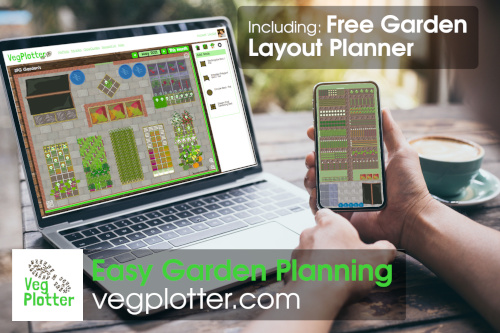
It’s hard to visualize all the possiblilities in your garden, allotment or growing space. Use VegPlotter to mark out existing features and then tryout any number of layouts for free.

Start Designing for Free

Step 2: How to Measure Your Garden for a Useful Plan

A useful plan is based on suitably accurate data. You don't need surveyor-level precision, but knowing the dimensions of your plot prevents the frustration of finding out your new raised beds don't fit where you planned.

Choosing Your Method: Exact vs. Approximate

For a high-precision plan, a 30-meter (100ft) tape measure is the best tool. If you’re in a rush, even "pacing out" your plot—where one large step roughly equals one meter—is enough to create a functional foundation for your 2026 layout.

Measuring from Fixed Points

Start by measuring the perimeter (the "outline") of your garden. Then, locate "fixed points" that won't move—like the corner of your house, a fence post, or a shed. Measuring the distance between these points allows you to anchor your digital plan to the real world.

The Long-term Benefit of Scale

By establishing these measurements now, you create a permanent "base map". Once this is in your digital planner, you’ll never have to measure your garden again. You can simply drag and drop new ideas onto your scale layout as your garden evolves year after year.

Accuracy Made Easy

VegPlotter handles the math for you. Whether you input exact centimeters or approximate paces, our software ensures your digital beds match your real-world space.

Create Your Scale Plan

Step 3: How to Design Your New Garden Layout

This is the creative phase where your assessment and measurements come together. Designing a layout is about more than just where the plants go; it is about creating a space that is functional, accessible, and productive.

Prioritize Access and Paths

One of the most common mistakes is making beds too wide. Ensure your vegetable beds are no more than 1.2 meters (4ft) wide so you can reach the center from either side without stepping on the soil. Keep your main paths wide enough for a wheelbarrow—usually around 60–90cm.

Strategic Placement of Structures

Position heavy or permanent items like sheds, greenhouses, or large compost bins first. In a 2026 garden plan, you should also consider vertical space. Use north-facing fences or walls for climbing plants like beans or cucumbers so they don't shade out smaller crops.

Digital vs. Paper: The Iteration Advantage

On paper, every change requires an eraser. Digitally, you can "sketch" a layout, duplicate it, and try a completely different configuration in seconds. This allows you to compare a traditional row layout against an intensive block-style design to see which yields more for your specific space.

Iterate Without Effort

Don't settle for your first idea. Use VegPlotter to duplicate your layout and test different bed shapes and path alignments until you find the perfect fit.

Start Designing

Step 4: How to Decide What to Grow in Your Garden

With your layout designed, it is time to choose your crops. While it is tempting to grow everything you see in a seed catalog, a successful 2026 harvest depends on what you enjoy eating and, most importantly, what your climate allows.

Grow What You Enjoy

It sounds obvious, but many gardeners grow crops they rarely use. Focus your space on vegetables that are significantly better when home-grown (like tomatoes and sweetcorn) or items that are expensive to buy at the store.

Automated Climate Planning

One of the best features of VegPlotter is that its garden planning tools automatically adjust to your local climate. By knowing your location, the software calculates your specific growing window so you don't have to.

If you are planning on paper we recommend using a frost date and growing zone calculator to find your exact last spring frost date, first autumn frost date, and growing zone.

Succession Sowing for a Constant Harvest

Instead of planting everything at once, consider "Succession Sowing." Planting a few lettuce seeds every two weeks ensures a steady supply of greens throughout the season, rather than a single massive harvest that goes to waste.

Know What Grows

Not sure if a crop will thrive? VegPlotter automatically adjusts to your local climate, identifying what to grow based on your location so you don't waste time.

Find My Local Crops

Step 5: Mapping Out Your Planting Schedule

Now that you know what you want to grow, the next challenge is knowing when to get those seeds in the ground. A common mistake is planting everything on the first warm day of spring, only to have half your crops fail because the soil was too cold or the season wasn't long enough.

Your Monthly Garden To-Do List

VegPlotter takes the guesswork out of timing by generating a personalized Planting Calendar. Tailored to your local climage data, the software creates a month-by-month schedule showing exactly when to sow seeds indoors, when to transplant them outside, and when to expect your first harvest.

Visualizing the Growing Season

By seeing your entire 2026 season laid out visually, you can easily spot gaps in your garden. If you see a quiet period in July, that is your cue to plan a second crop of carrots or beets to keep your soil productive and your kitchen stocked.

Pro Tip: Check your VegPlotter Jobs list at the start of every month. It’s like having a professional head gardener whispering in your ear, telling you exactly what needs your attention today.

Automated Scheduling

Never miss a planting date again. VegPlotter transforms your crop list into a dynamic timeline tailored to your local climate.

See How It Works

Vegplotter can help you get organised! The easiest way to plan your garden

We want you to triumph and deliver your most organised and productive vegetable garden!

No more forgetting what you wanted to plant, when or where. You can design your garden in minutes, using our Vegetable Garden Planner with its inituitive drag and drop interface.

Then, plan out your planting calendar as far into the future as you want.


What people have said...

"Fantastic! I’m thrilled. You’ve done truly excellent work and made a tool that has made gardening loads easier."

VC Smith

"I just discovered your website over the weekend to plan my garden! It was very user friendly and helpful!!"

S Watkins

"Thanks so much for that great app (saving lots of paper!). We are using it to plan all our garden this year and so far it's been quite a success."

Anonymous


It's as simple as...

icon showing a roll of twine for measuring your garden or allotment

Measure out your plot

Using some twine or counting strides will quickly give you rough measurements of your plot and beds

shed outline icon from vegplotter

Add beds, paths and structures

Use the simple drag and drop interface to add your plot

plant icon outlines from vegplotter

Plan your planting year

Plan your garden/allotment month by month adding plants as they go in or plan months/years ahead

graphic showing checklist of planting jobs

Check your plans

Use your smartphone to check/update your monthly plans from your allotment or garden

Simple drag and drop interface

Easy for everyone to use! All can have a garden planned in minutes.

Extensive Features...

Unique Month by Month approach

With our month by month approach you can plan all aspects of your vegetable garden as far in to the future as you need...

from when to sow your seed, to when to put up your plant supports or cloches.

Companion Planting

Our Garden Planner lets you know what plants go well together.

Select a plant on your plan and a list of good companions for it appears in the menu.

Crop Rotation Conflicts

Avoid plant pests and deseases.

The planner will warn you if your are planning to put similar plants in the same spot.

Journal Your Progress

Track and record the progress of your garden plan by adding notes and photos to items on your garden plan.

Never forget planting instructions: Take a picture of your the seed packets and upload the the planting row in your garden plan.

Works with the latest web browsers...

Icons of all the popular browsers that our Vegetable Garden Planner supports

...On desktop, laptop, tablet and mobile

Icons for desktop laptop tablet and mobile showing that our vegetable garden planner works on each