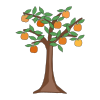
Persimmons are a distinctive and rewarding fruit tree, celebrated for their sweet, honey-like flavour and vibrant orange fruit. Belonging to the genus Diospyros — meaning "divine fruit" — persimmons are among the oldest cultivated fruits, with a long history in traditional cuisine and medicine across many cultures.
Varieties
Two species dominate cultivation:
- Asian Persimmon (Diospyros kaki): The most widely grown species, producing large, sweet fruit in astringent (e.g., Hachiya) and non-astringent (e.g., Fuyu) forms. Astringent types must be fully ripe before eating, developing a soft, jelly-like flesh. Non-astringent types can be eaten firm.
- American Persimmon (Diospyros virginiana): A hardier species with smaller, intensely sweet fruit. More tolerant of cold climates and often used in breeding programmes for hardiness.
Nutritional Value
Persimmons are rich in vitamin A, vitamin C, dietary fibre, and antioxidants including flavonoids and carotenoids. Regular consumption may support immune function, digestive health, and cardiovascular wellbeing.
Culinary Uses
Persimmons are versatile in the kitchen — enjoyed fresh, dried, baked into cakes and puddings, or incorporated into salads and savoury dishes. Dried persimmons are a traditional delicacy in many cultures and make an excellent long-lasting snack.
How To Grow
Persimmon trees are long-lived, relatively low-maintenance fruit trees that reward patience with generous harvests of beautiful autumn fruit.
Planting
Choose a sheltered site with full sun and well-drained, loamy soil with a pH of 6.0–7.5. Persimmons dislike waterlogged conditions, which can cause root rot. Plant grafted trees or well-rooted whips in late winter or early spring while the tree is still dormant.
Allow 5–8 metres between standard trees to accommodate their spreading canopy. For dwarf or semi-dwarf rootstocks, 3–5 metres may suffice.
Planting steps:
- Dig a hole twice as wide and slightly deeper than the root ball.
- Loosen the roots gently before placing in the hole.
- Ensure the graft union (if present) sits above the soil surface.
- Backfill, firm gently, and water thoroughly.
- Apply a 5–8 cm mulch layer around the base, keeping it clear of the trunk.
Watering
Water regularly during the first two growing seasons to establish the root system. Once established, persimmons are moderately drought-tolerant, but consistent moisture during fruit development reduces fruit drop and improves quality.
Feeding
Apply a balanced general-purpose fertiliser in early spring as growth resumes. Avoid excessive nitrogen, which promotes leafy growth at the expense of fruit. Top-dress with compost annually to maintain soil health.
Pruning
Minimal pruning is required. In late winter (while dormant), remove dead, damaged, or crossing branches, and aim to maintain an open canopy structure to improve light penetration and air circulation. Avoid heavy pruning of mature trees.
Pollination
Many modern cultivars, including most Fuyu types, are self-fertile and will produce fruit without a pollinator. Some varieties, particularly certain American types, produce better crops with a male tree or a compatible pollinator nearby. Check the requirements of your chosen variety before planting.
Frost Considerations
Asian persimmons are generally hardy to around -15°C once established. American persimmons are significantly hardier. Young trees may need protection from late spring frosts, as emerging shoots and blossom can be damaged by unexpected freezes.
Harvesting
Persimmons ripen in autumn and are typically ready to harvest from mid-autumn through to early winter, depending on the variety and local conditions.
When to Harvest
- Astringent varieties (e.g., Hachiya): Harvest only when fully coloured and very soft with a jelly-like texture. Unripe astringent persimmons contain high tannin levels and are unpleasantly bitter and mouth-puckering.
- Non-astringent varieties (e.g., Fuyu): Harvest when fully coloured but still firm. These can be eaten immediately or left to soften slightly for a sweeter flavour.
Signs of Ripeness
- Skin colour is a rich, deep orange to red-orange
- Astringent types feel soft or almost squishy; the skin may appear slightly translucent
- Non-astringent types feel firm but give slightly under gentle pressure
- Ripe fruit often detaches easily from the branch with minimal effort
How to Harvest
Use clean, sharp pruning shears or scissors to cut the stem 2–3 cm above the fruit, leaving the green calyx (leafy cap) attached to extend shelf life. Handle fruit gently to avoid bruising. Collect into a shallow, lined tray or basket.
Post-Harvest Storage
- Astringent varieties: Ripen at room temperature, then refrigerate for up to 3 days once fully soft, or freeze for longer storage.
- Non-astringent varieties: Store in a cool, dry place for up to one week, or refrigerate to extend shelf life.
- To accelerate ripening of astringent persimmons, place them in a paper bag with a ripe apple or banana — the ethylene gas released speeds up the process.
Fallen Fruit
Fruit that has dropped naturally should be inspected immediately. Use undamaged fallen fruit promptly for cooking, baking, or freezing, as it deteriorates quickly.
Common Problems
Persimmons are among the more trouble-free fruit trees, but a few pests, diseases, and cultural problems are worth monitoring.
Common Pests
- Scale insects: Small, waxy insects that attach to bark and stems, sucking sap and causing yellowing leaves and reduced vigour. Treat with horticultural oil or neem oil during the dormant season.
- Mealybugs: Fluffy white colonies found in leaf axils and on stems. Remove manually or treat with insecticidal soap.
- Aphids: Can colonise new growth in spring. Encourage natural predators such as ladybirds and lacewings, or treat with a dilute soap spray.
- Birds and wildlife: Ripe persimmons attract birds, squirrels, and other animals. Protect the crop with netting if losses are significant.
Common Diseases
- Crown and root rot (Phytophthora spp.): Caused by waterlogged conditions. Prevent by planting in well-drained soil and avoiding overwatering. There is no cure once established — prevention is key.
- Leaf spot (fungal): Brown or black spots on leaves, particularly in warm, humid conditions. Improve airflow through pruning and avoid overhead watering. Remove and dispose of affected leaves.
- Anthracnose: Can cause fruit spotting and dieback in humid climates. Prune to open up the canopy and apply copper-based fungicide if needed.
Cultural Problems
- Fruit drop: Heavy premature fruit drop is often caused by water stress, irregular irrigation, or nutrient imbalance. Maintain consistent moisture during fruit development and avoid excessive nitrogen.
- Failure to ripen: In cooler growing areas, fruit may fail to ripen fully before autumn frosts arrive. Choose early-ripening varieties suited to your season length.
- Biennial bearing: Some trees produce heavily one year and lightly the next. Thinning fruit in high-crop years can encourage more consistent annual yields.