2026 Spring Gardening: A Masterclass in Pest and Disease Management
As spring 2026 approaches, gardeners are shifting toward Purposeful Planting—viewing the backyard not just as a display, but as a mini-ecosystem. Successfully managing spring pests requires an integrated approach that balances biological, physical, and organic remedies.
<span id="1. Aphids (The "Sap-Sucking" Vectors)" />
1. Aphids (The "Sap-Sucking" Vectors)
- Crops Affected: Lettuce, Peas, Broad Beans, Spinach, and Fruit trees (Apple, Plum).
- The Technical Impact: Aphids use piercing-sucking mouthparts to drain phloem sap. This causes leaf curling and the secretion of honeydew, which facilitates the growth of Sooty Mold.
- The Remedy: * Blast Treatment: Use a high-pressure water spray to mechanically dislodge colonies.
- Organic Control: Apply Pure Castile Soap (1 tbsp per 1 liter of water). The soap breaks down the insect's waxy cuticle, leading to dehydration.
- Predatory Attraction: Plant Alyssum or Dill to attract Hoverflies, whose larvae are voracious aphid hunters.
2. Slugs and Snails (Nocturnal Gastropods)
- Crops Affected: Cabbage, Kale, Cucumber seedlings, and ripening Strawberries.
- The Technical Impact: Slugs move on a single muscular "foot" and thrive in high humidity. They can consume several times their weight in foliage nightly.
- The Remedy: * Cultural: Switch to drip irrigation to keep the soil surface dry, as slugs struggle to cross dry, abrasive terrain.
- Barriers: Use Diatomaceous Earth (DE) or crushed eggshells. On a microscopic level, DE is sharp and desiccates the slug's mucous membrane.
- Beer Traps: Place shallow dishes of fermented liquid; the yeast attracts them, and they drown in the basin.
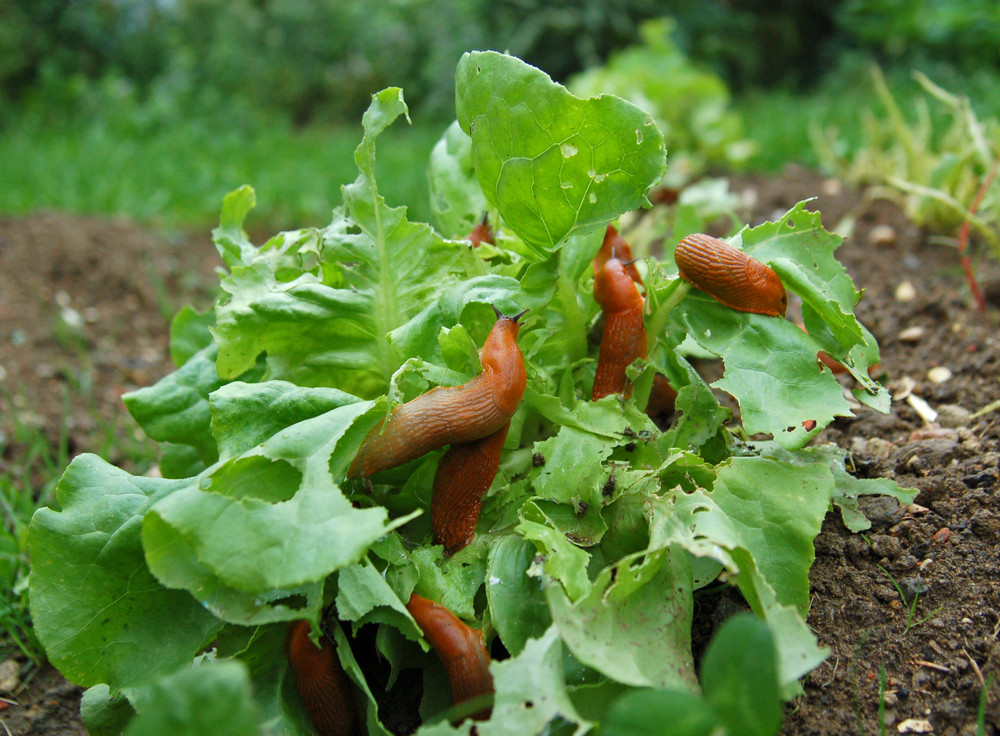
Slug invasion of lettuce leaves
3. Late Blight (Phytophthora infestans)
- Crops Affected: Tomatoes, Potatoes, and Eggplant.
- The Technical Impact: Not a true fungus but an oomycete (water mold). It spreads via airborne sporangia that require leaf wetness to germinate.
- The Remedy: * Airflow Management: Space plants 24 inches apart. This reduces the "humidity pocket" around the leaves.
- Pruning: Remove "sucker" branches near the ground to prevent soil-splashing spores from reaching the foliage.
- Bio-Fungicides: Use Copper-based sprays as a preventative measure before heavy rain periods.
4. Powdery Mildew (Surface Fungi)
- Crops Affected: Zucchini, Pumpkins, Squash, Grapes, and Gooseberries.
- The Technical Impact: Unlike most fungi, it thrives in high humidity without liquid water. It sends haustoria (root-like structures) into cells to steal nutrients.
- The Remedy: * The 1:9 Milk Protocol: Spray a solution of 1 part milk to 9 parts water. The protein (lactoferrin) reacts with sunlight to create a natural antifungal environment.
- Potassium Bicarbonate: A spray of this alters the leaf pH, making it inhospitable for fungal spores.
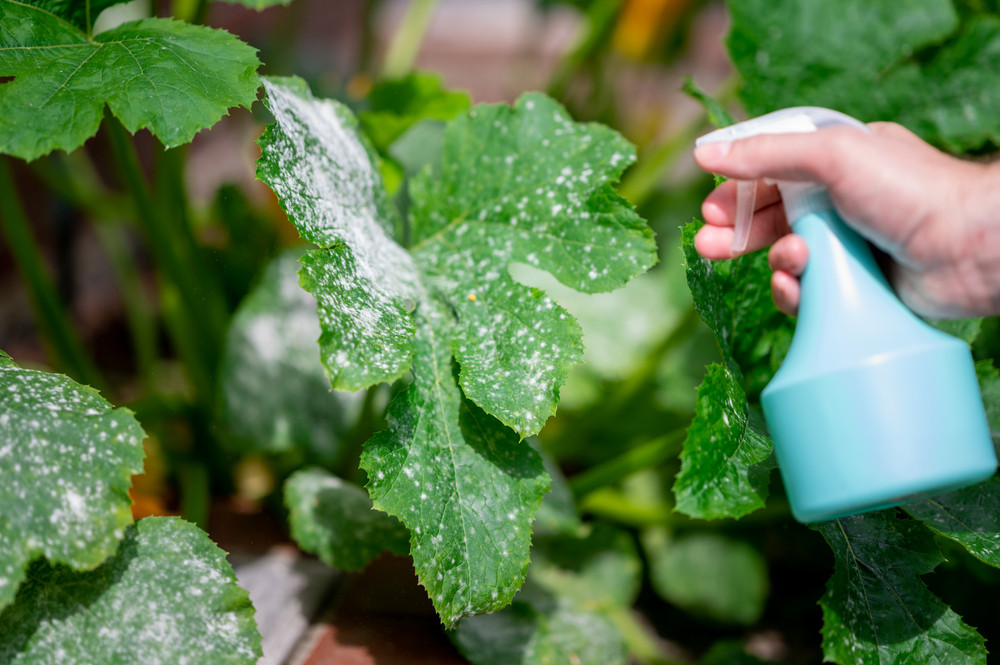
Treating powdery mildew on a zucchini/courgette plant
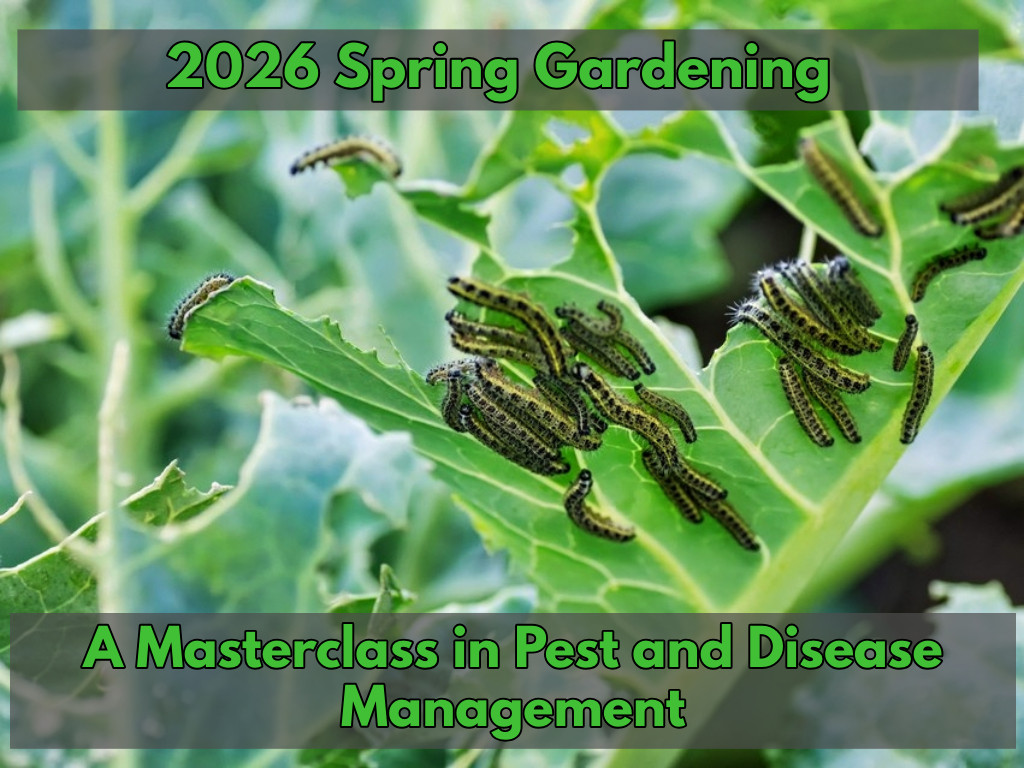
5. Cabbage White Caterpillars (Brassica Specialists)
- Crops Affected: Broccoli, Cauliflower, Kale, and Brussels Sprouts.
- The Technical Impact: The larvae of the Pieris butterfly are camouflaged specialists that defoliate brassicas, leaving only the leaf veins (skeletonizing).
- The Remedy: * Physical Barriers: Install fine mesh netting (agfabric) immediately after planting. If the butterfly cannot land, it cannot deposit eggs.
- Biological Agent: Use Bacillus thuringiensis (Bt). This bacterium produces a protein that is lethal specifically to caterpillars upon ingestion but safe for other wildlife.
6. Fire Blight (Erwinia amylovora)
- Crops Affected: Apples, Pears, and Quince.
- The Technical Impact: A systemic bacterial disease that enters through blossoms. It causes the vascular system to collapse, making branches look "scorched."
- The Remedy: * Sterile Pruning: Cut 12 inches (30 cm) below the visible infection line.
- Sanitization: You must disinfect shears with 70% isopropyl alcohol between every single cut to prevent bacterial transfer.
7. Vine Weevil (Root and Foliage Pest)
- Crops Affected: Blueberries, Strawberries, and container-grown Raspberries.
- The Technical Impact: Adults notch the leaves (cosmetic), but the C-shaped larvae consume the roots, causing the plant to wilt and die suddenly.
- The Remedy: Beneficial Nematodes: Apply Steinernema kraussei* to the soil in spring. These microscopic worms hunt and parasitize the larvae.
- Night Scouting: Use a flashlight at night to hand-pick flightless adult beetles from the foliage.
8. Box Tree Moth (Cydalima perspectalis)
- Crops Affected: Boxwood (Buxus) shrubs and hedges.
- The Technical Impact: Larvae create white webbing and can strip a mature hedge bare in days.
- The Remedy: * Pheromone Traps: Use lures to catch males and monitor the breeding cycle.
- Manual Removal: If the infestation is small, hand-picking caterpillars is the most immediate solution.
9. Jumping Worms (Amynthas spp.)
- Crops Affected: All shallow-rooted vegetables (Onions, Carrots, Garlic).
- The Technical Impact: These invasive worms consume the soil's organic "O-horizon" rapidly, leaving behind nutrient-depleted, coffee-ground-textured soil.
- The Remedy: * The Mustard Test: Mix 1/3 cup of ground mustard with 2 gallons of water. Pour on the soil to irritate worms, forcing them to the surface for manual disposal.
- Soil Bio-Security: Avoid sharing unverified compost or nursery pots from infested areas.
10. Voles (Girdling Rodents)
- Crops Affected: Apple trees (bark), Beets, and Garlic.
- The Technical Impact: Voles chew the bark around the base of trees (girdling), cutting off the flow of nutrients from the roots to the leaves.
- The Remedy: * Hardware Cloth: Wrap the base of young trees in 1/4-inch metal mesh, buried 6 inches deep to prevent tunneling.
- Mulch Zones: Keep a 3-inch "no-mulch" ring around tree trunks to remove the protective cover voles need to hide from predators.
Quick Reference Remedy Table
| Challenge | Primary Action | Pro-Tip for 2026 |
|---|---|---|
| Aphids | Castile Soap Spray | Mix with Neem Oil for extra protection. |
| Blight | Copper Fungicide | Plant resistant cultivars like 'Mountain Magic'. |
| Slugs | Iron Phosphate Pellets | Use "Pet-Safe" varieties only. |
| Caterpillars | Bt (Bacillus thuringiensis) | Apply in the evening to avoid UV degradation. |
| Mildew | Milk/Water (1:9) | Works best in full sunlight. |