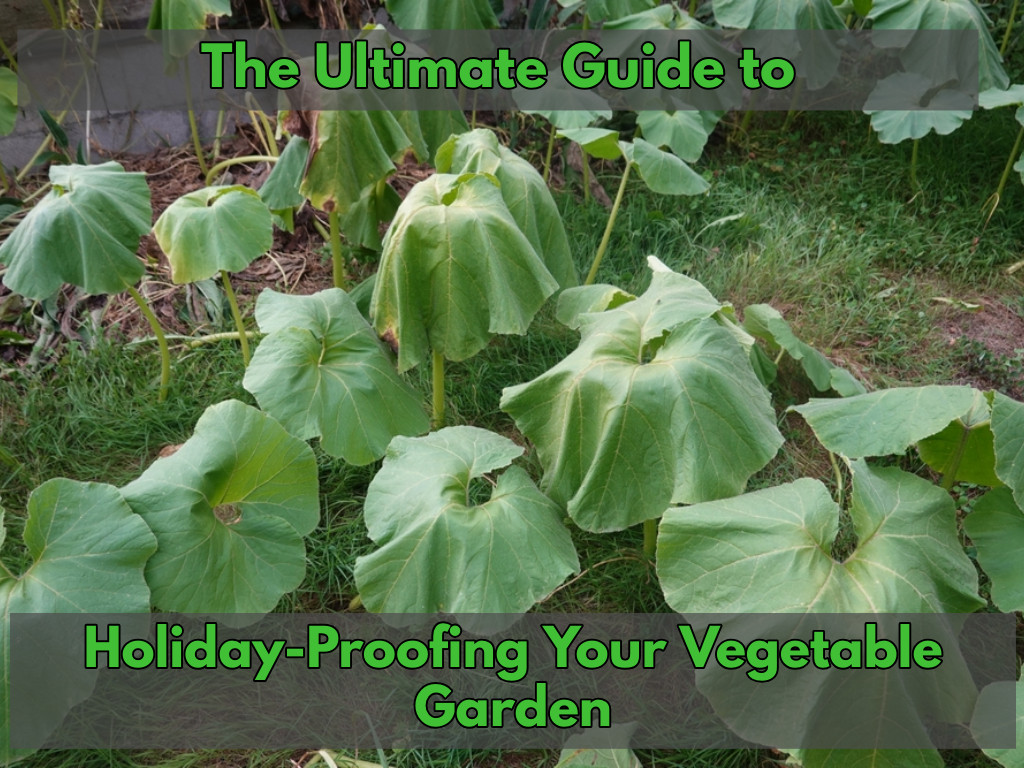
The Ultimate Guide to Holiday-Proofing Your Vegetable Garden
Going on holiday shouldn't mean returning to a graveyard of withered tomato vines, split fruits, and bolted lettuce. For dedicated growers, "summer holiday anxiety" is incredibly real—the lingering fear that a single week of high temperatures or a lack of water will completely undo months of meticulous sowing, pricking out, and nurturing.
However, a garden's vulnerability isn't a fixed rule; it is a design and preparation puzzle. With a bit of strategic engineering, soil science, and preventative "garden-proofing," you can build a resilient, self-sustaining ecosystem.
Here is an in-depth, expert guide to safeguarding your vegetable plot, automating its survival, and choosing the right crops and layouts so you can travel with absolute peace of mind.
5 In-Depth Strategies to Holiday-Proof Your Garden
1. Deep Hydration Engineering and Soil Insulation
The most critical threat to a vegetable garden during a vacation is rapid soil dehydration. Many gardeners make the mistake of giving their plants a heavy surface watering the night before they leave. This is counterproductive; shallow watering keeps roots near the surface where the soil dries out fastest.
- The Deep Soak: Two days before departure, begin a process of slow, deep hydration. Run your watering systems at a low pressure for a prolonged period (1 to 2 hours). This encourages the water to migrate deep into the subsoil layers. It coaxes plant roots downward, accessing moisture reserves that do not evaporate under midday sun.
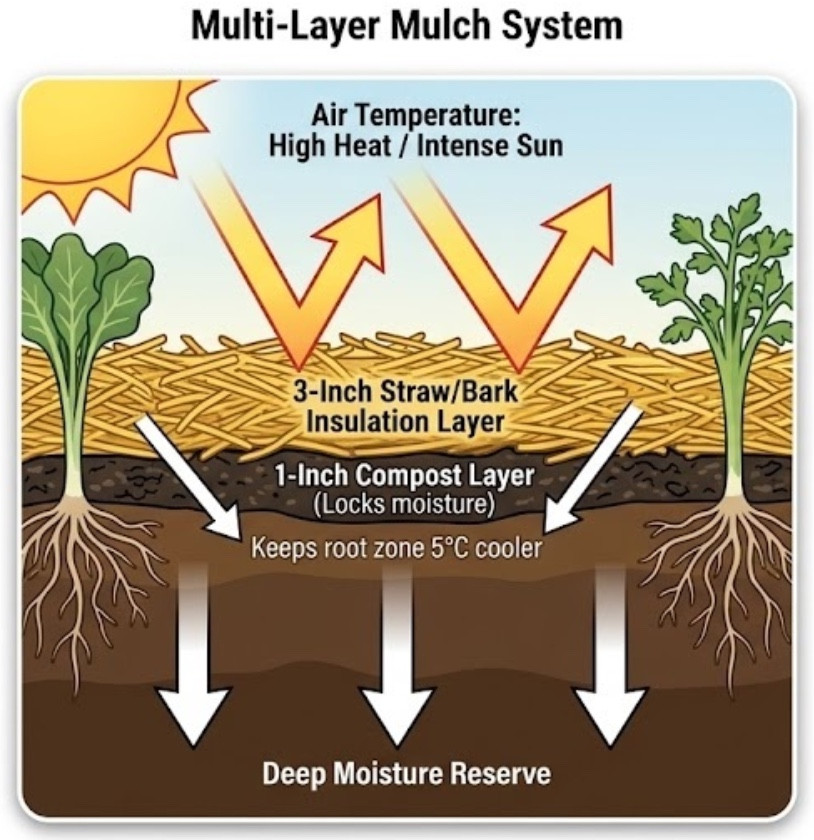
- The Multi-Layer Mulch System: Immediately following your final deep soak, apply a dual-layer organic mulch.
- Layer 1: Apply a 1-inch layer of fine compost or leaf mould to nourish soil microbes and retain immediate moisture.
- Layer 2: Layer 3 inches of clean straw, shredded bark, or wood chips on top.
This thick barrier acts as an insulating blanket, reducing soil water evaporation by up to 70%. It prevents the soil crusting over, suppresses weed germination, and keeps the root zones up to $5^\circ\text{C}$ cooler during peak heatwaves.
2. Micro-Irrigation Zoning and Automation
If you are traveling for more than four days, manual prep work simply won't cut it. Relying on neighbors can be hit-or-miss. The most reliable solution is a tailored micro-irrigation system managed by a multi-zone battery-operated tap timer.
- Drip Emitters vs. Soaker Hoses: For larger plots, split your system. Use soaker hoses (porous pipes that sweat water along their length) for densely planted, intensive beds of root vegetables or leafy greens. Use button drip emitters (which deliver precise hourly quantities like 2 or 4 litres per hour) directly at the base of heavy feeders like tomatoes, pumpkins, and brassicas. This target-specific approach ensures no water is wasted on empty pathways.
- The Evaporation-Safe Schedule: Program your timer to initiate watering cycles in the early morning, ideally between 4:00 AM and 6:00 AM. Watering at this time allows moisture to soak fully into the soil before the sun causes evaporation, and gives plant foliage time to dry before evening, preventing the humid conditions that invite fungal diseases like powdery mildew or blight.
3. Plant Hormonal Reset: Pre-Trip Harvesting and Pruning
One of the hardest psychological hurdles for a gardener is harvesting food before it reaches peak aesthetic maturity. However, leaving near-ripe fruit on the vine is a recipe for a stalled garden.
From a botanical perspective, an annual vegetable plant’s sole biological imperative is to produce viable seeds. If a zucchini, cucumber, or runner bean grows to a massive, overripe size while you're away, the plant receives a hormonal signal that its lifecycle is complete. It will stop producing new flowers and divert all remaining energy into hardening those oversized seeds.
- The Aggressive Strip: Pick every vegetable that is even remotely close to maturity. Harvest underripe tomatoes (they will ripen on your kitchen counter), tiny summer squash, and young green beans.
- Sacrificial Pruning: If you are traveling for more than a week, actively pinch out the growing tips of indeterminate tomatoes and remove newly forming flower clusters on peppers and eggplants. This temporarily halts the fruiting cycle, redirecting the plant's vital sugars and water into maintaining its core root system and existing foliage structure rather than trying to develop new fruit during a period of potential environmental stress.
4. Zero-Tolerance Weed Eradication
Weeds are not merely an aesthetic nuisance; they are hyper-aggressive, deeply-rooted moisture thieves. Because weeds have evolved to survive in unforgiving wild conditions, they are fundamentally hardier and more efficient at drawing resources than pampered, highly hybridized vegetable crops.
In a direct competition for limited water and soil nitrogen during a dry spell, the weeds will win every time.
Dedicate the afternoon before your flight to a zero-tolerance weeding session. Use a Dutch hoe for surface weeds in open rows, but hand-pull deep-rooted perennial weeds (like dandelions or bindweed) near the base of your crops to ensure the roots are completely extracted. Removing these hidden competitors ensures that every drop of water delivered by your automated timers goes exclusively toward keeping your food crops alive.
5. Microclimate Modification via Shade and Windbreaks
Intense solar radiation and dry, whipping winds can induce permanent wilting point in a plant faster than dry soil alone. When a plant respires water through its leaves faster than its roots can pull it up, the cell walls collapse. If a major heatwave or high wind warning is forecast while you are away, you must alter the physical microclimate of your plot.
- Temporary Shade Tunnels: Install low hoops or stakes over sensitive beds (such as salads, spinach, chard, or young brassicas) and drape them with a 30% to 50% UV-stabilized agricultural shade cloth. Secure the cloth firmly with landscape pins. This simple fabric canopy can lower ambient air temperatures underneath by several degrees, significantly cutting down on transpiration rates and preventing leafy greens from "bolting" (flowering and turning unpalatably bitter).
- Wind Deflection: For tall, top-heavy crops like staked tomatoes or climbing beans, add extra support strings or cross-bracing to your frames. A sudden summer storm can easily snap heavily laden structures if they are left free to sway.
Low-Maintenance, "Vacation-Friendly" Vegetables
If you are a frequent traveler, design your growing season around self-sufficient crops. These varieties feature internal mechanisms—such as deep root architectures, waxy leaves, or underground storage capabilities—that allow them to withstand periods of total human neglect.
| Vegetable Group | Varieties | Why They Are Vacation-Friendly |
|---|---|---|
| Alliums | Garlic, Onions, Leeks, Shallots | These crops feature tight, waxy, upright leaves that minimize water loss via transpiration. Once established in early summer, their water needs drop significantly, and they are ignored by most common pests. |
| Tubers & Root Crops | Maincrop Potatoes, Carrots, Parsnips | Potatoes store vast reserves of moisture and energy safely underground within their tubers. Carrots and parsnips send down incredibly deep taproots that can draw water from moisture reservoirs deep in the subsoil. |
| Cucurbit Canopy | Winter Squash, Pumpkins, Butternuts | While they require initial water to grow, their sprawling, giant leaves create a massive "living mulch." They completely blanket the ground, shading out weeds and trapping humidity underneath their own vine network. |
| Legumes | Bush Beans, Broad Beans | Unlike climbing runner beans which require constant picking to stay productive, bush varieties tend to produce their crops in a single, predictable window. They are physically sturdy and highly resilient to brief droughts. |
Strategic Plot Layout for Natural Microclimates
The physical arrangement of your garden beds shouldn't just look pretty; it can be arranged to serve as a natural defense system against extreme weather. By carefully choosing what sits next to what, you create a self-protecting micro-ecosystem.
1. The Understory Effect (Companion Shading)
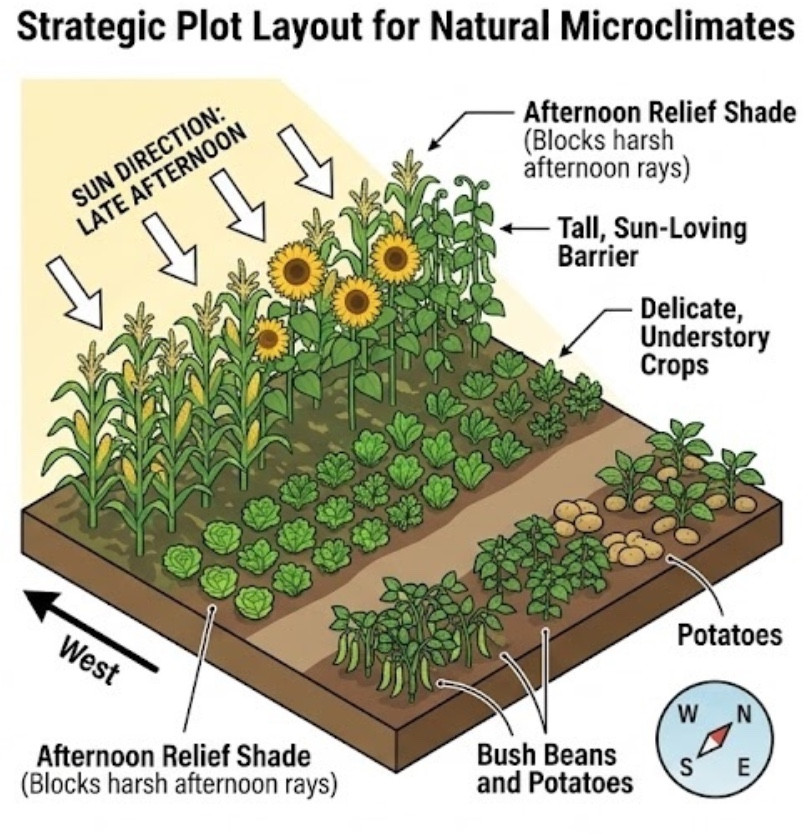
Utilize a vertical hierarchy when planting your beds. Position tall, sun-loving, structural crops—such as sweetcorn, sunflowers, or climbing pole beans—on the western or southwestern perimeter of your garden plot.
As the sun moves across the sky into the punishing, ultra-dry late afternoon, these towering plants act as a living shield, casting long, cool, dappled shadows over delicate understory crops like loose-leaf lettuce, rocket, or coriander planted directly behind them.
2. Intensive Block Planting (The Living Canopy)
Ditch the traditional Victorian-style garden layout of single, wide rows separated by vast expanses of bare, exposed soil pathways. Instead, transition to intensive block planting or French Intensive methods (often used in raised beds).
Space your plants using a staggered, hexagonal grid pattern so that when the crops reach roughly two-thirds of their mature size, their leaves gently touch. This creates an unbroken, green canopy over the entire bed. This living shield completely shades the soil surface, cooling the earth, preventing weed seeds from getting the light they need to germinate, and trapping rising soil humidity beneath the leaves.
3. Hydro-Zoning (Grouping by Water Consumption)
Never interplant drought-tolerant Mediterranean herbs directly alongside thirsty, succulent crops. Implement hydro-zoning across your plot layout:
- Zone A (The High-Demand Oasis): Group your heavy water consumers together—such as cucumbers, celery, outdoor melons, and tomatoes. This allows you to run a highly concentrated, dedicated drip irrigation line directly to this bed without wasting resources.
- Zone B (The Resilient Zone): Group your drought-hardy, deep-rooted, or perennial crops together—such as rosemary, thyme, sage, asparagus, and established globe artichokes. This section can comfortably bypass the irrigation cycle entirely while you are away, preventing root rot from over-watering.
By combining deep soil preparation, automated micro-irrigation, and a layout designed to work with nature rather than against it, you can confidently turn the key in your front door, knowing your garden is fully equipped to take care of itself.