How to Protect Your Vegetable Plot from Whiplash Weather
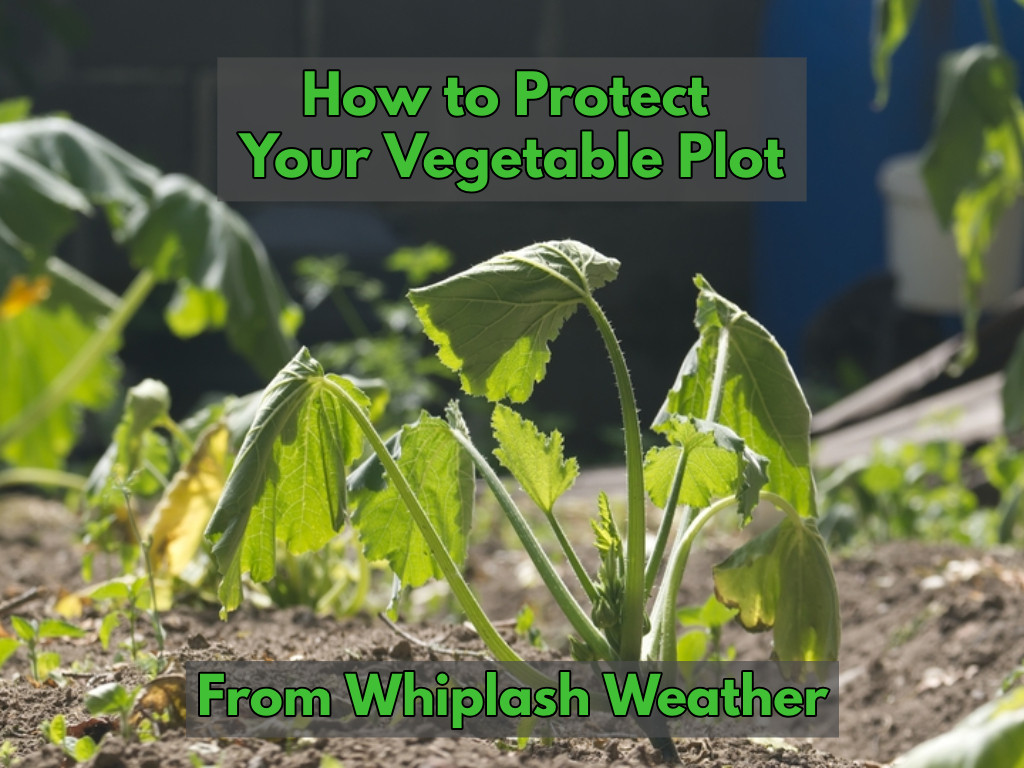
One week, your lettuce is baking in a 35 Centigrade / 95 Fahrenheit heatwave; the next, a torrential summer thunderstorm threatens to wash away your topsoil and snap your tomato vines.
Welcome to the era of whiplash weather. For the modern vegetable gardener, extreme weather shifts are no longer a rare exception—they are the new normal. Whether you are managing an allotment in the UK or a backyard plot in the USA, a reactive approach won't cut it anymore. Survival requires a climate-resilient garden plan.
Here is exactly how to protect your plot from the two destructive extremes of summer weather, and how digital planning can help you outsmart the elements.
Part 1: Managing the Melt (Survival Strategies for Heatwaves)
When a heatwave hits, your garden goes into survival mode. The immediate threats are obvious: rapid soil evaporation, baked root zones, and scorched leaves. But the hidden danger is physiological stress—which causes tomatoes to split, blossoms to drop, and leafy greens to bolt overnight.
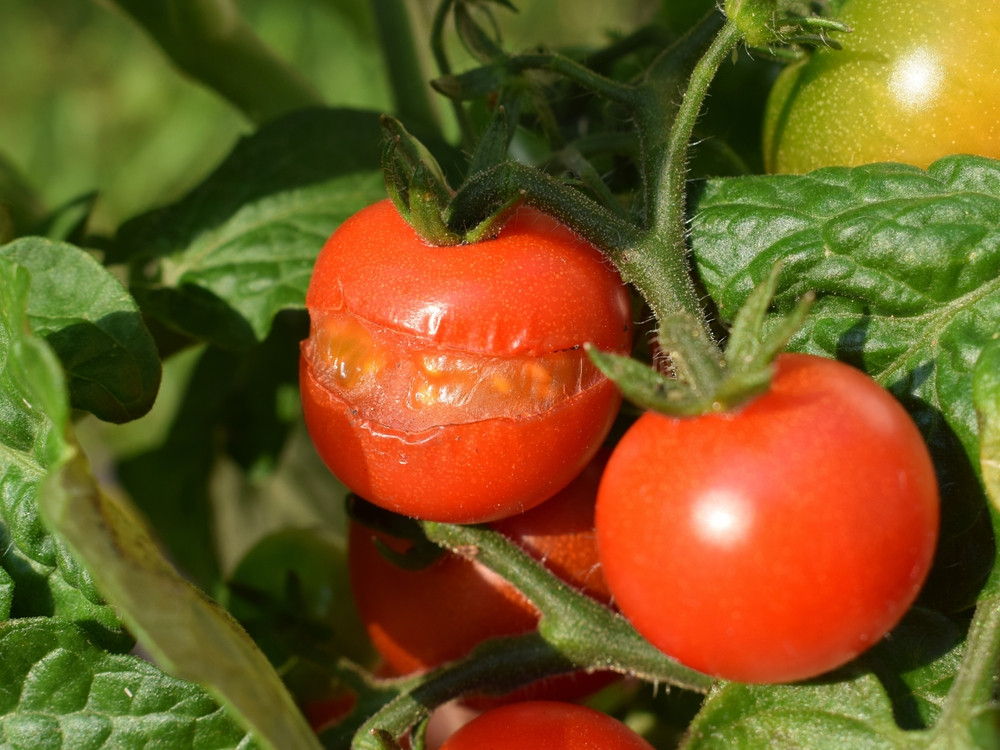
Cracked tomato close up. Cracking or splitting tomatoes can occur when a period of drought is followed by heavy watering or rains
Immediate Action Checklist:
- The 5cm (2-inch) Jacket (Mulch Everything): Exposed soil can heat up to over 40C/104F, killing beneficial microbes and cooking shallow roots. Lay down a 5cm layer of organic mulch (straw, grass clippings, or shredded bark) to keep soil temperatures up to 5C/9C cooler and lock in moisture.
- The Dawn Soak: Water deeply between 5:00 AM and 8:00 AM. Avoid shallow, evening splashes, which encourage fungal diseases and evaporate before reaching the roots. Aim for fewer, deeper waterings that force roots to search downward for moisture.
- Deploy Instant Shade: Vegetables like spinach, lettuce, and brassicas will bolt (go to seed and turn bitter) in extreme heat. Erect temporary frames over these beds using 30% to 40% shade cloth to filter the harsh afternoon sun.
VegPlotter Power Tip: Don't fight the sun—use it. When mapping out your garden next season using the VegPlotter Layout Tool, practice companion planting. Place tall, sun-loving crops like sweetcorn or pole beans on the south/west side of your beds so they cast a natural, moving shadow over your sensitive salad greens during the hottest hours of the day.
Part 2: Weathering the Washout (Preparing for Summer Thunderstorms)
The intense heat of a summer afternoon often breaks into a sudden, violent thunderstorm. These storms pack a triple punch: heavy downpours, damaging wind gusts, and sudden drops in temperature.
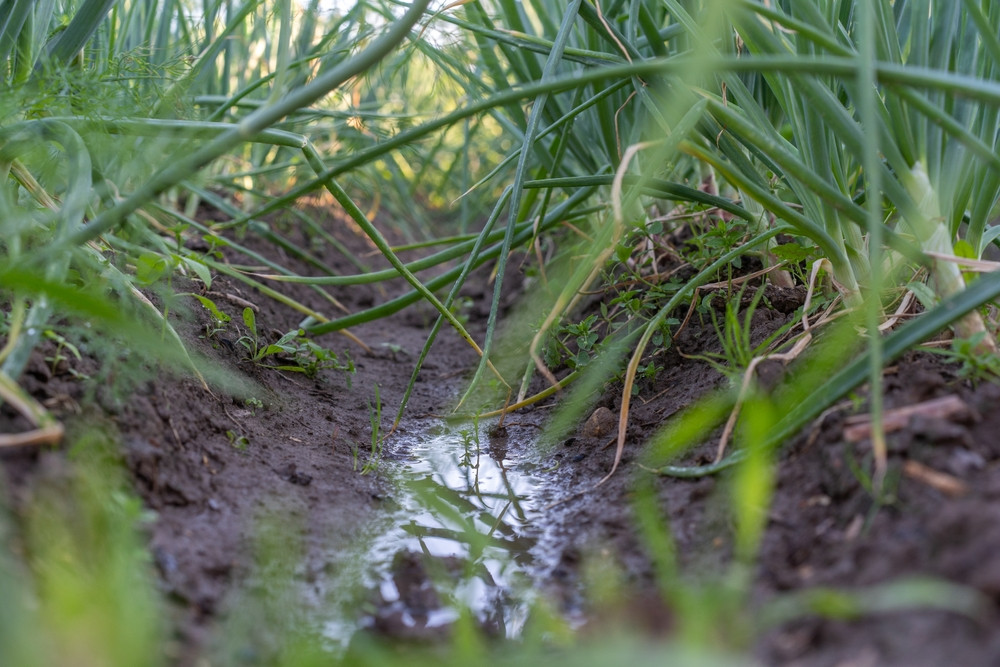
A row of green onions grows in moist soil, partially submerged in a rain-filled furrow
Immediate Action Checklist:
- Stake Before the Storm: Heavy fruiting crops like indeterminate tomatoes, peppers, and aubergines (eggplants) are top-heavy and incredibly vulnerable. Secure them to sturdy bamboo canes, stakes, or cages before the wind gusts hit.
- Create Diversion Furrows: Heavy downpours can cause pooling water, leading to root rot. Use a hoe to clear garden paths and create minor drainage channels to steer pooling water away from your low-lying vegetable beds.
- The Post-Storm Fungal Shield: Rain drops hitting bare earth create "splashback," lifting soil-borne fungal spores onto the lower leaves of your plants (a primary cause of tomato blight). Keeping your beds mulched—even during a storm—acts as a physical buffer against this splashback.
VegPlotter Power Tip: When a storm warning flashes on your phone, you don't want to panic-wonder what needs doing. Keep a customized "Storm Prep" checklist directly in your VegPlotter Task & Job Tracker. With one click, you'll have a prioritized list of which beds need staking and which covers need tying down.
Part 3: The Ultimate Weapon—Microclimate Planning
The secret to a truly weather-proof garden isn't just reacting to the forecast; it’s designing your plot to handle the extremes automatically. Every garden has unique microclimates shaped by fences, walls, sheds, and slopes.
| Garden Feature | Heatwave Impact | Thunderstorm Impact | Smart Planting Fix |
|---|---|---|---|
| South-Facing Brick Wall | Radiates intense heat (Thermal Mass) | Protects from northern winds | Perfect for Mediterranean crops (Peppers/Tomatoes); lethal for Lettuce. |
| Below a Shed or Fence Line | Casts afternoon shade | Creates a windbreak (but watch out for rain-shadows) | Ideal spot for leafy greens that need relief from the sun and protection from wind. |
| Low-Lying Dip in the Plot | Retains moisture longer | Highly prone to waterlogging/flooding | Use raised beds here, or reserve it for thirsty crops like pumpkins and winter squash. |
By digitally mapping out these zones on VegPlotter, you can drag and drop your crops into the exact microclimates where they are most likely to thrive, regardless of what the summer weather throws at you.
Future-Proof Your Plot
Weather extremes are here to stay, but a ruined harvest doesn't have to be. By combining immediate physical protection—like mulching and shading—with long-term digital planning, you can give your vegetable garden the resilience it needs to survive the summer whiplash.
Ready to design a climate-resilient garden? Map out your microclimates, schedule your weather-prep tasks, and keep your plot thriving all year round with VegPlotter.