Master the Pepper Patch: The Ultimate Sowing to Harvest Guide
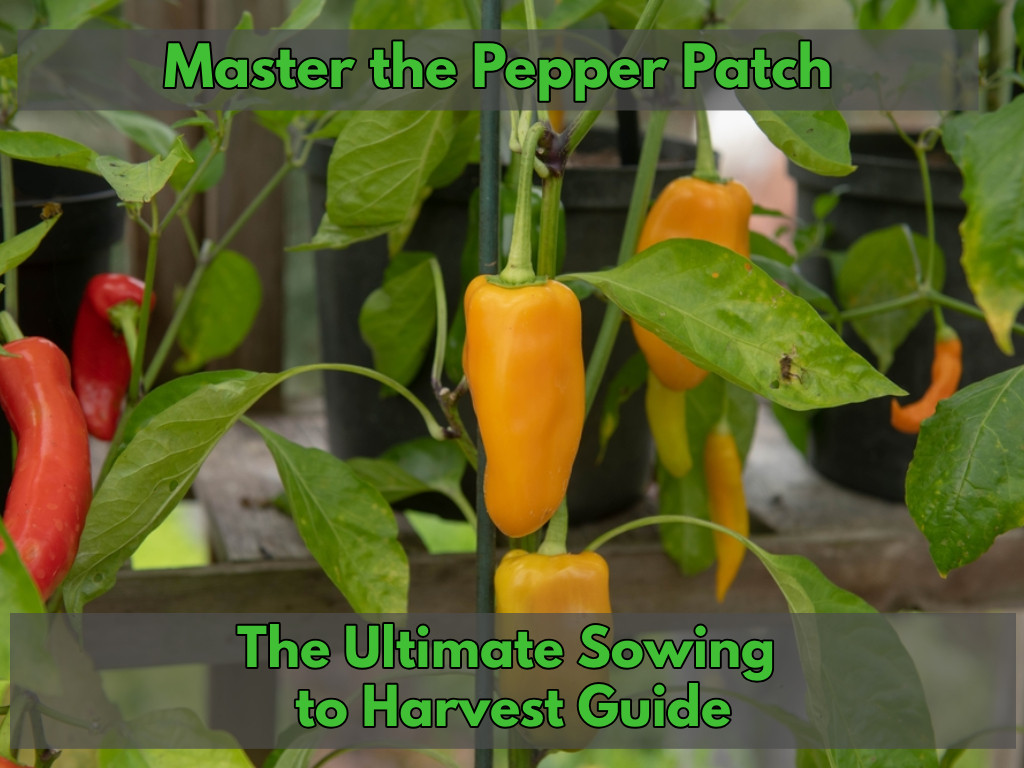
Whether you are craving sweet, crunchy capsicums to roast for summer dishes or fiery chilli peppers to bring heat to curries and chutneys, growing your own peppers is one of the most rewarding gardening projects you can take on. Native to tropical regions, these sun-loving plants require early planning, steady heat, and smart summer management.
When mapping out your beds, pots, or greenhouse layout, using VegPlotter will help you optimise sunny exposures, track your crop rotations, and keep your planting schedules seamlessly organised.
Here is your comprehensive, deep-dive guide to growing sweet and chilli peppers from seed to harvest.
1. Varieties at a Glance: Sweet vs. Chilli
Before you sow, matching the right pepper variety to your available space and microclimate is critical for success.
- Sweet Peppers (Capsicums): Known for their thick, crunchy walls and mild flavour. They start out green and progressively sweeten as they ripen into brilliant red, yellow, or purple shades.
- Chilli Peppers: Typically more compact, tender plants that yield vibrant pods varying from mild heat to extreme spiciness. They thrive best under cover in greenhouses or on very warm, sheltered patios.
Pepper Variety Comparison
| Variety | Type | Heat Level / Flavour | Mature Colour | Growth Habit | Ideal Location | Key Features |
|---|---|---|---|---|---|---|
| 'Gypsy' | Sweet | Very mild, sweet | Deep Red | Bushy, vigorous | Greenhouse / Outdoors | Early-maturing, highly reliable heavy cropper |
| 'Redskin' | Sweet | Juicy, mild | Red | Dwarf / Compact | Patio pots / Balconies | Ideal for small spaces and container growing |
| 'Luteus' | Sweet | Rich, high sugar | Bright Yellow | Upright, tall | Greenhouse / Sunny spot | Vivid fruit colour with excellent raw flavour |
| 'Mavras' | Sweet | Mild, rich depth | Purple / Black | Medium height | Greenhouse / Outdoors | Striking dark fruit that creates stunning salad contrast |
| 'New Carnival' | Sweet | Sweet & varied | Mixed Assortment | Variable | Greenhouse / Outdoors | Diverse colour mix from a single seed pack |
| 'Hero' | Chilli | Hot & spicy | Red | Medium bush | Greenhouse | High disease resistance; continuous producer |
| 'Apache' | Chilli | Medium heat | Bright Red | Compact dwarf | Sunny Patio / Windowsill | Very easy to grow; produces heavy yields on small plants |
2. Germination & Seedling Care: A Warm Start
Peppers require a long, frost-free growing season to yield a full crop. Because they originate in tropical environments, getting an early indoors start provides the thermal heat unit head start they need.
- Sowing Schedule: Sow seeds indoors in seed trays or cell inserts during March (or late February if using a heated propagator).
- Temperature Requirements: Maintain a soil temperature of 21°C–25°C/70°F-77°F for optimal germination.
- Pricking Out & Potting On: Once the seedlings develop their first pair of true leaves (the second set of leaves that look like actual pepper foliage), gently transplant them into individual 7.5cm/3 inch or 9cm/3.5 inch pots filled with quality, free-draining compost.
- Lighting: Keep young plants in a brightly lit location (a south-facing windowsill or under LED grow lights) to prevent leggy, weak stems. Their environmental needs at this stage closely parallel those of tomato plants.
3. Location Strategy & Planting Out
Peppers require maximum sunlight and heat to convert energy into heavy fruit crops.
- Greenhouse Growing: A heated or well-insulated unheated greenhouse offers the warm ambient temperature and shelter peppers love, maximising yield and season length.
- Outdoor Growing: If planting in open ground, wait until early June when night-time temperatures stay consistently above 10°C/50°F and all frost threat has passed. Position plants against a south-facing brick wall, which absorbs sun heat during the day and radiates it back at night.
- Container & Patio Setup: Growing in black pots or growing bags on a sun-drenched patio accelerates root warmth.
- Staking: Stake tall, upright varieties early with bamboo canes and soft garden twine to prevent heavy fruit loads from snapping the main stems.
4. Crop Rotation & Soil Health Strategy
Peppers belong to the Solanaceae (nightshade) and Cucurbitaceae-adjacent management groups when planning soil hygiene.
Crucial Crop Rotation Rule: Never plant peppers in soil where tomatoes, potatoes, aubergines, cucumbers, or marrows grew the previous season.
These plant families are vulnerable to similar soil-borne fungal pathogens—such as Verticillium wilt, Fusarium wilt, and root-knot nematodes. Rotating your beds on a 3- to 4-year cycle prevents pathogen buildup in the soil.
| Rotation Year | Crop Group | Example Crops | Specific Guidance for Peppers |
|---|---|---|---|
| Year 1 | Solanaceae (Nightshades) | Peppers, Tomatoes, Potatoes, Aubergines, Chillies | This is your pepper year! Ensure they are not followed by potatoes. |
| Year 2 | Legumes / Brassicas | Peas, Beans / Cabbages, Kale, Broccoli | Legumes add vital nitrogen back to the soil, supporting strong growth in future years. |
| Year 3 | Roots / Alliums | Carrots, Beetroot, Parsnips / Onions, Leeks, Garlic | Alliums can help break pest cycles; deep roots improve soil structure. |
| Year 4 | Cucurbits / Other | Cucumbers, Courgettes, Marrows / Salads | Clears the soil of any lingering nightshade pathogens before the cycle resets. |
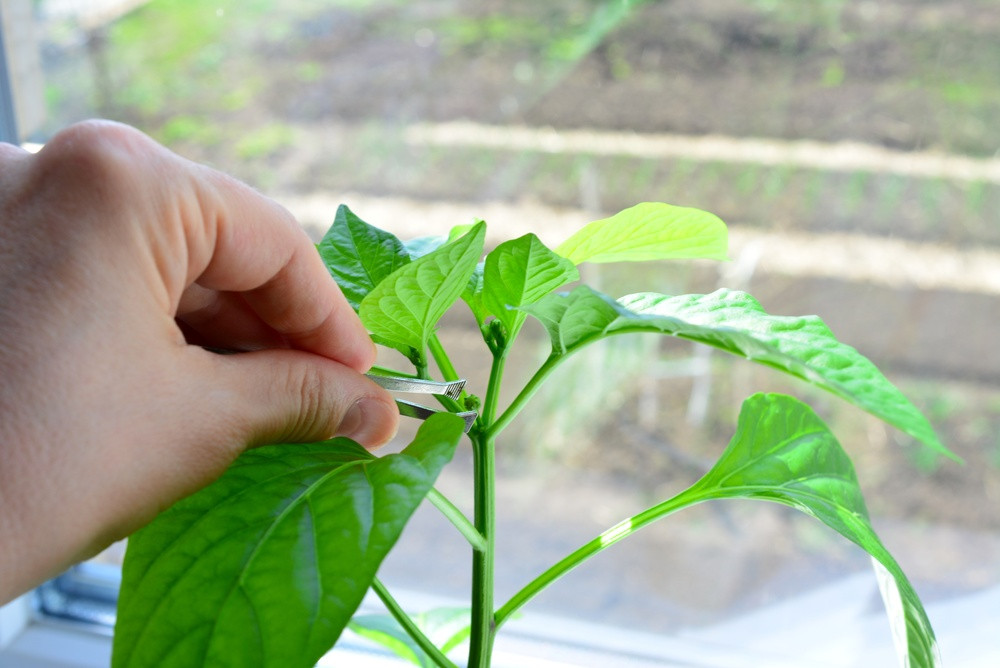
Piinching Out a Young Pepper Plant
5. Summer Pruning, Pollination & Feeding
To transform a slender seedling into a high-yielding, bushy plant, implement these summer cultural practices:
Pinching Out for Sturdy Habit
When sweet pepper plants reach roughly 30 cm (12 in) in height, pinch out the central growing tip. This stops vertical growth temporarily and forces the plant to send out lateral side shoots, creating a sturdy, bushy structure capable of holding dozens of peppers.
Humidity & Fruit Set
In dry, hot greenhouse air, pepper pollen can dry out and fail to fertilise flowers, leading to blossom drop. Mist the foliage daily with water during the flowering window to boost ambient humidity and encourage successful fruit set.
Nutrient Management
- Vegetative Stage: Use a balanced feed high in nitrogen early on to build leaf structure.
- Flowering & Fruiting Stage: Once the first flower buds open, switch to a high-potassium (potash) fertiliser (such as liquid tomato feed) weekly. Potassium fuels flower formation and fruit enlargement.
6. Manipulating Flavour & Harvesting Techniques
Flavour Balancing Via Irrigation
You can actively influence the taste profile of sweet peppers by adjusting water availability in the final weeks before harvest:
- For Concentrated, Sweet & Rich Flavour: Reduce watering frequency starting two weeks before harvest. Mild water stress increases the concentration of sugars and aromatic compounds in the fruit walls.
- For Mild, Crunchy & Juicier Flesh: Maintain regular, deep watering up until one week before harvest.
- Caution: During extreme summer heatwaves, never stress plants to the point of severe wilting.
Harvesting Best Practices
- Clean Cuts: Always harvest using clean secateurs or sharp garden scissors. Never twist or pull fruit by hand; doing so easily tears the stem bark, leaving open wounds that act as infection pathways for Botrytis (grey mould).
- Continuous Yields: For chilli peppers, harvest pods as soon as they reach full size (green or red). Regular picking signals the plant to continuously set new flower buds right up until the autumn frosts.
- Drying Chillies: To preserve your chilli harvest, thread pods by their stems onto cotton string or lay them out on paper in a dry, warm, well-ventilated location (like a sunny windowsill).
7. Troubleshooting: Preventing Blossom-End Rot
If your peppers develop a dark, sunken, leathery patch at the blossom end (the bottom of the fruit), the plant is suffering from blossom-end rot.
- The Cause: A localised calcium deficiency within the developing fruit tissues. However, this is rarely caused by a lack of calcium in the soil; rather, it is caused by erratic, irregular watering. When soil moisture fluctuates wildly, the plant cannot continuously transport calcium via transpiration to the extremities of the fruit.
- The Solution: Keep compost consistently moist like a wrung-out sponge. Never let container pots completely dry out between waterings, and apply organic mulch around outdoor plants to retain soil moisture.
Ready to plan your highest-yielding pepper crop yet? With VegPlotter you can drag, drop, design your beds, and master your crop rotation schedule, give it a go today!