September Groundwork: How to Prepare Your Plot for Fruit Trees and Bushes
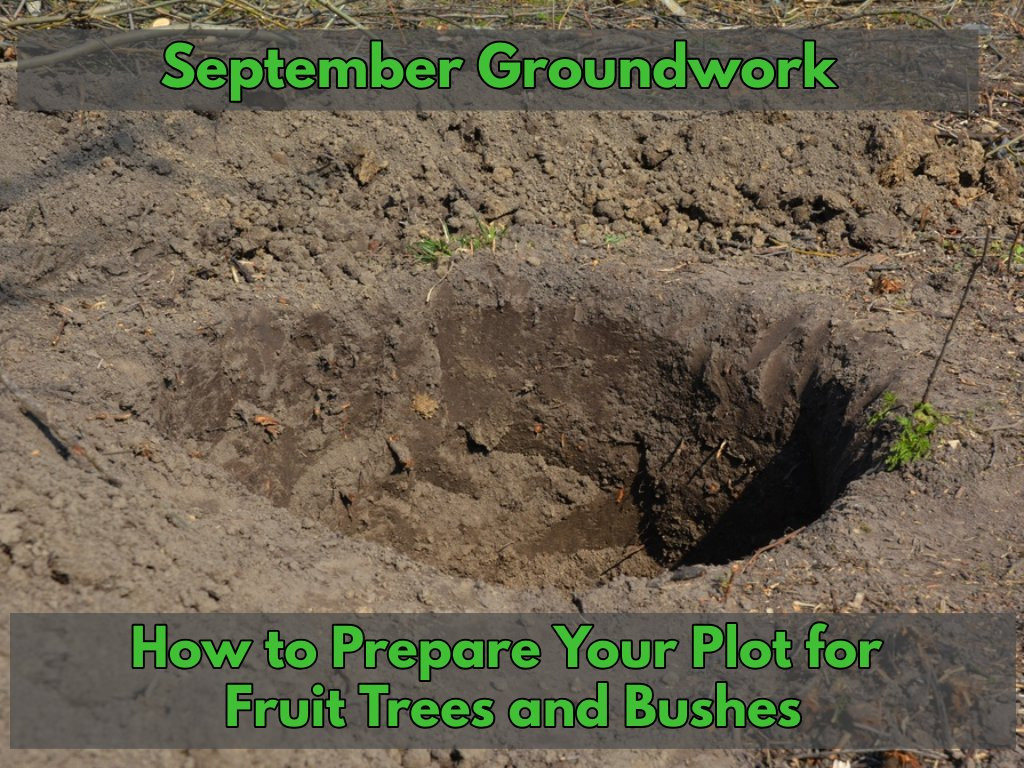
Autumn is prime time for planning where future fruit will live on your plot. Getting your planting sites cleared, dug, and enriched in mid-September gives the soil six to eight weeks to settle before bare-root stock arrives. Here is how to map your space in VegPlotter and prime the earth for maximum yields.
Why Early Autumn Prep Sets You Up for Success
Although bare-root fruit trees and bushes do not go into the ground until late autumn or winter, prepping the soil in mid-September provides three distinct advantages:
- Boosted Soil Life: Microbes and worms are highly active while early autumn soil holds summer warmth. Pre-mixing organic material now gives soil biology weeks to assimilate nutrients into the surrounding earth.
- Natural Bed Settlement: Earth naturally drops and firms up after being turned over. Preparing holes ahead of time prevents newly planted roots from sinking below ground level later on.
- Zero Planting Rush: Pre-digging early means that when your nursery order arrives on a freezing November morning, you can heel them in or plant immediately without struggling against cold, waterlogged ground.
Step 1: Mapping & Spacing Your Orchard in VegPlotter
Before putting a fork in the ground, jump into VegPlotter to sketch your site layout. Mapping mature canopy spans in advance prevents tall top fruit from shading out vegetable beds and ensures bushes have sufficient airflow.
Quick Spacing & Placement Guide
| Crop Type | Common Rootstock / Group | Recommended Separation | Smart Placement Strategy |
|---|---|---|---|
| Standard Top Fruit | M25 (Apple), Pyrus (Pear) | 6.0 m – 8.0 m gap | Place along the northern edge so full-grown canopies never block south sun |
| Semi-Dwarf Trees | MM106 (Apple), Quince A (Pear) | 3.5 m – 4.0 m gap | Ideal for boundary fences or dividing plot sections |
| Dwarf / Patio Trees | M26, M9 (Apple), Quince C (Pear) | 2.5 m – 3.0 m gap | Run parallel to perennial vegetable beds or herb borders |
| Soft Fruit Bushes | Blackcurrants, Gooseberries | 1.2 m – 1.5 m gap | Great in open beds or partially shaded corners |
| Cane Fruits | Raspberries (Summer / Autumn) | 40 cm – 50 cm (1.5 m row spacing) | Set up along post-and-wire supports |
Layout Rules to Remember:
- Keep Shading North: Always position tall trees toward the north or north-west sides of your plot. This ensures lower-growing annual crops to the south receive full sunlight all summer long.
- Harness Warm Wall Microclimates: Train espaliers, cordons, or fan-trained fruits against south- or west-facing masonry walls to trap heat and protect blossoms from late frosts.
Step 2: Preparing the Ground (Avoiding the 'Bathtub' Pitfall)
A frequent error when planting fruit is digging a narrow, deep pit and filling it solely with rich potting compost. This creates a "bathtub effect"—water accumulates in the loose hole, and roots refuse to spread beyond the rich soil pocket into native earth.
Step-by-Step Ground Preparation Protocol:
- Clear a 1-Metre Circular Zone: Strip away grass, perennial weeds, and surface growth across a 1m diameter area for each planned tree or bush to remove root competition.
- Relieve Subsoil Compaction: Turn the topsoil to a depth of 30cm – 40cm. Fork through the exposed subsoil layer at the bottom to break up hard pans and encourage deep root penetration.
- Blend Organic Matter Evenly: Distribute 1–2 buckets of well-rotted garden compost, leaf mould, or decomposed manure over the 1m zone. Thoroughly turn it into the top 20cm – 30cm of native topsoil so the entire area is consistently enriched.
- Protect with Surface Mulch: Top the prepped patch with a 5cm – 7cm layer of woodchips, bark, or straw. Mulch prevents rain erosion, keeps weed seeds from germinating, and encourages earthworm activity throughout autumn.
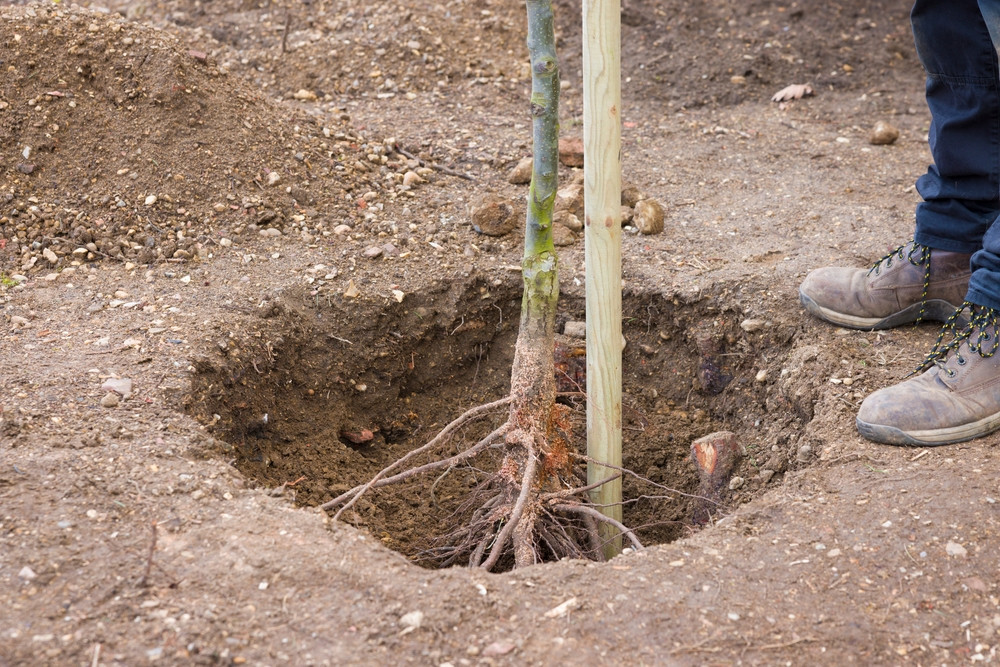
Make sure the stake is in place prior to planting
Step 3: Essential Planting Day Checklist
Keep this reference handy for when your nursery order arrives between November and March:
| Plant Category | Critical Action | Primary Benefit |
|---|---|---|
| Grafted Fruit Trees (Apples, Pears, Plums) |
Keep graft union 5–10 cm above soil line | Prevents top variety from rooting and overriding dwarfing rootstock. |
| Blackcurrant Bushes | Plant 5 cm deeper than nursery mark | Triggers new shoots directly from the base for heavier yields. |
| All Bare-Root Plants | Apply mycorrhizal fungi to damp roots | Builds a fungal network that enhances spring water and nutrient intake. |
| Staked Trees | Drive support stake in before placing roots | Avoids driving stakes through root systems and damaging root balls. |
September Action Plan
- [x] Plot your fruit tree and bush positions on VegPlotter.
- [x] Pre-order bare-root stock from reputable fruit nurseries.
- [x] Mark 1m circular prep zones on your plot and clear all surface vegetation.
- [x] Dig in well-rotted organic matter and apply a protective surface mulch.