The October Broad (Fava) Bean Secret: How to Sow Now for an Epic Early Harvest

If you want a head start on next year’s vegetable garden, October is your golden window. Sowing broad beans (fava beans) in mid-to-late autumn is one of the easiest ways to secure a pod harvest up to a month earlier than spring-sown crops.
Whether you live in a mild climate where seeds can go straight into open ground, or a frost-prone northern region where cloches are essential, autumn-sown fava beans develop strong, overwintered root systems that deliver heavier yields with far less hassle.
Why Sow Broad Beans in Autumn?
Broad beans (Vicia faba) are hardy cool-season crops. Their seeds can germinate in soil temperatures as low as 2°C (36°F). Sowing in October offers three massive advantages over spring planting:
- Beat the Blackfly: Black bean aphids peak in early summer. Autumn-sown crops mature and set pods early, allowing you to harvest before blackfly populations explode.
- Superior Root Systems: Over the winter months, plants focus energy below ground, developing deep taproots that make them far more drought-resistant come spring.
- Better Soil Health: Overwintering crops act as a living green manure, protecting topsoil from winter rain erosion and nutrient leaching.
Regional Strategy: Direct Ground vs. Cloche Protection
Your winter climate determines how much protection your autumn seeds will need:
| Climate Zone | Sowing Method | Timing | Protection Required | Primary Benefit |
|---|---|---|---|---|
| Mild / Coastal (USDA 7–9 / Mild UK) | Direct Outdoor | Mid to Late October | Bare soil or light organic mulch | Natural wind-hardening and hardy top growth |
| Cold / Exposed (USDA 4–6 / Northern & Inland) | Under Cloches / Fleece | Early to Mid October | Cloches, glass barn frames, or fleece hoops | Protects roots from waterlogging and freeze-thaw cycles |
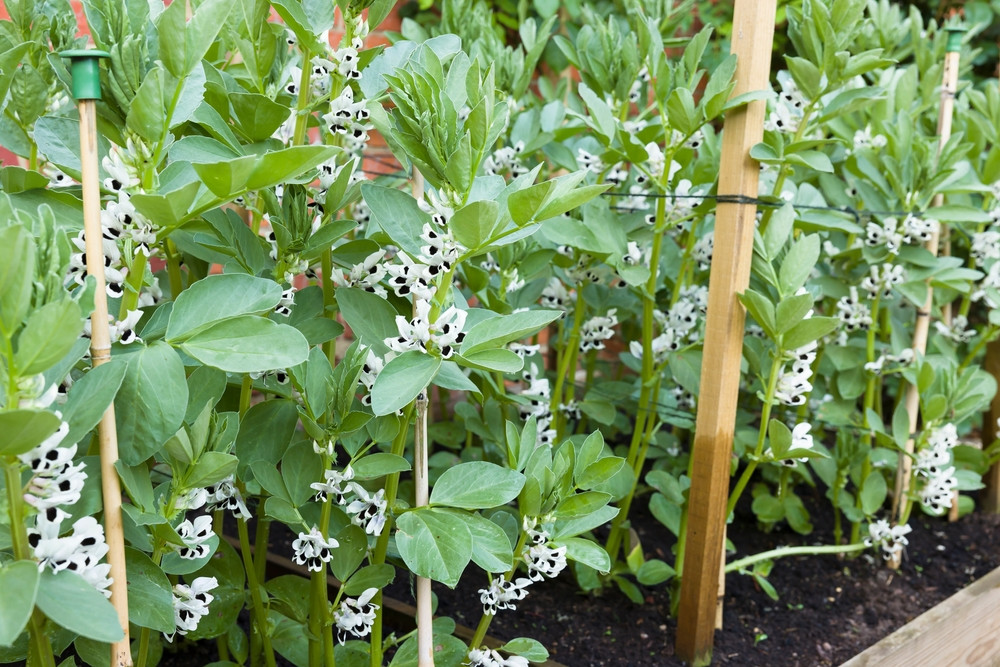
Closeup of broad beans (fava beans) plants growing with flowers
Step-by-Step Autumn Sowing Protocol
1. Choose the Right Cultivar
Not all broad bean varieties can survive a severe frost. Look for time-tested, cold-hardy cultivars:
- 'Aquadulce Claudia': The gold standard for autumn sowing; incredibly frost-tolerant and reliable.
- 'The Sutton': A dwarf variety reaching only 30–45 cm (12–18 inches), making it ideal for low cloches and windy plots.
- 'Superaquadulce': Fast-growing and hardy, excellent for heavy yields.
2. Prepare Well-Drained Soil
Overwintering beans dislike wet feet. Select a sunny spot and avoid adding fresh, rich manure or high-nitrogen fertilizers right before planting—nitrogen encourages soft, sap-heavy foliage that snaps easily in winter frosts. If you have heavy clay soil, sow into raised beds or mix coarse grit into the planting trench to improve drainage.
3. Sow at the Right Depth and Spacing
- Depth: Sow seeds 5–7 cm (2–3 inches) deep.
- Spacing: Plant seeds 20–25 cm (8–10 inches) apart in double rows.
- Row Gap: Leave 45–60 cm (18–24 inches) between pairs of rows to ensure good airflow.
Pro Tip: Always plant a few extra "reserve" seeds at the end of your row. In spring, you can lift these spare seedlings to fill any gaps left by winter losses.
4. Set Up Cloches in Cold Regions
If heavy snow, hard frosts, or waterlogged soil are common in your area, cover your row with rigid plastic cloches, glass cloches, or heavy horticultural fleece supported by wire hoops. Anchor the edges securely against autumn gales, but ensure the ends remain partially vented on mild days to keep air moving and reduce fungal build-up.
5 Essential Tips for Overwintering Success
- Target the Ideal Seedling Height: You want your seedlings to stand about 5–10 cm (2–4 inches) tall before the first hard winter freeze. If they grow taller than 15 cm (6 inches) before deep winter, they become floppy and susceptible to frost burn.
- Plant Seeds on Edge: Place seeds on edge with the black scar (hilum) facing down. This allows the taproot to grow directly downward while preventing water from sitting in the seed cavity and causing rot.
- Protect Against Mice: Rodents love broad bean seeds in late autumn when wild food becomes scarce. Cover fresh sowings with fine wire mesh or start seeds in module trays inside a cold frame before transplanting root plugs outdoors.
- Earth Up Stems in Early Spring: As growth speeds up in early spring, draw 5–7 cm (2–3 inches) of soil up around the base of the stems. This anchors plants against spring winds and encourages extra root branching.
- Pinch Out Tips: When the lowest pod clusters begin to form in spring, pinch out the top 2–3 cm of growing tips. This diverts energy directly into pod production and removes the tender succulent growth that blackfly love.
Sowing broad beans in October is one of the simplest, high-reward tasks you can complete in the autumn garden. With a little winter protection in colder zones, you'll be harvesting sweet, tender pods weeks ahead of everyone else next spring.