Diagnosing Your Vegetable Garden'Root and Tuber Troubles: Common Diseases and Pests
Whether you're an experienced grower or a beginner, nothing is more frustrating than putting months of hard work into your vegetable patch only to find your root vegetables and tubers are diseased or damaged. Diagnosing the problem is the first crucial step to saving your crop and preventing it from happening again.
The following information, based on comprehensive gardening resources, outlines some of the most common disorders affecting bulb, corm, tuber, and root vegetables. To help you research further and find the right solutions for your region, we've included both common UK and, where applicable, different US names in brackets.
Let's dive into the most frequent problems you might encounter:
Common Potato and Tuber Diseases
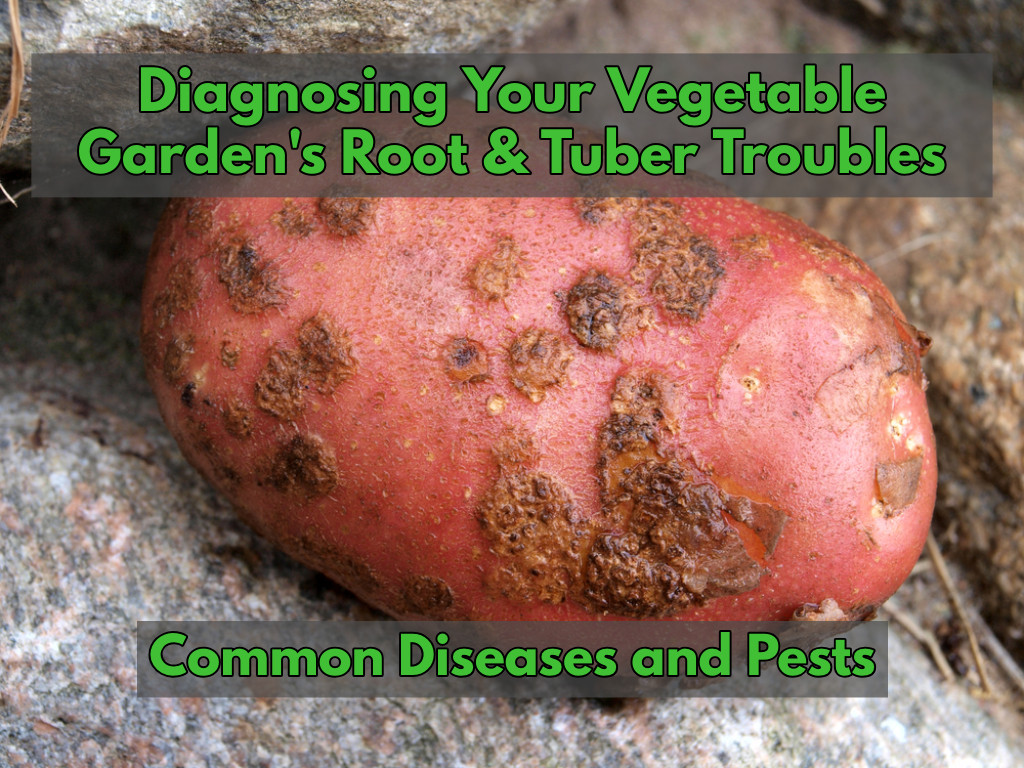
1. Common Scab (also known as Common Scab in the US)
This is one of the most widespread issues for potato growers.
- What to look for: Look out for corky, rough, or raised lesions on the surface of the potato tubers. It doesn't usually affect the inside of the potato, but it makes them look unappetizing and affects their storage life.
- Key Causes: This is caused by a soil-borne bacterium (Streptomyces scabies). It thrives in alkaline soils with high pH.
- How to combat it: For future crops, aim for a slightly more acidic soil (pH 5.0–5.2 is ideal for potatoes). Practice good crop rotation, and avoid adding lime just before planting. Some varieties show resistance.
2. Potato Blight (known as Late Blight in the US)
This is the devastating disease that caused the Irish Potato Famine. It can wipe out your crop almost overnight.
- What to look for: On the leaves, you'll see large, irregular, dark brown or black blotches, often with a subtle green-white fuzzy border in humid conditions. The stems can also be affected. The tubers will develop reddish-brown, firm rots just below the skin, which then spreads inwards.
- Key Causes: Caused by the fungus-like organism Phytophthora infestans. It spreads rapidly in warm, humid weather (often called 'Blight Weather').
- How to combat it: There are 'Blight Resistant' potato varieties available. Keep a close watch on weather forecasts for blight warnings. If you spot it on the leaves, earthing up the soil well around the base can help protect the tubers. If a significant part of the foliage is gone, cut it all off at ground level.
3. Internal Rust Spot (also known as Internal Brown Spot in the US)
This frustrating condition is invisible from the outside but reveals itself when you cut open the potato.
- What to look for: You'll see irregular, reddish-brown, rusty-looking spots or flecks distributed throughout the flesh of the tuber. The potatoes may not store well.
- Key Causes: This is a physiological disorder, not a disease. It's thought to be primarily caused by an imbalance in nutrients, specifically a lack of calcium and boron, or erratic water supply.
- How to combat it: Ensure consistent watering, and try using a fertiliser balanced with trace elements.
4. Potato Powdery Scab (known as Powdery Scab in the US)
Although it looks different to common scab, it's also a big problem.
- What to look for: Powdery scab produces dark, often purple-ish to brown, slightly raised pustules on the skin of the potato. Inside these are spore balls.
- Key Causes: Caused by the soil-borne slime mold Spongospora subterranea. It prefers cooler, wetter conditions than common scab.
- How to combat it: Crop rotation is important, and avoid planting on known-infested land. Again, there are resistant varieties.
Common Onion and Bulb Plant Disorders
1. Onion Fly (known as Onion Maggot in the US)
This common pest can cause significant crop losses in onions, leeks, and garlic.
- What to look for: You will see your young plants yellowing, wilting, and falling over. On lifting the bulbs, you'll find legless white maggots feeding inside, often with a disgusting, foul smell.
- Key Causes: The larvae of the onion fly (Delia antiqua).
- How to combat it: Crop rotation is vital. Use physical barriers like fine horticultural mesh over young plants. Remove and destroy any infested plants immediately.
2. Neck Rot (known as Onion Neck Rot in the US)
This is a serious fungal disease, especially for stored onions.
- What to look for: The neck of the onion softens and a grey, fuzzy mold forms, which can spread into the bulb itself, causing it to rot. Hard, black sclerotia (the fungus's survival structures) may be visible.
- Key Causes: The fungus Botrytis allii. It often enters through physical damage or the neck as the plant matures.
- How to combat it: Handle harvested onions carefully to avoid bruising. Crucially, let the necks dry completely (this is called "curing") before cutting them off and storing the bulbs in a cool, dry, airy place.
3. Stem and Bulb Eelworms (known as Bulb Nematode in the US)
This parasitic nematode is a serious problem for onions, narcissi, and tulips.
- What to look for: Plants are often stunted, with leaves that are distorted, swollen, and twisted. If you cut across an affected bulb, you'll see rings of brown, rotten tissue, giving it the common name 'ring rot'.
- Key Causes: Tiny, microscopic parasitic nematodes (Ditylenchus dipsaci).
- How to combat it: There are no practical chemical treatments for home gardeners. Crop rotation of at least three years is essential. Remove and destroy any infected plants immediately, making sure not to spread soil from the infected area.
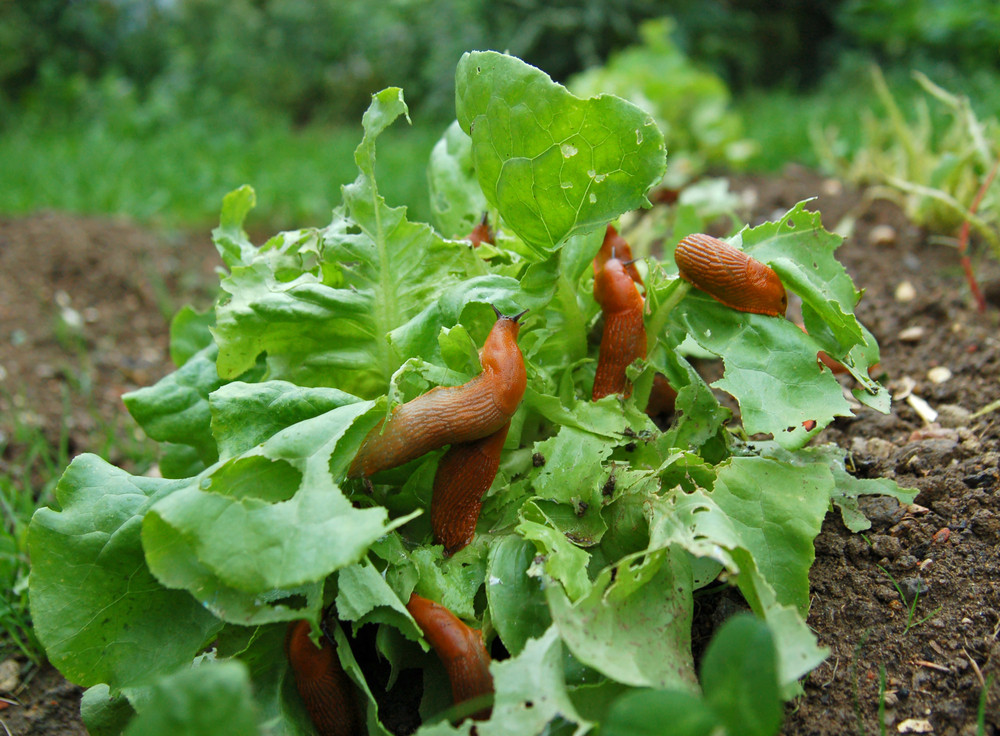
Slug Invasion on the salad garden
Common Root Vegetable Pests and Diseases
1. Slugs
A universal gardener's pest, but especially damaging to root crops like carrots and parsnips.
- What to look for: Irregular holes and tunneled areas eaten into the surface and flesh of the roots. This can lead to secondary rots. You'll also likely see slime trails.
- Key Causes: Several species of slugs and snails.
- How to combat it: Encourage natural predators like hedgehogs and birds. Hand-picking in the evening or using traps (e.g., beer traps) are effective. There are also parasitic nematodes you can buy to water onto the soil.
2. Carrot Fly (also known as Carrot Rust Fly in the US)
This is the carrot equivalent of the onion fly and can be a huge problem.
- What to look for: While the carrot foliage might look fine, on lifting the roots you'll see small, reddish-brown tunneled areas eaten into the root surface and flesh by the fly larvae. The larvae themselves are small and whitish.
- Key Causes: The larvae of the carrot fly (Psila rosae).
- How to combat it: Use fine horticultural fleece to cover your crop from sowing to harvest. Delay sowing carrots until later in the spring (after late May/early June) can help avoid the first generation of flies.
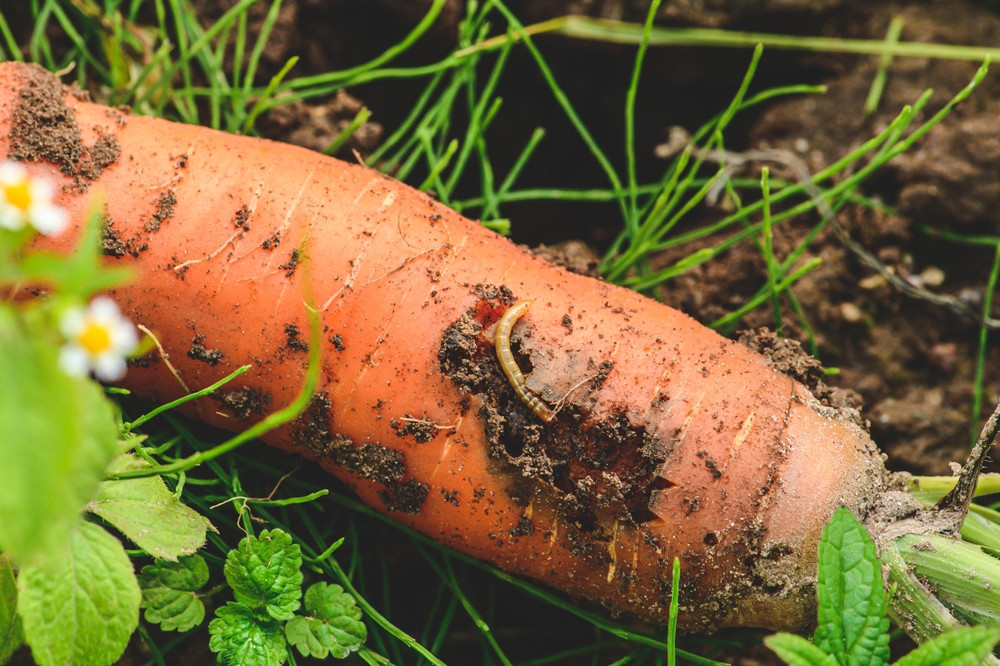
Fresh ripe carrot in the soil with a worm or carrot rust fly eating it among green grass.
3. Cracking (also known as Split Roots/Tubers in the US)
This common issue affects many root vegetables and tubers, including potatoes, carrots, and radishes.
- What to look for: Large, wide, linear cracks and splits developing on the surface of the root or tuber. It's not a disease, but it allows rots and pests to get in more easily.
- Key Causes: A physiological disorder caused by sudden changes in water availability, usually following a period of dryness.
- How to combat it: Maintain a consistent water supply. Water well during dry spells, and use organic matter in the soil to help it retain moisture.
4. Core Rot (often referred to generically as Root Rot in the US)
This generic term can cover several specific fungal diseases.
- What to look for: Look out for darkening and rotting of the central core of the root vegetable, leading to a foul-smelling slime. Affected vegetables like carrots will often collapse.
- Key Causes: Various soil-borne fungi and bacteria (e.g., Erwinia, Fusarium).
- How to combat it: Improve soil drainage, as the rots are worse in waterlogged conditions. Practice good crop rotation and handle roots gently to avoid damage where infection can start.
Remember, the key to successful vegetable gardening is to be a detective! Spot problems early and use this guide to research and find the best organic or traditional remedies. Happy growing!