The 2026 Homegrown Revolution: 10 Genius Hacks for a High-Yield, Low-Cost Garden
In 2026, self-sufficiency isn't just a trend; it's a financial strategy. With the cost of living remaining high and food supply chains becoming more unpredictable, the garden has become the most productive "room" in the house. To truly beat inflation, you need to look past the garden center shelves and find value in what you already own.
Taking matters into your own hands—literally—is the smartest way to ensure food security. By combining traditional wisdom with modern tools, you can turn a tiny patch of dirt or a few recycled containers into a high-output food factory.
Here are 10 budget-friendly strategies to maximize your harvest while keeping costs at zero.
1. Vertical Potato Sacks
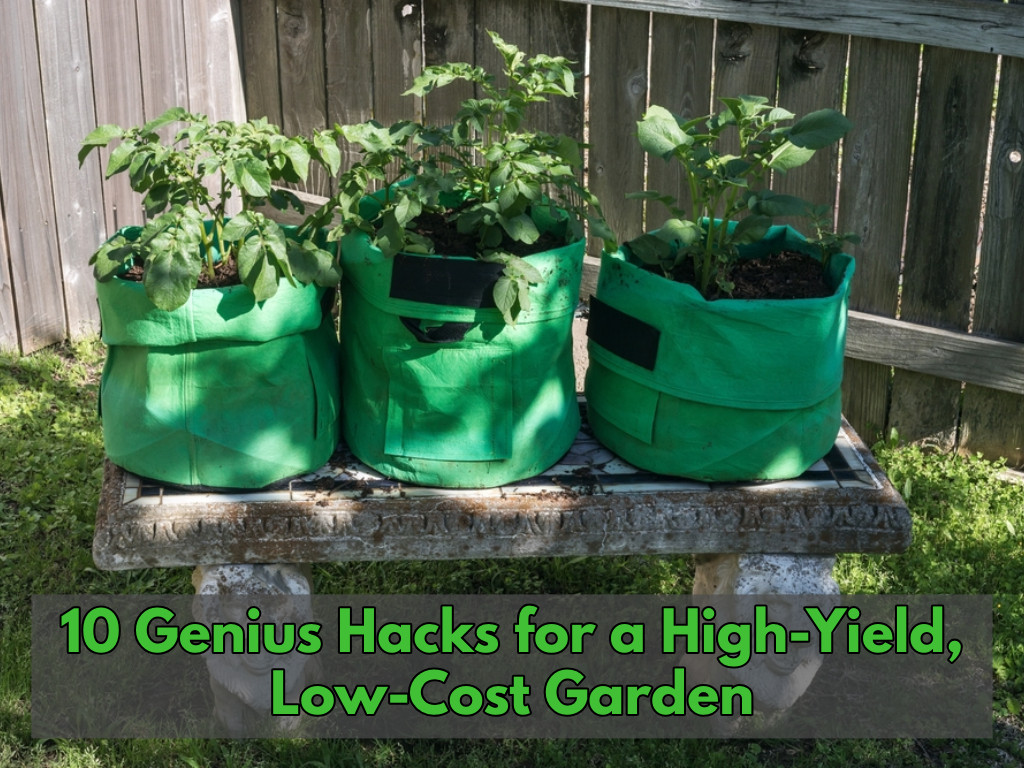
Potatoes are a high-calorie staple. Instead of digging up your yard, use old burlap sacks, "bags for life," or even empty compost bags.
- The Method: Roll the sides of the bag down, add 4 inches of soil, and plant 3 chitted (sprouted) potatoes.
- The "Secret": As green shoots grow, unroll the bag and add more soil (earthing up). This forces the plant to grow a longer stem underground, which means more potatoes in the same vertical space.
2. Upside-Down Bottle Irrigation
Water is a rising utility cost. Standard surface watering often evaporates before reaching the roots.
- The Build: Cut the bottom off a 2L plastic bottle. Poke 5–8 small holes in the cap.
- The Placement: Bury the bottle neck-down 6 inches away from a "hungry" plant like a tomato or squash.
- Why it works: When you fill the bottle, water seeps slowly and directly into the root zone. This reduces water waste by up to 50% and prevents leaf diseases caused by splashing soil.
3. Wooden Lollipop Stick Labels
Plastic garden markers are an unnecessary expense.
- The Hack: Save wooden lollipop sticks or collect small, flat-faced twigs.
- Pro Tip: Use a standard HB pencil to write names. Unlike "permanent" markers which bleach white in summer UV rays, graphite remains legible all season. At the end of the year, simply toss them in the compost.
4. Catching Every Drop of Rainwater
Rainwater isn't just free; it’s better for plants than treated tap water because it lacks chlorine and has a perfect pH.
- The Setup: Place any large, clean container (old bins, buckets, or barrels) under the corners of sheds or greenhouses.
- Safety: Cover the top with a fine mesh or an old stocking to prevent mosquitoes from breeding and to keep debris out.
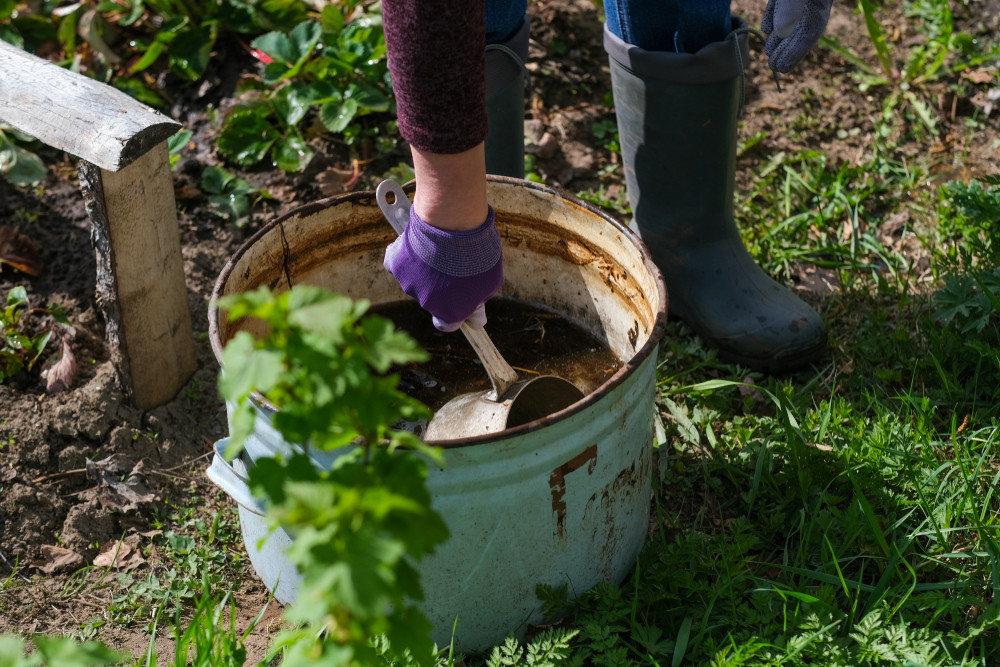
Applying Homemade Liquid Fertilizer
5. Homemade "Liquid Gold" Fertilizer
Commercial fertilizers are expensive and petroleum-based. You can make better versions for free.
- Nettle/Comfrey Tea: Fill a bucket with stinging nettles or comfrey leaves, weigh them down with a brick, and cover with water.
- The "Brew": Let it sit for 2–4 weeks (it will smell!).
- Usage: Dilute the dark liquid 1:10 with water. It provides a massive hit of nitrogen and potassium, perfect for boosting leaf growth and fruit production.
6. Pinching Out for Massive Harvests
This is a free technique that can literally double your yield.
- How to do it: On "indeterminate" (tall-growing) tomatoes, look for the tiny shoots growing in the "V" shape between the main stem and a leaf branch. Pinch these out with your thumb and forefinger.
- The Benefit: This stops the plant from wasting energy on extra leaves and forces it to put all its nutrients into growing larger, sweeter fruit.
7. The Infinite Seed Loop (Seed Saving)
In 2026, a packet of seeds can cost as much as a gallon of milk. Stop buying them.
- Easy Starters: Let a few pods of peas or beans dry on the vine until they rattle.
- Tomato Fermentation: Squeeze tomato seeds into a jar with a little water for 3 days until a layer of mold forms (this breaks down the germination-inhibitor). Rinse, dry on a glass plate, and store. You now have hundreds of free seeds for 2027.
8. Mirror Lighting for Dark Corners
Not everyone has a perfectly sunny garden.
- The Strategy: Position old household mirrors or sheets of aluminum foil in shaded areas to bounce sunlight onto your plants.
- The Science: This increases the Photosynthetic Photon Flux Density (PPFD) that reaches the leaves. It’s the difference between a spindly, failing plant and a productive one in a north-facing garden.
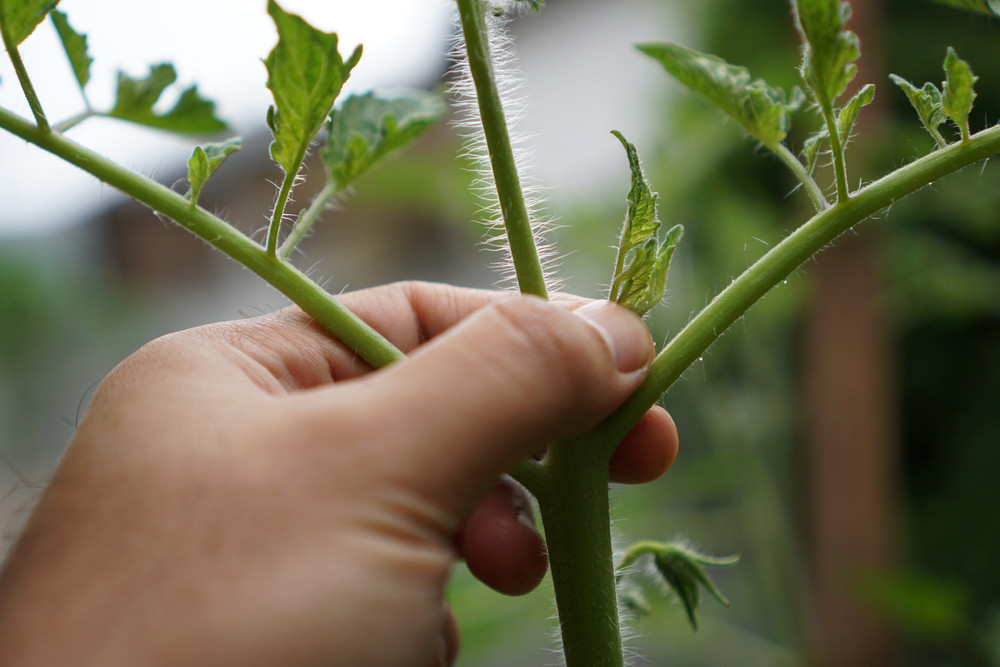
Pinching Out Helps Grow Larger, Sweeter Fruit
9. High-Yield "Cut-and-Come-Again" Varieties
To get the best Return on Investment (ROI), choose plants that give multiple harvests.
- The Concept: Instead of planting a cabbage that you harvest once, plant loose-leaf lettuce, kale, or Swiss chard.
- The Harvest: Pick only the outer leaves. The "heart" of the plant remains intact and continues to produce new foliage, giving you a fresh salad every week for months from a single seed.
10. Digital Efficiency with VegPlotter
Even with free materials, your most expensive resource is time. VegPlotter is a game-changer for beginners.
- Visual Mapping: It prevents "over-planting," which leads to stunted plants and wasted seeds.
- Succession Planning: The software tells you exactly when a bed will become empty (e.g., after your June radishes) and what to plant immediately (e.g., July carrots) so you never have a day of "dead" soil.
- Crop Rotation: It automatically tracks where you planted what, ensuring you don't attract pests by planting the same family in the same spot twice.
Why use VegPlotter specifically?
In a budget-focused garden, errors cost money. VegPlotter acts like a professional consultant, giving you a monthly "To-Do" list tailored to your exact location and climate. It takes the guesswork out of 2026 gardening, ensuring your first attempt is a productive success.