The Green Machine: How to Grow, Cook, and Rock Your Spinach Harvest

Welcome to the ultimate guide to spinach on VegPlotter! Whether you are mapping out your spring garden layout, looking to boost your family's daily nutrient intake, or searching for creative culinary ideas, spinach (Spinacia oleracea) stands out as one of the most rewarding and versatile crops you can grow. This cool-season staple combines rapid growth with exceptional nutritional density, making it an indispensable favourite for gardeners and cooks alike.
In this comprehensive guide, we delve into everything you need to know about spinach. We will explore the primary structural varieties, unpack the science-backed health benefits, detail delicious cooking methods and unconventional uses, and share proven cultivation techniques so you can enjoy a continuous harvest from your VegPlotter garden beds.
1. Why Spinach Deserves a Prime Spot in Your Plot
Spinach is a fast-growing, cool-hardy leaf vegetable belonging to the Amaranthaceae family, sharing close ancestry with beetroot and Swiss chard. What makes spinach uniquely attractive to home gardeners is its incredible speed and efficiency. In as little as four weeks from seed germination, you can begin harvesting tender baby leaves for fresh salads.
Beyond its quick turnaround, spinach is remarkably adaptable to compact spaces, raised beds, and container gardens. Because it thrives in cool weather, it serves as an ideal crop for extending your growing season, kicking off early spring harvests and producing deep into autumn when other summer vegetables begin to fade.
2. Exploring Spinach Types and Heat-Tolerant Substitutes
Not all spinach varieties look or behave the same in the garden. Botanists and seed growers categorise true spinach (Spinacia oleracea) into three main structural types based on leaf texture and growth habit. Knowing the difference helps you select the perfect variety for your regional climate and kitchen needs.
Savoy Spinach
Savoy spinach is characterised by its deeply crinkled, thick, and dark green leaves. This type is exceptionally cold-hardy and offers a rich, earthy flavour with a satisfyingly crisp texture. Because of its sturdy structure, Savoy spinach holds up beautifully in warm cooked dishes, soups, and stews. Standout varieties in this category include:
-
Bloomsdale Long Standing: A world-renowned heirloom classic prized for its full flavour, heavy yields, and resistance to early summer heat.
-
Regiment: A fast-growing hybrid known for producing massive, thick, dark green crinkled leaves that stay tender even as they mature.
-
Winter Giant: An exceptionally cold-hardy variety ideal for overwintering in UK gardens, featuring deep green, heavily savoyed foliage that easily withstands frosts.
Smooth and Flat-Leaf Spinach
In contrast to Savoy types, flat-leaf spinach features broad, entirely smooth leaves that grow rapidly. Flat-leaf varieties are preferred by commercial growers and home chefs alike because they are effortlessly easy to wash and prepare, leaving no crinkles for soil to hide in. Top choices for garden plots include:
-
Giant Noble: An incredible giant heirloom that produces smooth, succulent leaves up to 25 cm long without losing its sweet, mild flavour.
-
Smoothie: A uniform, fast-maturing variety specifically bred for baby-leaf harvesting and ultra-smooth blending into morning green smoothies.
-
Red Kitten: An eye-catching, fast-growing flat-leaf variety featuring striking red stems and veins, perfect for adding visual pop to raw salads.
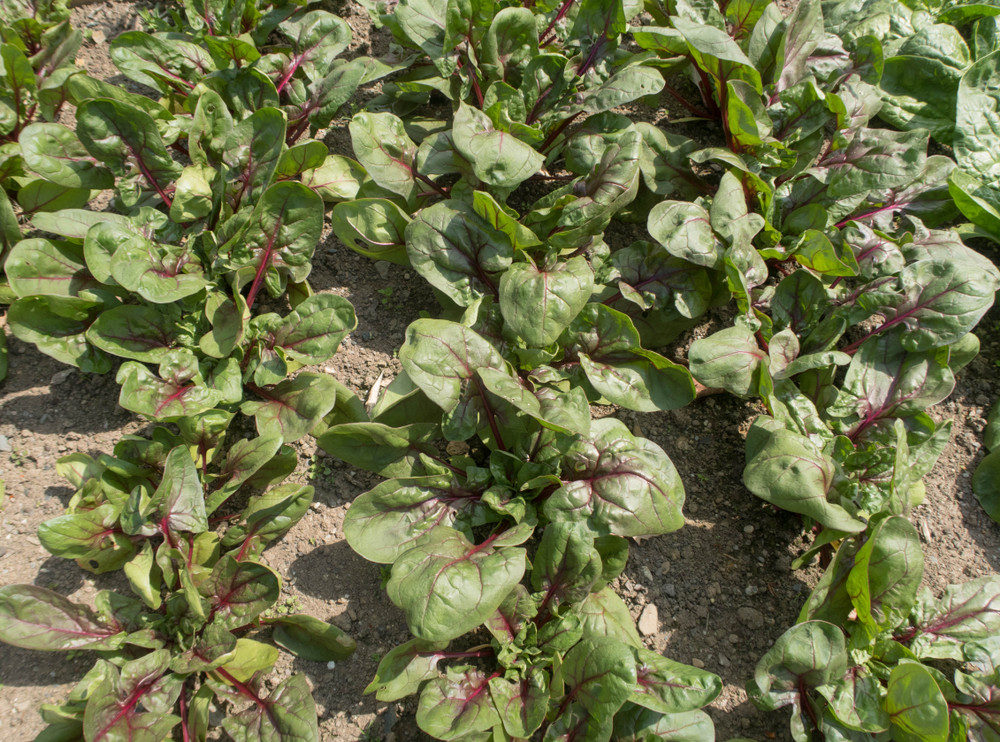
Spinacia oleracea 'Red Kitten' growing on an allotment in Rural Devon, England
Semi-Savoy Spinach
Semi-Savoy spinach offers the best of both worlds. It features lightly crinkled, upright leaves that provide a pleasant texture while remaining easy to clean in the sink. Semi-Savoy varieties are engineered for high disease resistance and slow bolting, making them top performers in variable climates. Excellent varieties include:
-
Space F1: A highly adaptable hybrid with smooth-to-lightly-puckered leaves that are a breeze to wash, featuring broad resistance to downy mildew.
-
Tyee: Famous among home gardeners for its exceptional bolt resistance and reliability during transitional spring-to-summer heat.
-
Catalina: A popular, compact semi-savoy variety with thick, rounded leaves that hold up wonderfully both raw in salads and lightly flash-sautéed.
Warm-Weather Spinach Substitutes
True spinach naturally bolts—sending up a flower stalk and turning bitter—when daytime temperatures consistently exceed 20°C. To keep harvesting nutrient-dense greens through the warmest summer months, gardeners rely on heat-loving spinach substitutes:
- New Zealand Spinach (Tetragonia tetragonioides): A sprawling, drought-tolerant ground cover that produces succulent leaves with a flavour nearly identical to true spinach.
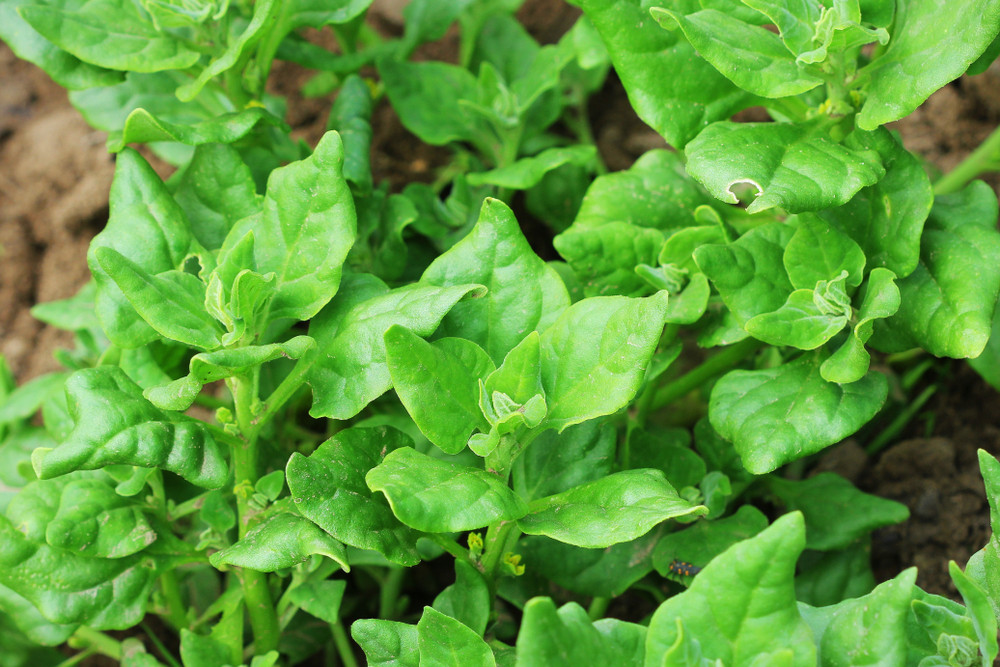
Tetragonia tetragonioides, New Zealand spinach growing in garden
-
Malabar Spinach (Basella alba): A striking, heat-loving climbing vine with thick, glossy leaves that thrive in high summer heat.
-
Water Spinach (Ipomoea aquatica): A popular moisture-loving Asian green featuring crisp, hollow stems and tender foliage.
3. The Science-Backed Health Benefits of Spinach
Spinach has earned a well-deserved reputation as a nutritional powerhouse. While raw spinach consists of over 90 percent water, every leaf contains an extraordinarily dense concentration of vitamins, essential minerals, and vital antioxidants. A single 100-gram serving delivers over four times your daily requirement of Vitamin K1, nearly double your daily Vitamin A, and significant portions of Vitamin C, folate, iron, calcium, and magnesium.
Protecting Eye Health
Spinach is one of the richest plant sources of lutein and zeaxanthin. These powerful carotenoids accumulate in the retina of the human eye, acting as a natural sunscreen that filters harmful high-energy light waves and protects eye cells against age-related macular degeneration and cataracts.
Supporting Heart Health and Blood Pressure
The deep green leaves of spinach contain high concentrations of naturally occurring dietary nitrates. During digestion, these nitrates assist in relaxing and dilating blood vessels, promoting healthy blood circulation and supporting optimal blood pressure levels alongside essential minerals like potassium and magnesium.
Enhancing Bone Density and Cell Protection
With its massive reserve of Vitamin K1, spinach plays a critical role in bone mineralisation by activating osteocalcin, the primary protein responsible for anchoring calcium within the bone matrix. Furthermore, antioxidants such as alpha-lipoic acid, quercetin, and kaempferol actively combat oxidative stress throughout the body.
Nutritional Tip — Raw vs. Cooked Spinach: Eating spinach raw preserves its delicate Vitamin C and folate content. However, light cooking—such as quick steaming or sautéing—degrades oxalic acid, making key minerals like iron and calcium significantly easier for your digestive system to absorb. Pairing cooked spinach with a squeeze of fresh lemon juice further boosts plant-based iron uptake!
4. Culinary Techniques and Uses in the Kitchen
Spinach is a celebrated staple across global culinary traditions, forming the backbone of iconic dishes like Indian Palak Paneer, Greek Spanakopita, and Italian fresh pasta fillings.
To prepare spinach effectively, proper handling is key. Savoy leaves should always be submerged in a bowl of cold water and swished gently so trapped soil settles to the bottom before spinning dry. When cooking, spinach wilts down rapidly—a large frying pan overflowing with fresh leaves will reduce to a small, tender side dish in under three minutes when flash-sautéed in olive oil with garlic.
For long-term storage and vivid green purées, master the art of blanching. Submerge fresh leaves in boiling water for 45 seconds, then immediately plunge them into an ice-water bath. Squeezing out the excess moisture leaves you with concentrated green portion balls that freeze exceptionally well for future winter soups, dips, and baked dishes.
5. Beyond the Kitchen: Creative Household Uses
The chemical properties of spinach extend its usefulness far beyond standard meal preparation:
-
Natural Green Food Colouring: Puréeing blanched spinach and straining the concentrated juice creates a heat-stable, chemical-free green dye for fresh pasta dough, cake icings, and natural craft projects.
-
Plant-Based Textile Dyeing: Simmering spent spinach leaves extracts rich chlorophyll compounds, allowing textile crafters to create soft, pastel-green dye baths for natural fibres like wool and cotton.
-
Compost Nitrogen Booster: Old spinach plants and surplus garden trimmings are packed with nitrogen, providing an immediate biological spark to accelerate decomposition in dry compost heaps.
6. Expert Gardening Techniques: Planting, Care, and Harvesting
Growing healthy spinach requires understanding its preference for cool conditions, rich soil, and consistent moisture. By planning your crop layout systematically, you can harvest fresh leaves almost year-round.
Soil Preparation and Sunlight
Spinach thrives best in fertile, moisture-retentive soil rich in organic matter. Target a soil pH between 6.5 and 7.5, as spinach is particularly sensitive to acidic soils below pH 6.0. Position your spring and autumn crops in full sun, but provide partial afternoon shade for early summer plantings to help keep root temperatures low.
Direct Sowing and Spacing
Spinach taproots are delicate, so direct sowing into your garden beds yields the strongest plants. Sow seeds roughly 1 to 2 centimetres deep. Space rows 20 to 30 centimetres apart, and thin the emerging seedlings to about 7 centimetres for baby leaf harvests, or 15 to 20 centimetres apart if you want full-sized heads. Sowing small patches every fortnight ensures a continuous, unbroken supply.
Watering and Harvesting
Consistent soil moisture is crucial when growing spinach. Irregular watering causes environmental stress, triggering the plant to bolt prematurely. Feed your growing plants with an organic nitrogen-rich fertilizer like liquid seaweed to encourage lush foliage.
Harvest baby leaves using the "cut-and-come-again" method by snipping outer foliage a few centimetres above the soil line, allowing the central crown to continue regenerating new leaves. For full-head harvests, slice the entire plant off at soil level before any central flower stalk begins to form.
7. Troubleshooting Common Spinach Growing Challenges
Every gardener encounters occasional challenges. Understanding common spinach issues ensures quick resolution:
-
Premature Bolting: High summer temperatures, long daylight hours, and moisture stress cause spinach plants to stretch vertically, producing bitter leaves. Prevent this by growing bolt-resistant cultivars like Tyee or Bloomsdale, applying thick organic mulch to cool the roots, and utilizing shade cloth.
-
Downy Mildew: Caused by fungal pathogens in high humidity, downy mildew appears as yellow patches on top of leaves with greyish fuzz underneath. Mitigate this by spacing plants well for air circulation, watering directly at the soil line, and planting modern F1 hybrid seeds.
-
Leaf Miner Damage: Leaf miners are fly larvae that create winding white trails as they feed inside the leaf tissue. Protect young crops by installing fine insect mesh over your garden beds immediately after sowing.
8. Frequently Asked Questions
Can I successfully grow spinach in containers?
Absolutely. Spinach has a relatively shallow root system, making it an ideal choice for container gardens, window boxes, and patio pots that are at least 15 to 20 centimetres deep. Ensure your pots have proper drainage holes and receive adequate daily sunlight.
Why are my spinach leaves turning bitter?
Bitter flavour indicates that the plant is undergoing heat stress or preparing to bloom. Once a flower stalk begins forming, leaf sugars decrease rapidly. Harvest leaves while young and keep plants shaded and well-watered to preserve sweet flavour.
What is the best way to store fresh spinach after harvesting?
Avoid washing your spinach until right before cooking. To store fresh leaves, wrap dry harvested spinach in clean paper towels to absorb ambient moisture, place inside an airtight bag or container, and refrigerate. Stored this way, leaves remain crisp for up to ten days.
Ready to design your ideal vegetable garden? Plan your spinach rows, companion plantings, and succession sowing schedules effortlessly with VegPlotter!