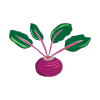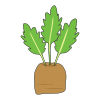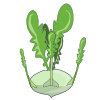
Kohlrabi (Green) is a fascinating and versatile cool-season vegetable belonging to the brassica family. Its most distinctive feature is the swollen, globe-shaped stem that forms just above the soil surface — a structure unique among common garden vegetables. The green-skinned variety produces pale green flesh that is crisp, mild, and subtly sweet, with a flavour reminiscent of a mild broccoli stem or water chestnut.
Beyond the bulb, the dark green leaves are entirely edible and nutritionally dense, offering a flavour profile similar to kale or collard greens. Raw leaves have a mildly peppery, nutty character, while cooking mellows them into a savoury, tender green.
Culinary Uses
- Raw: Slice or julienne the bulb for salads, slaws, and crudité platters.
- Roasted or Sautéed: The bulb caramelises beautifully with olive oil and seasoning.
- Soups and Stews: Adds body and mild sweetness to broths.
- Greens: Use exactly as you would kale — sautéed, braised, or blended into smoothies.
Kohlrabi is a fast-growing, space-efficient crop that rewards gardeners with reliable harvests across spring and autumn seasons.
How To Grow
Kohlrabi is a quick-maturing cool-season crop that thrives in the shoulder seasons of spring and autumn. It is one of the most rewarding brassicas for gardeners with limited space or a short growing season.
Sowing Sow seeds directly into the ground or into modules for transplanting. Sow at a depth of approximately 1 cm. For a continuous supply, make successional sowings every 3–4 weeks during the cool season. Avoid sowing during the hottest part of the year as heat causes premature bolting and woody bulbs.
Spacing Thin or transplant seedlings to 20 cm apart within rows, with 30 cm between rows. Adequate spacing is essential for good bulb development.
Soil Preparation Kohlrabi prefers fertile, well-drained soil enriched with compost or well-rotted organic matter. Avoid freshly manured beds, which can cause forking or lush but flavourless growth. Aim for a neutral to slightly alkaline soil pH (6.5–7.5).
Watering Consistent moisture is essential. Irregular watering — wet then dry — causes the bulb to split or become fibrous. Aim for an even 2–3 cm of water per week and apply a mulch of straw or compost around the base to retain soil moisture.
Feeding If your soil is rich in organic matter, additional feeding is rarely necessary. On poorer soils, a balanced fertiliser applied at planting and once mid-season will support healthy growth.
Temperature Kohlrabi grows best at air temperatures between 15°C and 22°C. It tolerates light frosts and can even improve in flavour after a mild frost.
Harvesting
Harvesting kohlrabi at the right time is key to enjoying its best flavour and texture. Leave it too long and the bulb becomes fibrous and unpleasantly pungent.
When to Harvest Most standard varieties are ready 45–60 days from sowing, when the bulb reaches 5–8 cm in diameter — roughly the size of a tennis ball. At this size the flesh is crisp, sweet, and tender.
Signs of Readiness
- Bulb is visibly swollen above the soil surface
- Skin is smooth and firm with good colour
- Lower leaves beginning to yellow indicate the plant is past its prime
Giant Varieties Some varieties (such as 'Kossak') are bred to remain tender at much larger sizes — up to 15–20 cm in diameter. Unless you have specifically grown a giant variety, harvest at the tennis ball stage.
How to Harvest Using a sharp knife, cut the taproot just below the bulb at soil level. Trim off the long leafy stems, leaving a short stub of around 2 cm if storing.
Saving the Greens Separate the leaves from the bulb immediately after harvest to prevent them drawing moisture from the root. Use fresh within 3–5 days, treating them as you would kale.
Storage
- Bulbs: Store unwashed and unpeeled in a cool, humid environment or in the refrigerator crisper drawer for up to 3–4 weeks.
- Freezing: Blanch and freeze slices for use in cooked dishes; note that the texture softens after freezing.
Common Problems
Kohlrabi shares many common pests and diseases with other brassicas. Practising crop rotation and maintaining good garden hygiene significantly reduces the risk of most problems.
Pests
- Cabbage Root Fly: Larvae tunnel into the base of the stem and roots. Use fine mesh or fleece collars around the base of transplants to protect against egg-laying.
- Cabbage White Caterpillars: The larvae of large and small white butterflies can rapidly skeletonise leaves. Check the undersides of leaves regularly for yellow egg clusters and remove by hand. Fine mesh netting is the most effective prevention.
- Aphids: Colonies of mealy cabbage aphid can distort growing tips and weaken plants. Encourage natural predators or remove with a strong jet of water.
- Flea Beetle: Tiny holes peppered across young leaves are a sign of flea beetle damage. Protect seedlings with fine mesh and grow under cover in the early stages.
- Slugs and Snails: Young seedlings are particularly vulnerable. Use barriers, traps, or encourage natural predators such as ground beetles.
Diseases
- Clubroot: A soilborne disease that causes swollen, distorted roots and stunted growth. Improve drainage, raise soil pH with lime, and practice long crop rotations of at least 4 years.
- Downy Mildew: Yellow patches on leaves with a grey-white mould beneath. Improve air circulation and avoid overhead watering.
- Black Rot: Yellowing leaves with a V-shaped lesion at the leaf margins. Remove affected plants promptly and avoid working among wet plants.
Other Issues
- Bolting: Caused by heat stress or erratic watering. Choose bolt-resistant varieties for late sowing.
- Woody or Cracked Bulbs: Usually a result of irregular watering or harvesting too late. Consistent moisture and timely harvesting prevent this.